Tag Archives: Tapas

A Tale of Two Cities

I’ve been very lax on here of late, so now trying to rectify that. First off, a summary of two much-needed post-Covid mini-breaks.

Palma

Believing all attempts to leave the country to be thwarted in perpetuity, it was a pleasant surprise to find ourselves sitting in departure gate 23 at Gatwick airport last October. Fully vaxed, with the paperwork to prove it, we were headed to Mallorca for four days of sunshine. Like a tiny child on Christmas morning, eyes wide with awe and wonder, I gave a little whoop as we taxied down the runway. And then, suddenly airborne, almost two years of fear, boredom and frustration behind us, I breathed a sigh of contentment, settling back with book and podcast for an uneventful flight to the diminutive Balearic isle.

The holiday was magical. I remain resolute in my desire to never take such things for granted again. Palm trees, seafood, sand, sea, ice-creams…the smell of salt and suncream in my hair, which is my absolute favourite smell in the world. Everything was perfect. Sure, we were bound to see it through rose-tinted (sun)glasses after such an unprecedented enforced absence, but Palma proved a genuinely great location for our first escape.

The city itself is a great size for gentle evening promenading (our favourite pandemic pastime). The imposing Gothic Santa María cathedral, majestic harbour, maze of Arab inflected streets, delicious tapas bars, boutique shops and fish markets provide plenty of distractions without overwhelming a card-carrying sightseeing over-strategist such as myself. I didn’t feel the need to overfill our days, or rush from pillar to post. Happy instead to rest, absorb and indulge.

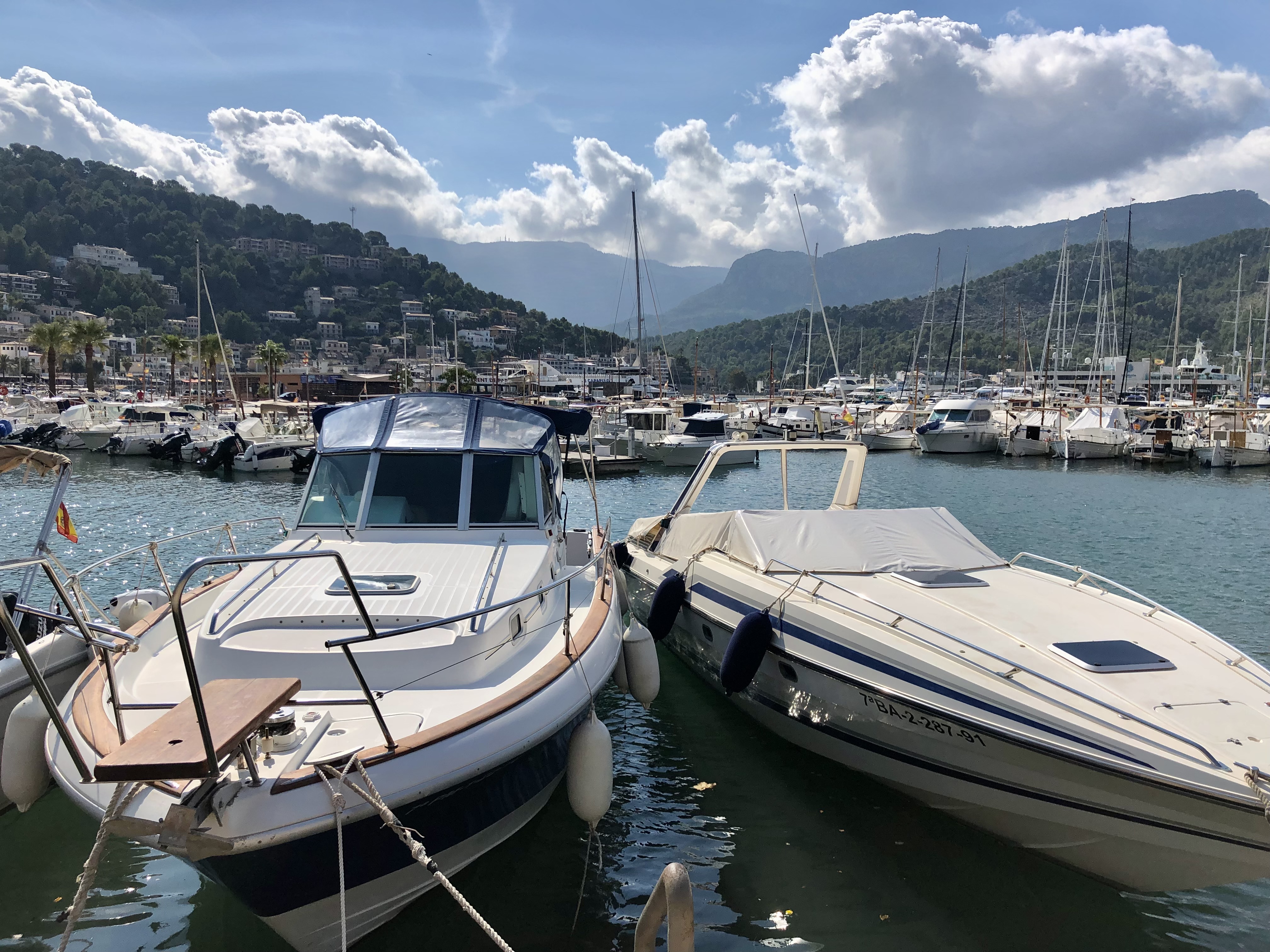
Nearby Playa de Illetes and Cala Major provided swimming and tanning opportunities, and a day trip to Port de Sóller should be on everyone’s list. A beautiful marina, sandy bay and estuary await, at the end of a diverting trip through the hilly interior of the island. And as the wooden tram trundled home through olive and citrus groves, I reminded myself how stupidly lucky I am.
Of course, I can’t finish without listing some restaurants of note: La Bodeguilla being our undisputed favourite (prawn carpaccio; Mallorcan black suckling pig; polpo with iberico and slow cooked egg…we’re planning a return visit mainly to eat there again!). Aromata, Arume Sake bar, and La Rosa were also great, but I’d advocate for the mouth-watering chuletón steak at the unassuming El Patxi in Santa Catalina over those. Que viva España!

Madrid

Little effort having been required to reignite my passion for European jaunts, I found myself united with one of my favourite travel buddies (my dad!) in spring of this year for a trip to the Spanish capital. Quite the contrast to Palma, the sprawling metropolis is crammed with sights and this hapless tourist was unable to resist sliding back into bad old habits. Armed with guide book, map and refillable water bottle, I marched us in erratic zigzags across the city, attempting to tick off all the attractions in a familiar fit of holiday mania.

Luckily, my far more sensible companion had some (limited) success in reigning me in, forcing the odd pause for pintxos, obligatory ice-creams, and breakfast churros. Still, if you are planning to tackle Madrid I would suggest focusing on fewer locations and allowing time for relaxation. Especially given its size demands regular metro trips, which can eat into your time considerably. Having said all that, there weren’t many things we saw that I wouldn’t recommend…so it’s really a case of being more ruthless in your choices.
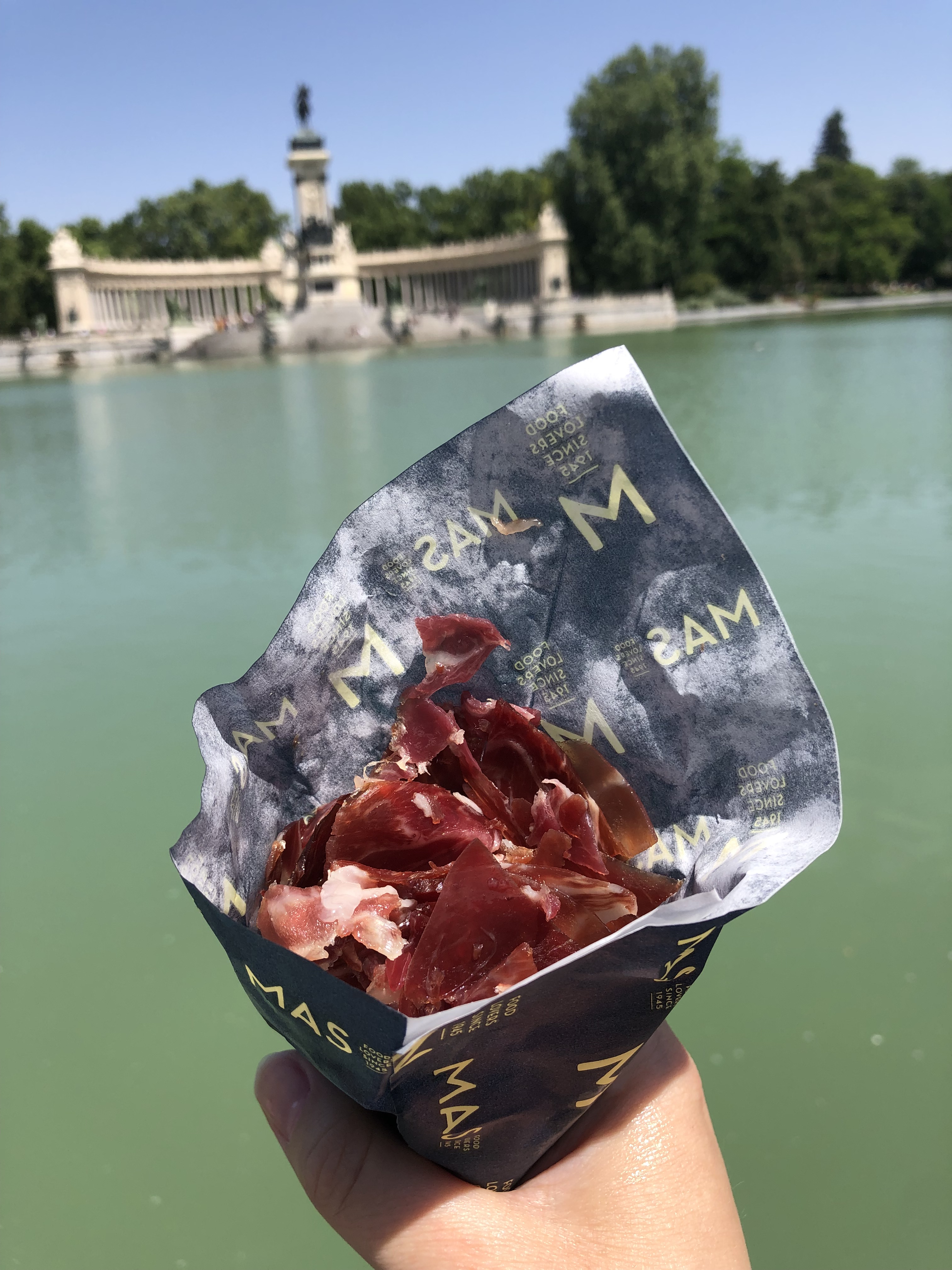
Our first day took in Parque de El Retiro, quite possibly the prettiest and most varied city park I’ve visited. With its central boating lake, rose gardens, “crystal palace” (Palacio de Cristal), wooded picnic spots, fountains and only-known public statue of Satan, there’s enough here alone to occupy half a day. The fact that we also crammed in Plaza Major (one of the handsome central squares), Palacio Real de Madrid (official residence of the Spanish royal family), Mercado de San Miguel, and Catedral de la Almudena (a twentieth century Catholic church built on the site of a medieval mosque) is testament to my aforementioned over-enthusiasm and explains why our feet were throbbing for days.

We weren’t done there though. Before dinner we also squeezed in a visit to Museo Nacional Centro de Arte Reina Sofía, the excellent modern art and sculpture gallery. Once a hospital, the building is worth visiting on its own merits, with its airy central courtyard and modern glass annex (plus a cafe serving excellent vermouth!). Many make the pilgrimage to ogle Picasso’s admittedly impressive Guernica, but I actually preferred discovering new works by Dalí, Juan Gris, Picabia, and – my favourite piece – Miró’s Hombre Con Pipa. Well worth having on your itinerary.

Dinner, when it finally came, was at the really excellent Malacatín, where we enjoyed traditional cocido madrileño. Open for more than 125 years, and one of the original twelve ‘centennial taverns’, the restaurant is protected for preserving the cultural heritage of the city. The stew consists of broth, chickpeas, cabbage, and a selection of meats (pork belly, morcilla, jamón serrano, beef shank) and is absolutely delicious.
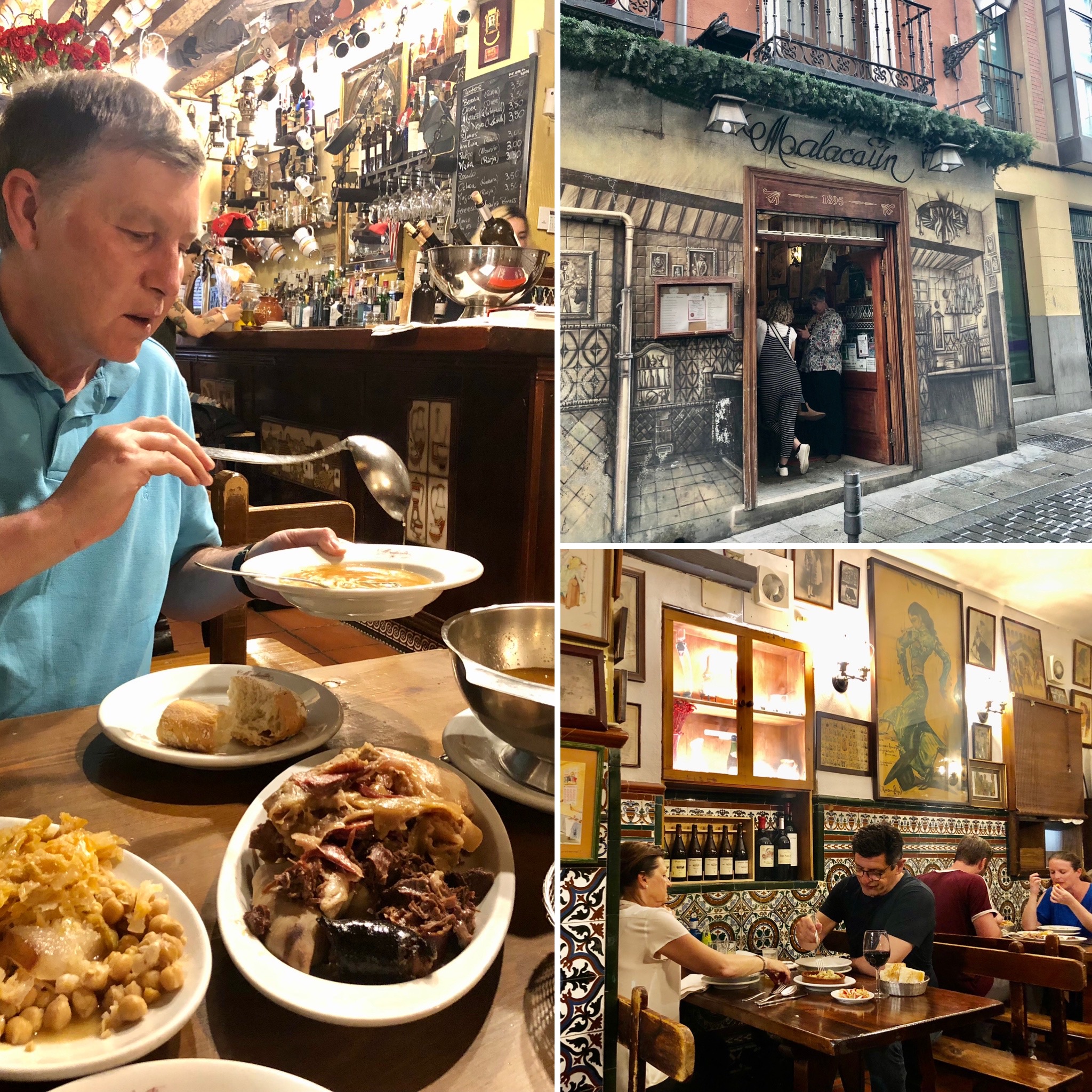
After an aborted attempt to visit the hilltop city of Toledo, through which I fostered a deep and ineliminable hatred of Atocha train station, the following day was spent at the botanical gardens, Museo del Prado, Calle de las Huertas (the neighborhood of Spanish writers), Plaza de Oriente, and Puerta del Sol (the busiest public square in the city and site of the wild bear and strawberry tree statue, Madrid’s famous coat of arms).

Large and imposing, the two-hundred-year-old Prado is not one of my favourite galleries. The dark and dour works of Goya, El Greco and Velázquez are not my thing. However, I wouldn’t have missed seeing Hieronymus Bosch’s staggeringly bonkers and stunningly beautiful Garden of Earthly Delights, nor the macabre and haunting Triumph of Death by Pieter Bruegel. As for the rest, my dad managed to google a list of highlights, and we amused ourselves by proclaiming “nothing to see here” as we passed by unfeatured masterpieces. Cocktails on the roof of Palacio de Cibeles rounded off the day.

Armed with our passports, having navigated 3 miles of subterranean passageways and sacrificed a few goats, we were finally allowed on a train to Toledo the next day. Perched atop a gorge overlooking the Río Tajo, Toledo was known as the ‘city of three cultures’ in the Middle Ages, a place where Christian, Muslim and Jewish communities peacefully co-existed. Sephardic synagogues, Visigothic and Roman ruins, a grand Gothic cathedral, and several interesting museums and galleries are packed into the small walled city. You need a whole day to do it justice, allowing time for tapas on one of the lantern-strewn medieval streets.

Amongst the highlights, I’d recommend Monasterio San Juan de los Reyes, with its peaceful cloisters and remarkable chapel. And save some time for walking the city walls and taking in the views over the Tagus river and countryside.

Our trip ended with a tasty meal of clams, scrambled hake, and baby lamb chops at La Castela. There you have it: two very different cities, with the common through-line of delectable Spanish cuisine. A not at all displeasing way to get back in the saddle.

Basque Country Part 1: Donostia

I have newly acquired a husband. And to celebrate we took ourselves off to San Sebastián and Bilbao, in northern Spain. It was a break centred first-and-foremost on good food. So I make no apologies for the grotesquely smug photos to follow.

The city is famous for its pintxos bars: small tapas usually skewered to bread (the word deriving from the verb ‘to pierce’). On two of our three nights there, we ambled happily from bar to bar, slugging back txakoli (the local wine) and ordering a gout-inducing number of dishes.

Highlights included the grilled octopus with paprika-aioli at Atari; the risotto con queso Idiazabal (cheesy-rice to you and me) from Borda Berri; the beef rib “brownie” at A Fuego Negro; and the divine dipped ice-creams from Loco Polo.

Our favourite bar, however, was La Cuchara de San Telmo. Would really recommend heading there for a long lunch and pretty much working through the entire menu. We didn’t quite do that, but left feeling stuffed and happy after demolishing the black pudding, razor clams, piquillo peppers, seared tuna, and kokotxa (hake throats, a regional delicacy). The bar is small and friendly, and only a stone’s throw from the very pretty Basílica de Santa María del Coro. Having washed the food down with a couple of large carafes of wine, it proved difficult to move.

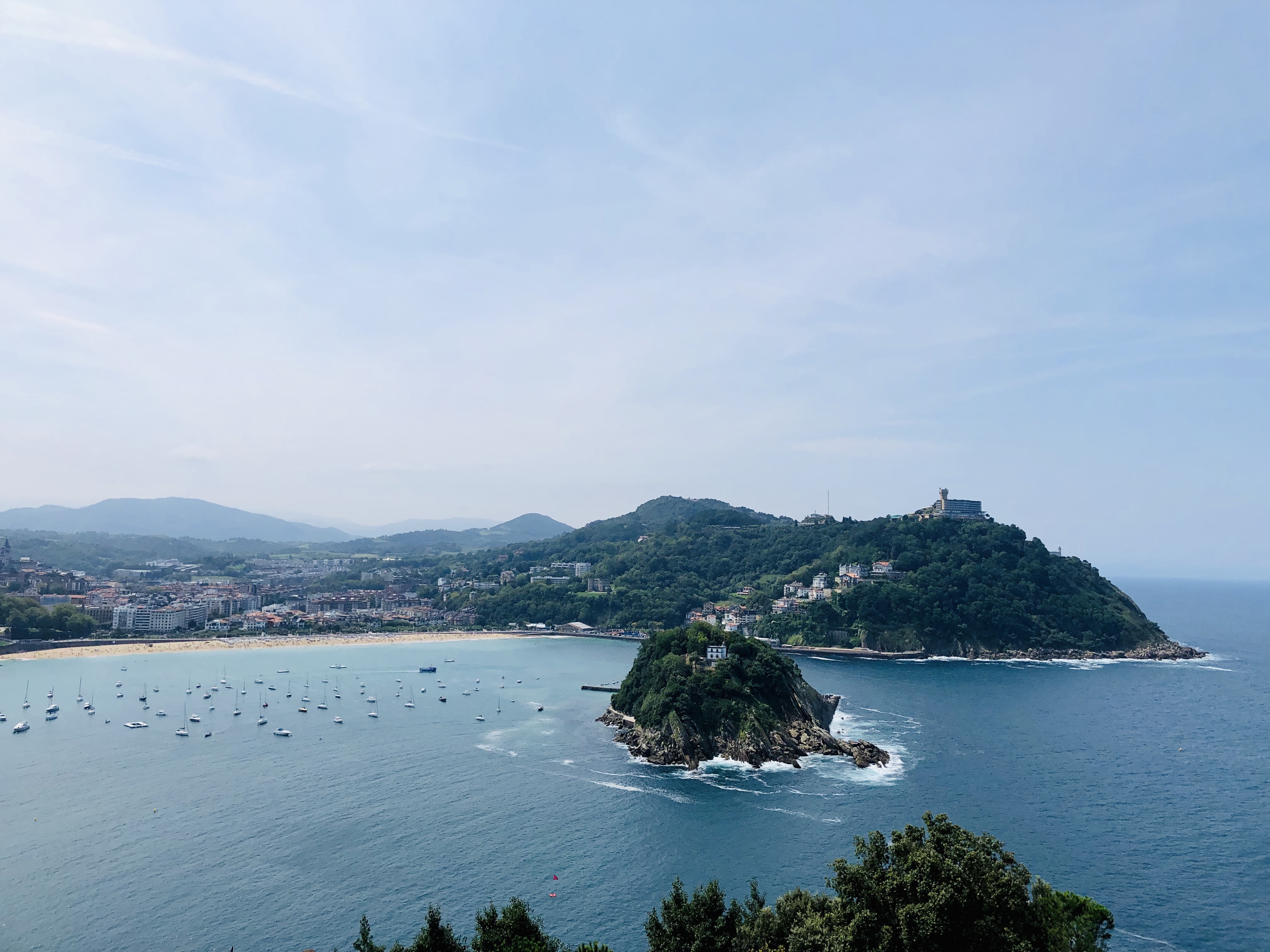
An afternoon climb up Monte Urgull was almost a necessity. Working off the calories, we plodded up to Sagrado Corazón (the “Sacred Heart”) statue to take in the stunning views over Bahía de la Concha and Isla de Santa Clara.

Honeymoon-053

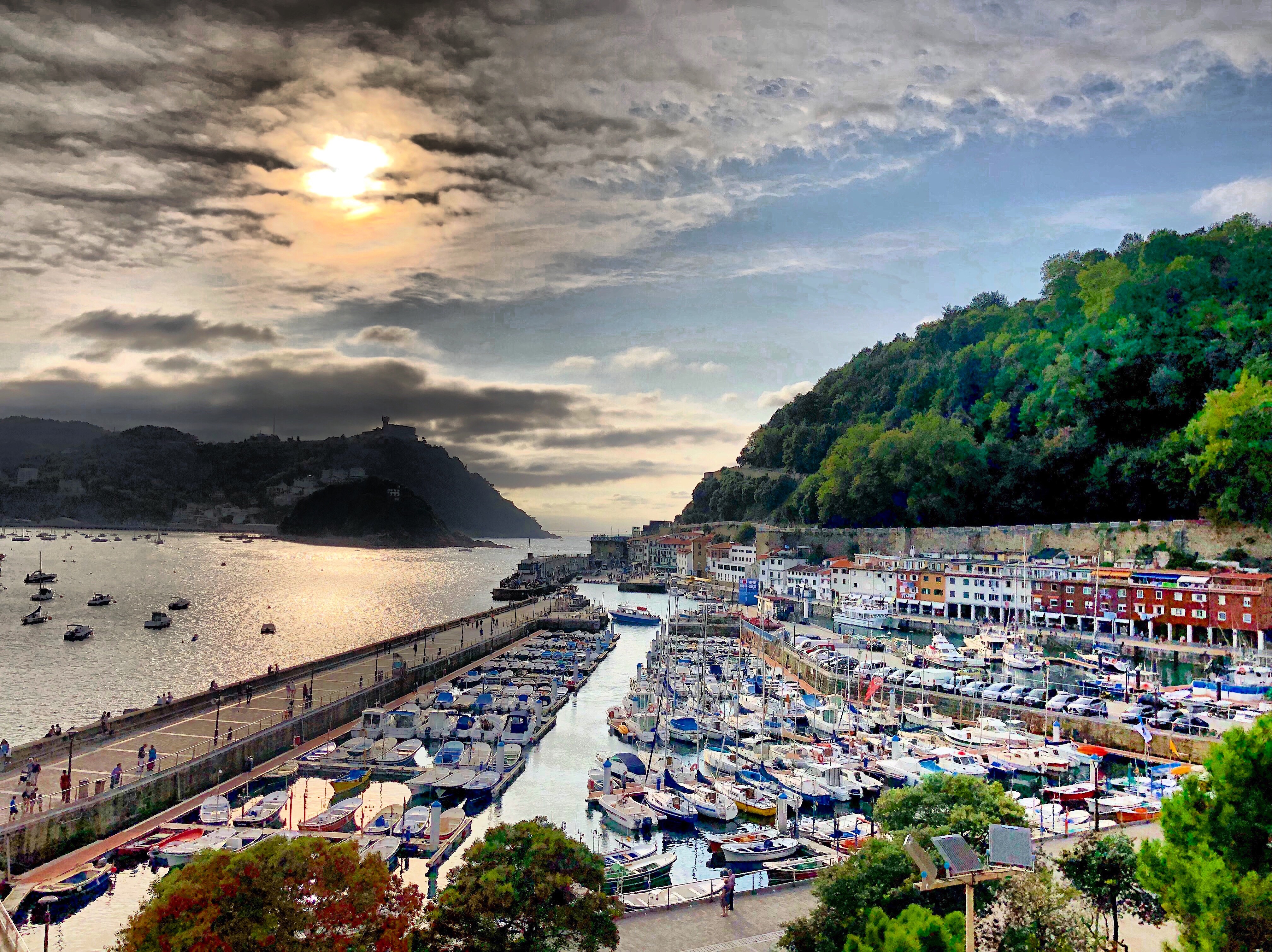
During our time in the city, we also visited Buen Pastor Cathedral, wandered the cobblestoned old town (Alde Zaharra), lazed on the beach, drank local craft beer, strolled the bank of the Urumea river, and caught the sunset at Bahía de Ondarreta.

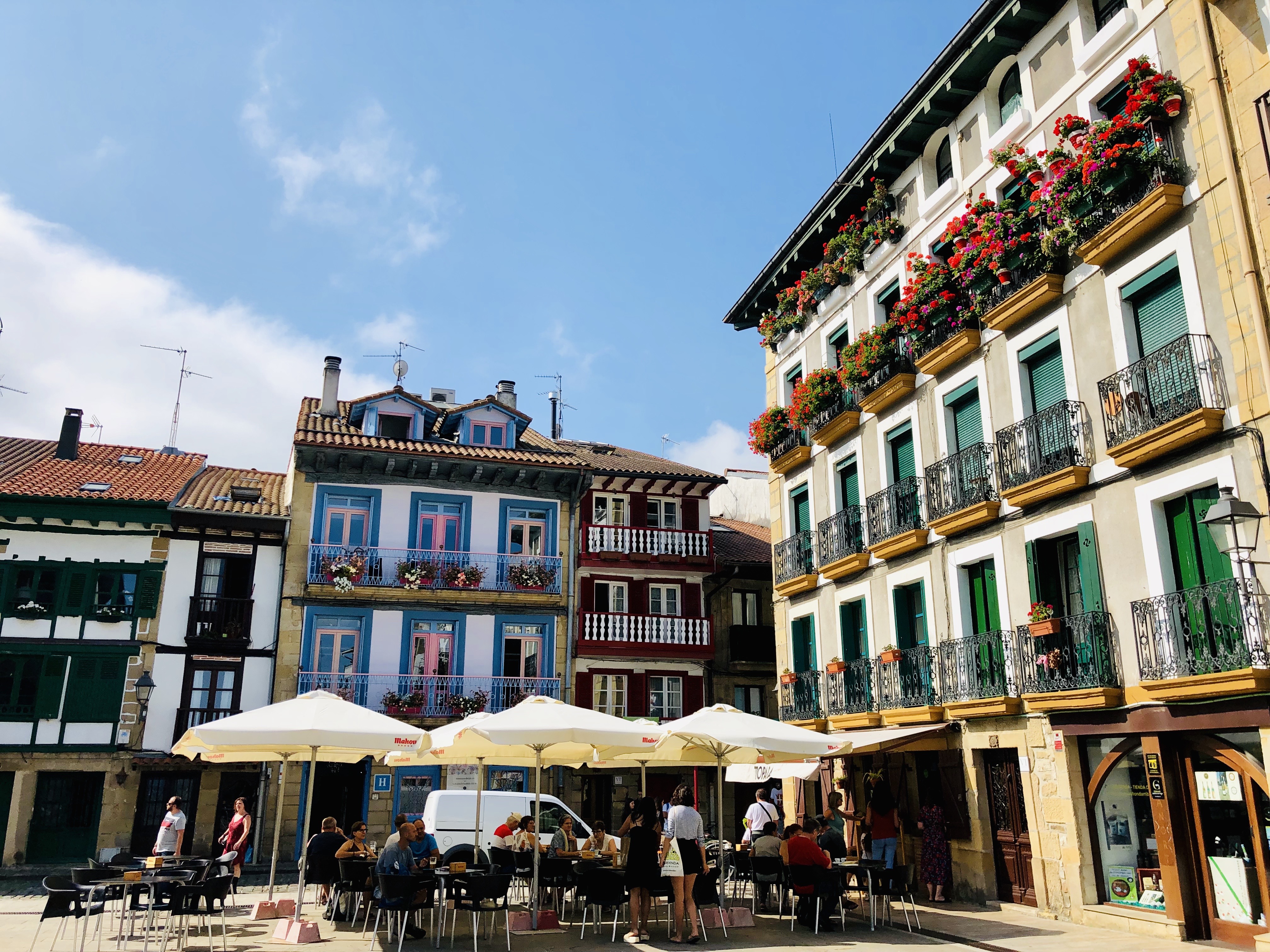
Donostia is small, though. You really don’t need more than a couple of days there. So on our third day, after a fantastic breakfast of perfectly-squidgy tortilla and rich, fatty jamón ibérico at Azkena (within La Bretxa market), we caught a bus to Hondarribia. A tiny coastal town in Guipuzcoa province on the French border, with a pleasant beach and medieval old town. We walked the fortified wall, sat in squares surrounded by colourful Basque houses, tried (but failed) to get into the baroque church, and had a refreshing (if slightly chilly) swim in the sea.

Honeymoon-068

And – of course – indulged in a multi-course lunch at Gran Sol. It’s worth a visit to this award-winning tapas bar on Calle San Pedro. Try the squid ink and chicken broth, ham croquetas and txerribeltz (pork and beets)…or pretty much anything else on the menu! It’s probably some of the prettiest food you’ll ever eat.  

Here’s some final photos of the newlyweds enjoying the view from their hotel room (free upgrade: winner!).

Honeymoon-006

Honeymoon-095

Honeymoon-038

I haven’t even mentioned breakfast churros (a must!), or our special honeymoon “treat” meal at Restaurante Kokotxa. Oh wait, there – I just did.

Next time, Part 2: Bilbao.


Andalucía

Seville is big. It’s the fourth largest city in Spain. It was founded by the Romans, occupied by the Moors, and latterly conquered by the Christian King Ferdinand III in the 13th century. The city – like much of Andalucía – is now an exciting mix of Gothic, Moorish and Renaissance architecture. So: it’s big and has lots of interesting things to see. Not a great idea to attempt to cover it in two days, then. But that’s what I did. Actually, my trip – in September 2006 – took in Córdoba and Granada as well. So, it was actually an attempt to cover the highlights of Andalucía in four days. Much better!

We stayed on the outskirts of the old quarter, a 30 minute walk to the imposing Cathedral of St. Mary.  Interestingly, for those of you paying attention, on its completion in the 16th century St. Mary unseated Aya Sofya as the world’s largest cathedral (see previous post for more on Istanbul).  Other interesting facts: it is the burial site of Christopher Columbus and its famous bell tower – the Giralda – was originally a minaret of the mosque that stood on the site.  There are ramps inside the Giralda, rather than stairs, so that the muezzin could ride on horseback to the top to call the people to prayer.  Don’t say I don’t try to teach you things!

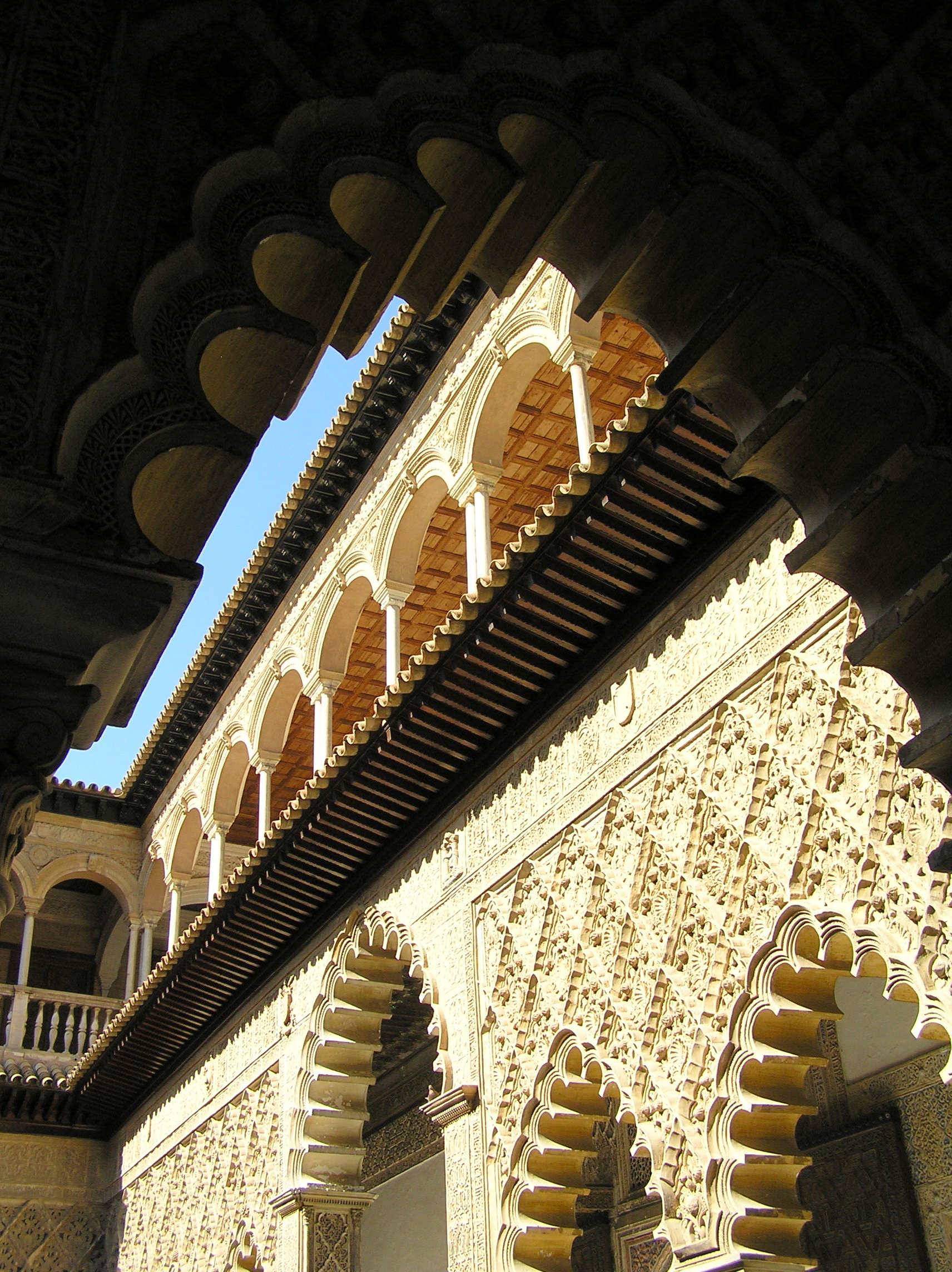
OLYMPUS DIGITAL CAMERAAs impressive as the cathedral is, the Alcázar is more so.  The palace is the oldest still in use in Europe (being used by the Royal Family when they visit the city) and is a beautiful Mudéjar complex.  The Mudéjar were the Moors who remained in Iberia after the Christian conquest and the palace started life as a Moorish fort before being enhanced by subsequent monarchs in renaissance style.  It’s beautiful.  Archways, terraces, courtyards, gardens, and water features make an intricate yet peaceful compound.

We also explored the expansive, and cooling, Parque de Maria Luisa, a lovely area that contains Plaza de España and other monuments of the 1929 Exposición Ibero-Americana (World’s Fair), and we walked along parts of the Guadalquivir River, beside which stands the Torre del Oro watchtower.

OLYMPUS DIGITAL CAMERAAfter all that sight-seeing (well…before, in-between, after, anytime we could really!) we ate in some amazing tapas bars and restaurants.  I can’t remember the names of them all, unfortunately, but I do remember the one I treated my dad to on his 50th birthday.  Bar Eslava, located in a pretty square in the San Lorenzo district, had been recommended by my friend Helen who lived in Seville for a short time.  I admit to being a little dubious when we passed earlier in the day to discover it was very small and completely empty, but I’m glad I kept the faith.  When we returned in the evening, people were queuing out of the door and the staff were run off their feet.  The menu was only in Spanish and we couldn’t decipher a word, so we just put our trust in the waiter and asked him to start by bringing us six things to try.  The best tapas I’ve ever had (sorry Chris!).  Pork cheek in sherry, marinated anchovies, stuffed mushrooms, jamón iberico, and so many more delights that I can’t now recall.  And by the time we’d finished, our food and wine came to about 25 euros in total.  I’d have felt a bit sheepish about choosing the place for ‘treat night’ except we both left with massive beams on our faces, so job done.

OLYMPUS DIGITAL CAMERA

Our trip to Córdoba fell on the hottest day.  Luckily we spent much of our time in the cool and dark Mezquita.  Formerly a mosque and now a Catholic cathedral, the space is a fascinating fusion of the two and its main hall, with its multiple red and white striped arches, is stunning.  Back in the sun, the old town (the largest urban area in the world declared a UNESCO World Heritage site) was a wonderful place to wander around.  The Calleja de las Flores, with its postcard view back down to the Mezquita, was quite crowded, but the rest of the town was reasonably quiet and we enjoyed meandering through the streets and in-and-out of shaded courtyards.

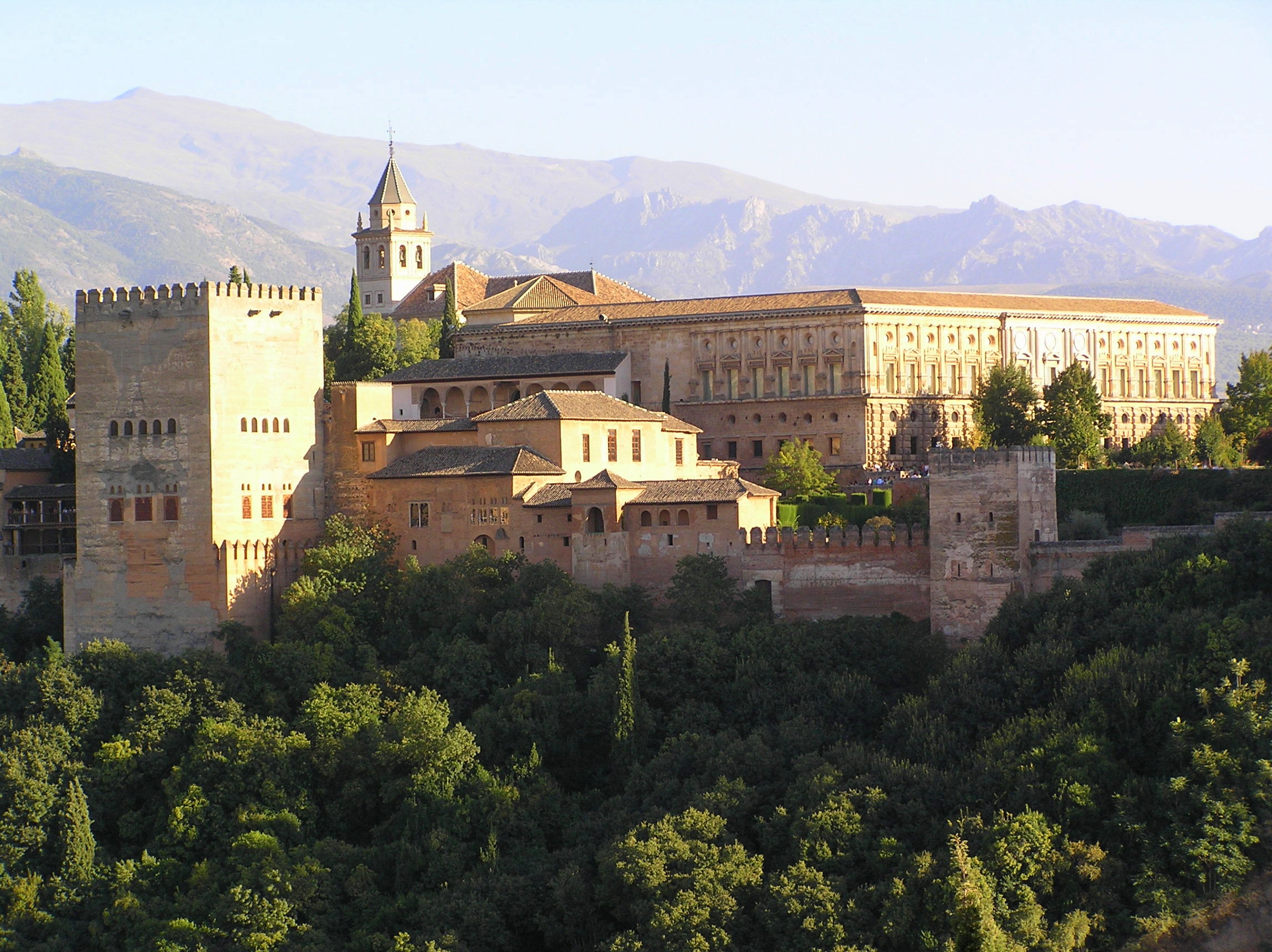
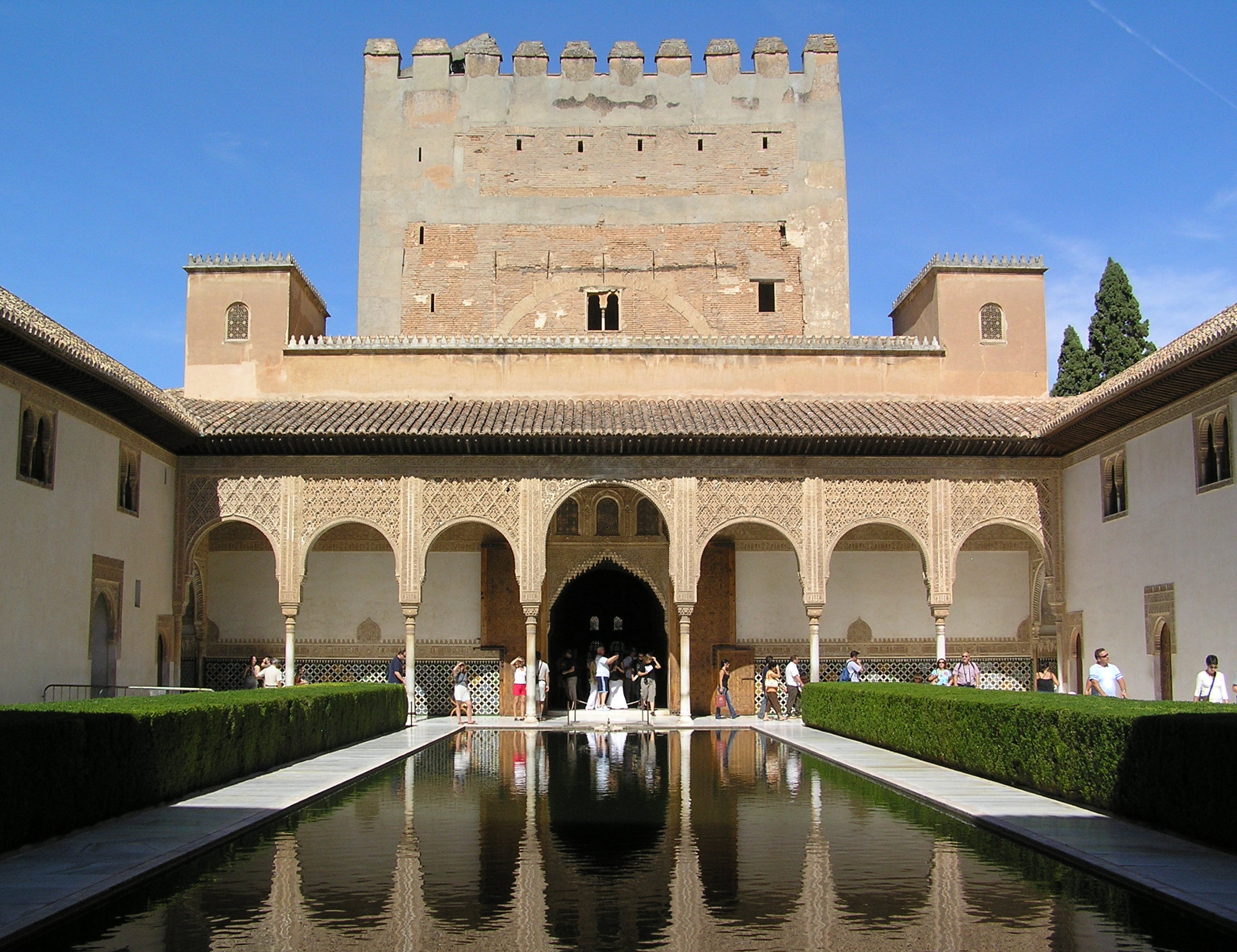
P9300974Which leaves Granada…I saved the best ‘til last!  An early start was needed for the 3 hour train journey, but I’d happily have travelled ten times as far to see the Alhambra.  The Nasrid palace was built mostly in the 14th century, when it was converted into a palace from a fort by Yusuf I, the Sultan of Granada.  The Muslim rulers were attempting to create ‘paradise on earth’, and I’d say they came pretty darn close.  Together with the Generalife palace and gardens, the huge complex is simply breathtaking.  The architecture is hard to beat and the different layers and spaces reveal new delights around every corner, with reflecting pools, archways and fountains providing endless photo opportunities.  I’m not going to pretend I wasn’t clicking away the whole time.

Obviously, for a view of the Alhambra in its entirety you need to be on the other side of the valley.  The Albaicín district on the hill opposite, with its narrow Moorish streets and white-washed homes, has the perfect vantage point: Mirador San Nicholas.  With dusk approaching, I sat looking at the Alhambra dappled in golden light, with the Sierra Nevada mountains as a backdrop.  Heavenly.

OLYMPUS DIGITAL CAMERA


After some seafood paella in a square near the cathedral, we headed back for the train.  What should have been a simple journey – if we’d have walked, as my dad suggested – became much more dramatic when it became clear our bus was headed for the coach station rather than the train station.  Given we were catching the last train of the day, the urgency of correcting our (my!) error was acute.  Stopping numerous times to ask baffled locals for directions, we sprinted in what we hoped was the general direction for about 20 mins, literally leaping on to the train just as it was about to depart.  Indiana Jones eat your heart out!  The train pulled out of the station and promptly stopped ten feet from the end of the platform for close to half an hour while a fault was seen to.  Typical!

OLYMPUS DIGITAL CAMERAThe Tourist Shot

OLYMPUS DIGITAL CAMERACulture Clash

OLYMPUS DIGITAL CAMERAReflecting on Things