Category Archives: Travel

A Rye for All Seasons

IMG_1676

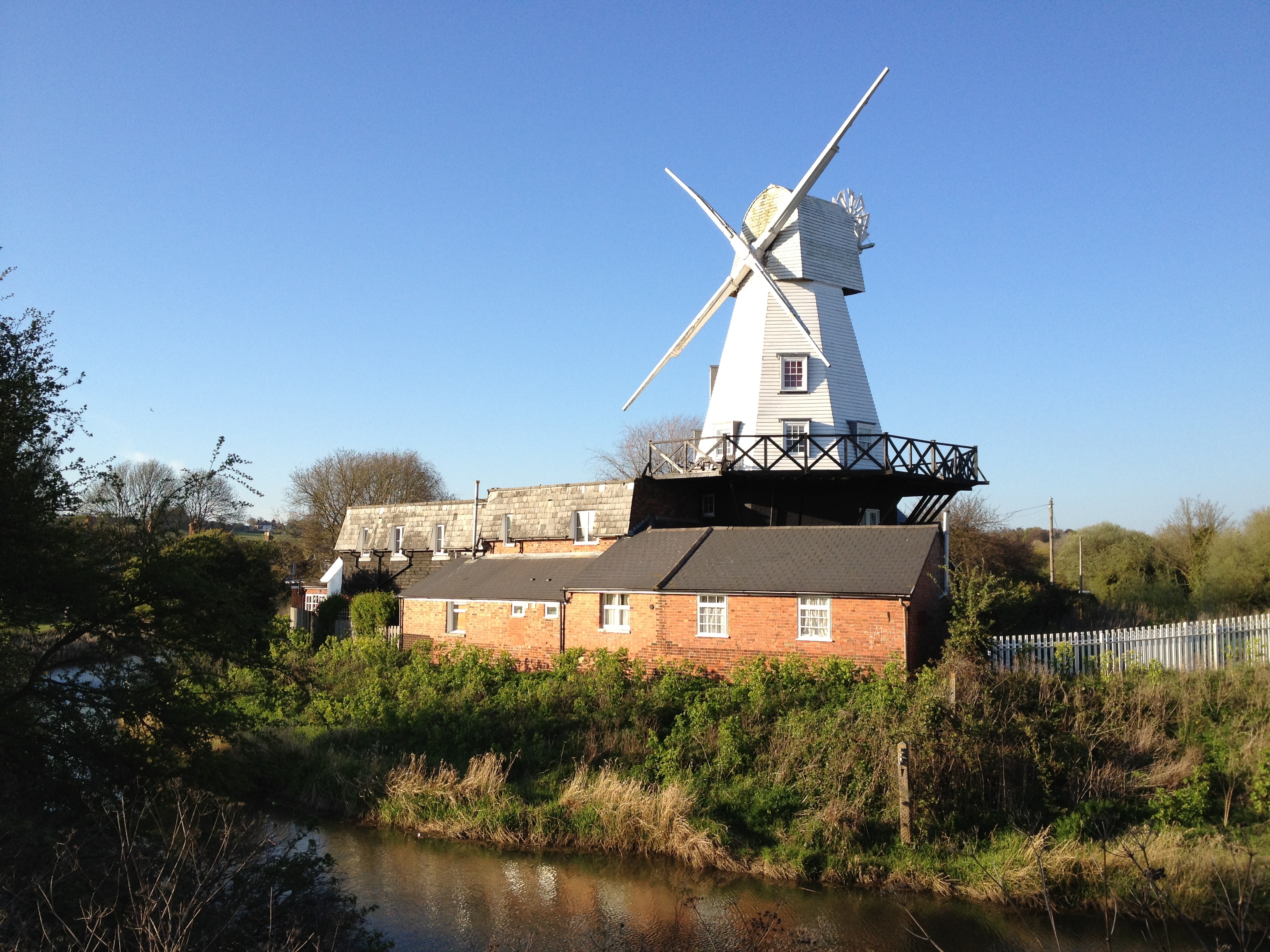
A pleasant hour-and-a-half drive from London, through the picturesque fields and oast houses of Kent, brings you to Rye on the East Sussex coast. Until a few years ago, I’d never explored the countryside and shorelines within easy reach of London; now I’m completely besotted. And Rye is one of my favourite spots in this newly discovered haven. The Parish Church of St Mary, perched high on a hill above the old town, welcomes you from afar as you make your approach, and the grade II listed white smock windmill – now a pricey B&B – is one of the first things you see as you enter. Everything is quaint and gentle, from the cobbled streets and tea shops to the 15th century pubs with their inglenook fireplaces. Strolling around the town (“hand holding”, as our friend Mark would say), or out past the harbour and nature reserve to the beach at Camber Sands, is a very pleasant way to spend a day.

IMG_0971

The first time Paul and I visited was on a very hot day in August 2010. After battling through the traffic of day-trippers, who had clearly stolen our idea, we fell under the town’s spell. Paul later returned with his brother and dad in May 2011 for a few days of walking, ale drinking and other manly pursuits. In February 2012, he surprised me with a romantic getaway for my birthday, booking a suite in the very posh George hotel, where we had a claw-foot bath in the middle of the bedroom and I was treated to a delicious meal at the hotel’s celebrated restaurant. On that occasion, we spent a lot of time trudging through the snow, helping locals dig their cars out of drifts, or hiding from the cold in The Ship, Ypres Castle and Mermaid Inn. You won’t be shocked to learn, I’m sure, that Rye is as beautiful in the winter as it is the rest of the year. More recently, we visited for a weekend in spring with our friends Alys and Simon, staying in Alys’ mum’s gorgeous house on the edge of the town centre. Whatever the season, Rye is enchanting.

IMG_2950

One of the other great things about the town is its location; close enough to explore some of the best of the Kent and Sussex countryside. On our various trips, we’ve visited the Chapel Down vineyard at Tenterden, Pashley Manor Gardens, Winchelsea, Tunbridge Wells and the solitary Dungeness. We’ve also come to love the charms of Hastings, with its sweet old town of boutiques, antique shops and cafés and its seafront of fishing huts and chippies. The 600 acre Country Park Nature Reserve in Hastings also offers great coastal and woodland walks. And the pièce de résistance: Rye is a mere half hour taxi ride from the best restaurant in the country. I cannot recommend The Curlew in Bodiam enough. Now Michelin-starred, the restaurant offers just the right balance of casual elegance and the food is simply incredible. I’m sure it won’t be long before we’re back!

IMG_1713

The Islands of Ródos and Symi

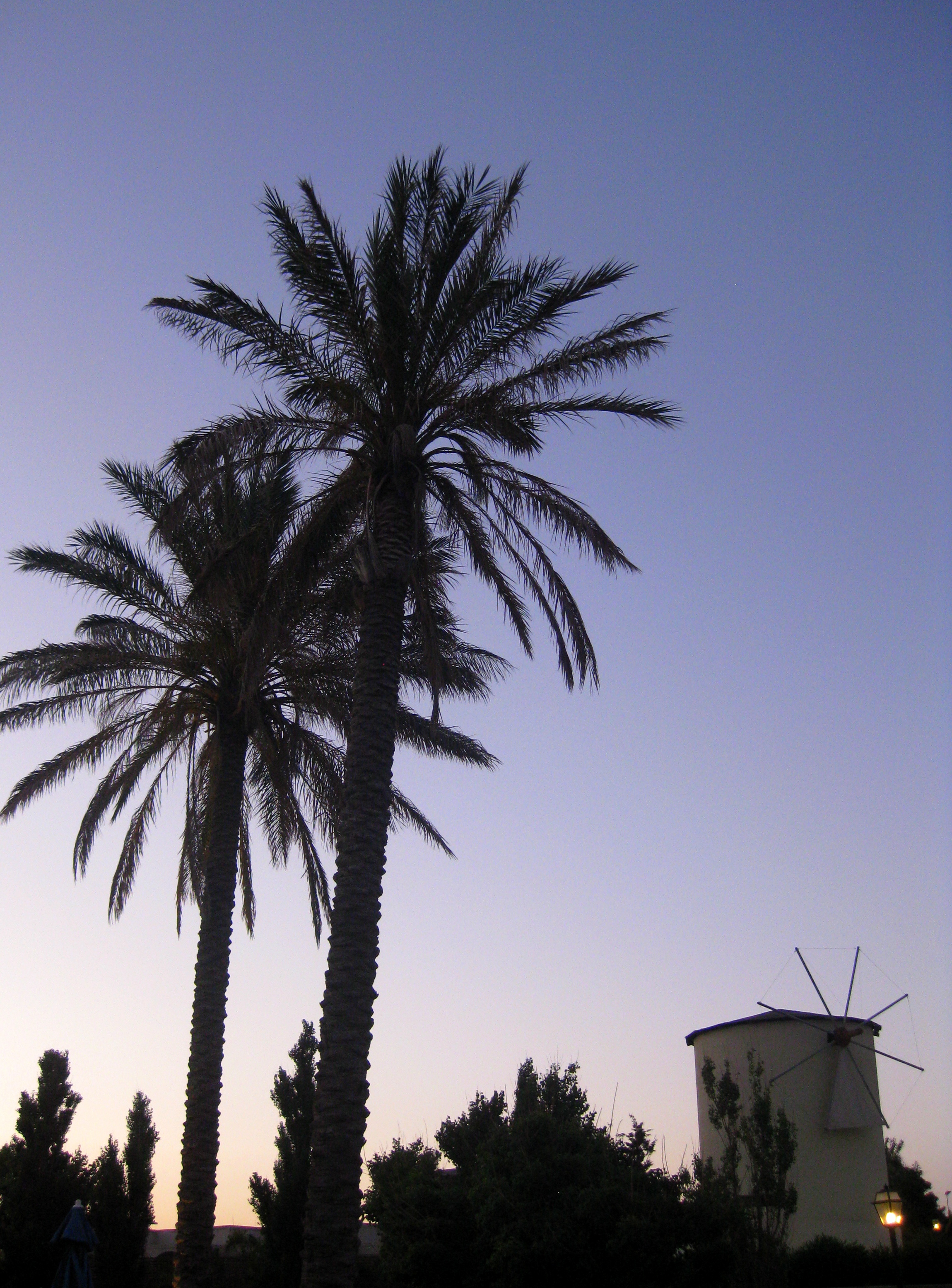
I’ve just got back from a week in Rhodes (or Ródos) with my mum.  The purpose of the trip was relaxation first-and-foremost, which was easily satisfied at our nice four-star hotel in Kolymbia on the east coast of the island.  The large pool was overlooked by palm trees; there was a good restaurant with a regular supply of grilled fish and nice Greek wine; and it was a two minute walk to the beach: perfect.  IMG_5054Days spent indulgently reading by the pool or swimming in the sea were interspersed with some (gentle) exploration of the island.  Ródos is the largest of the twelve Dodecanese islands in the east Aegean Sea and is actually much closer to Turkey than to the Greek mainland.  Having been occupied by the ancient Greeks, Persians, Romans and Turks, the island was taken in 1309 by the Knights of St John – a Christian military order originating from Jerusalem.  The Knights’ occupation lasted over two hundred years, during which time they fortified the island and saw off an attempted invasion from Egypt.  In the 16th century, however, they were defeated by Suleiman the Magnificent and the island fell back under Turkish rule.  The Ottamans stayed for almost four centuries, until Italy seized all of the Dodecanese isles in 1912.  Finally, in 1947, the island was reunited with Greece, becoming one of the country’s 227 inhabited islands.  No-one can claim that’s a boring history!

IMG_3449

On our first trip into Rhodes Town, the capital of the island – and indeed the whole region – it’s fair to say we got a little lost.  The old part of town, within the fortified walls, is divided into the Knight’s, Jewish and Turkish Quarters (though mathematicians amongst you might suggest that should be Thirds) and is criss-crossed with narrow, cobbled streets.  It didn’t help that I navigated us in through the wrong gate, taking us around the dry moat and in at the opposite corner to which I’d intended.  Thus every direction I gave from that point on was utterly wrong.  We still managed – somehow – to find the Palace of the Grand Masters.  And then you’d think with that bearing, I’d have got back on track.  But, no.

IMG_3229

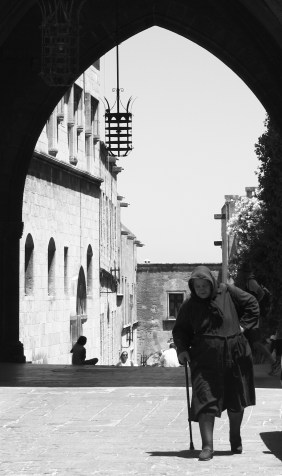
The Palace itself is an imposing medieval structure that looks like the sort of castle you’d see in a film like Prince of Thieves, full of dark corridors designed to be run down with a flaming torch to escape from Alan Rickman.  It doesn’t take long to walk around and provides welcome shade from the stifling streets outside.  Continuing through what I thought was the Knight’s Quarter, we came across the Mosque of Suleiman.  That’s when I gave up on the map.  We proceeded then to lose ourselves in the street bazaars for a while, occasionally scratching our heads at a familiar sight, but mainly wandering aimlessly, until we finally found ourselves on Sokrátous, the main thoroughfare.  And from there, we found the main square, Platia Ippokrátous, and confirmed what I’d known for a while – we’d been going in circles.  This proved an opportune time to stop for lunch in a café!  Sated by calamari and banana split, and on surer footing with the map, we explored some more of the Turkish and Jewish Quarters and the remains of the Episcopal Palace, then exited via Liberty gate to the harbour.  The seafront is really lovely – crystal-clear aquamarine water with little bobbing fishing boats, backed by high walls, windmills and forts.  Having walked the length of the harbour-front and feeling ready for a sit down and a swim, we headed back through town – unexpectedly finding Ippotón, a narrow cobblestoned street with the Inns of Italy and Spain and the French Chapel – and out via Amboise Gate, across a stone bridge over the moat to the bus station.

IMG_3072

On our second trip into town, we arrived late afternoon and went to the Archaeological Museum housed in the old Knight’s Hospital and then for an evening meal at Nireas fish restaurant on Sofokléous.  I’d read good reviews of the restaurant before the holiday and we were not disappointed – delicious king prawns, swordfish and an enormous Greek salad proved more than enough to share and the owner was a wonderful host, even if slightly preoccupied by restaurant politics and the impending descent of a film crew.  The town is beautiful at night, with fairy lights in restaurants and on trees and the city walls and forts illuminated.  I even managed to successfully navigate to and from the restaurant in the dark!

IMG_3399

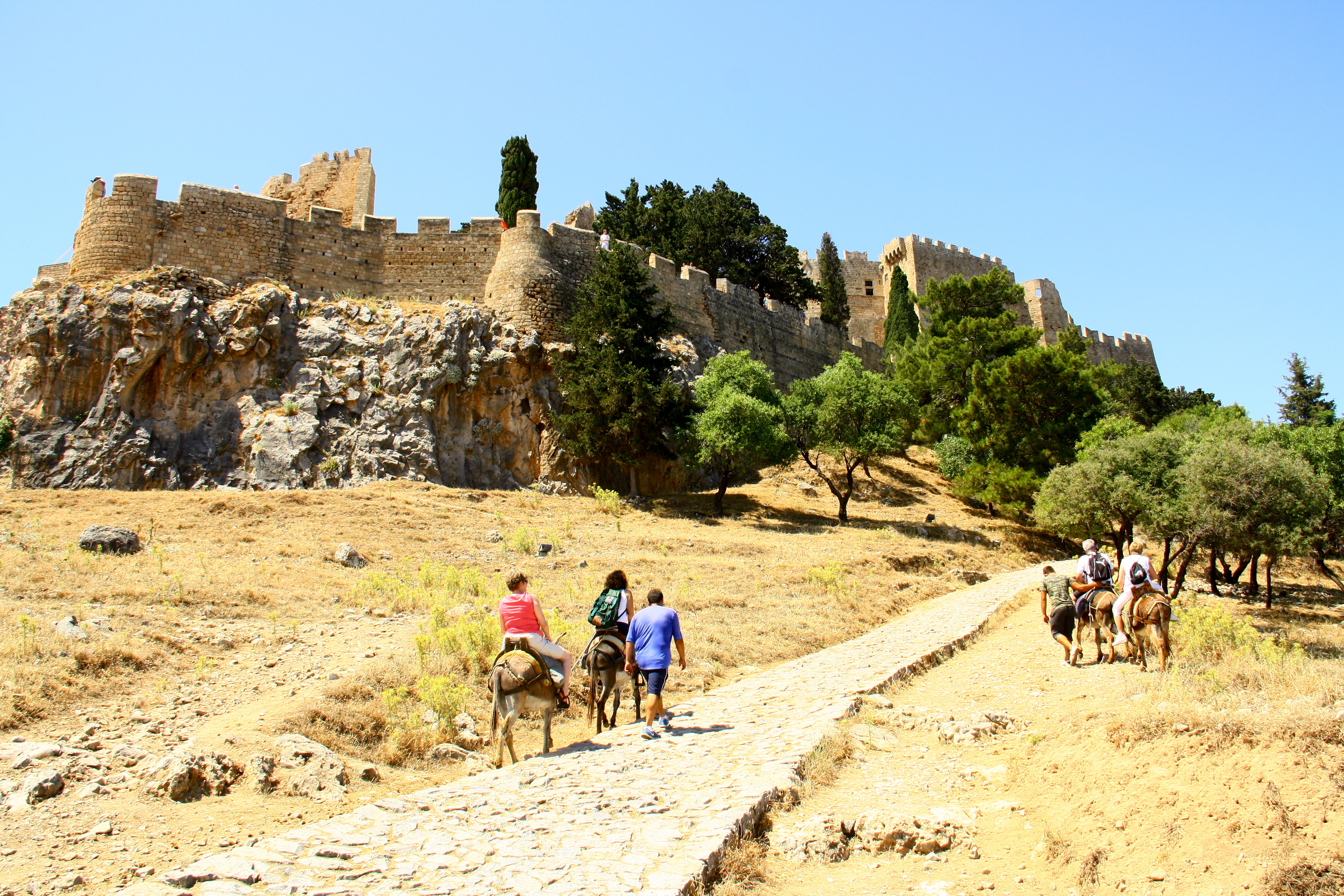
Later in the week, we spent half a day at Lindos, with its impressive (and very high!) acropolis, a 4th century BC temple with medieval fortifications added by – yes, you’ve guessed it – those Knights of St John.  Lindos was once one of the most important commercial cities in antiquity, with a population of 17,000.  Now there are only about 700 permanent residents and the town’s sole focus is tourism.  The local bus from Kolymbia took us to the foot of the hill, from where we hitched a donkey ride to the entrance of the acropolis.  The views from the top, down the Aegean coast and out towards Turkey, are splendid and Lindos itself, with its white-washed homes and little churches, is very pretty.  Having climbed to the top and spent some time around the Doric ruins, we spared our donkey the load and walked back down along the steep, dusty track, rewarding ourselves with a chocolate crepe and ice-cream in the town.

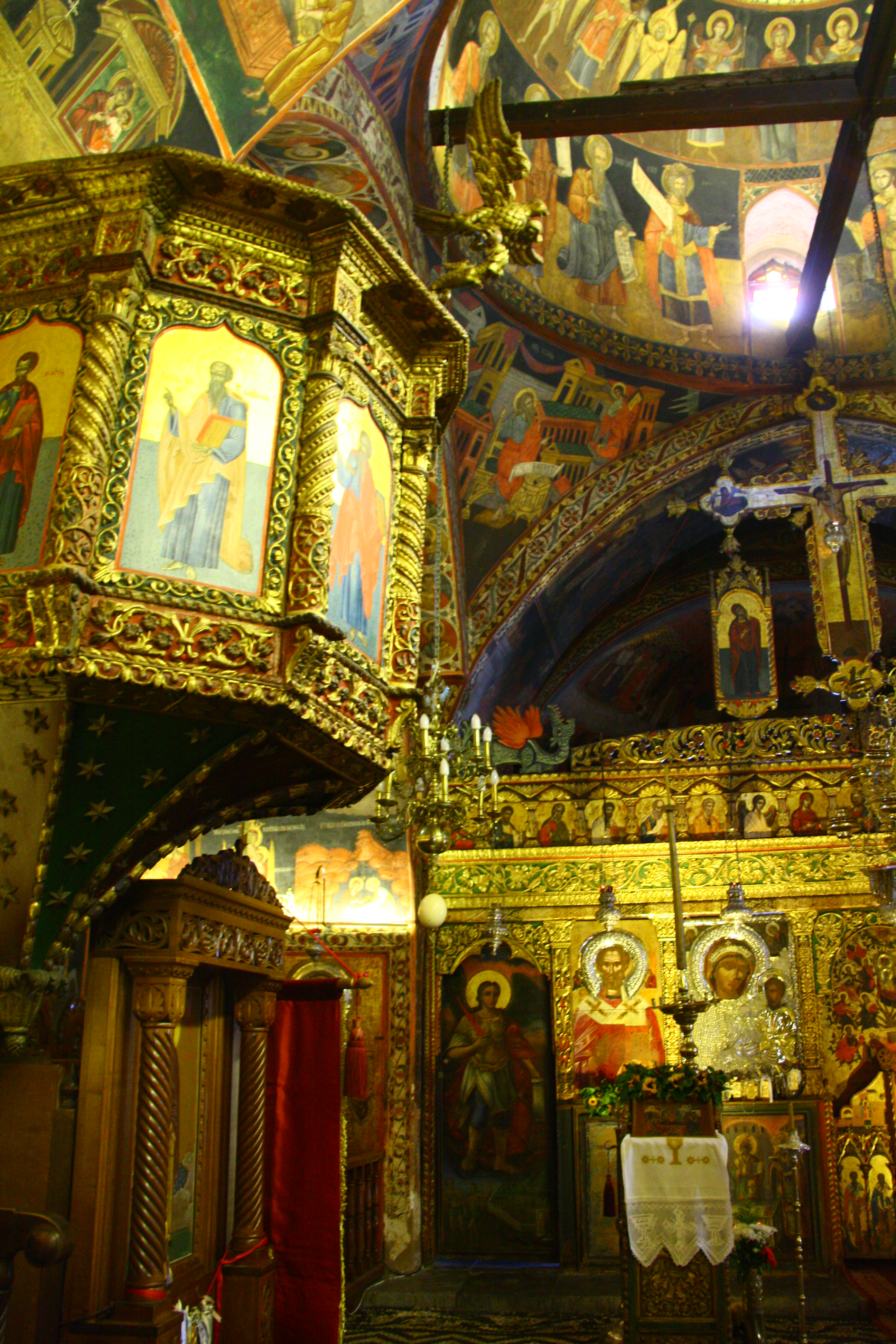
IMG_3407Our final trip was to Symi, another of the Dodecanese isles, taking its name from the nymph Syme of Greek mythology.  The island is a 90 minute boat ride from the port of Rhodes and is only a stone’s throw from Turkey.  It was the only island of the twelve to remain free during the Turkish occupation and as a result became incredibly prosperous, mainly as a result of the ship-building and navigation skills of its inhabitants and its extensive sponge harvesting.  At its peak in the 19th century, the small island’s population reached nearly 30,000.  Sponges are still exported all over the world, but now, with the decline of the industry and the economic downturn, the population lies closer to 3,000.  We first stopped at Panormitis on the south side of the island, where we were able to look around its famous monastery.  Inhabited now by only 8-10 monks, pilgrims nevertheless travel from all over the globe to pay homage to St Michael of Panormitis and the tiny chapel was well worth the stop.

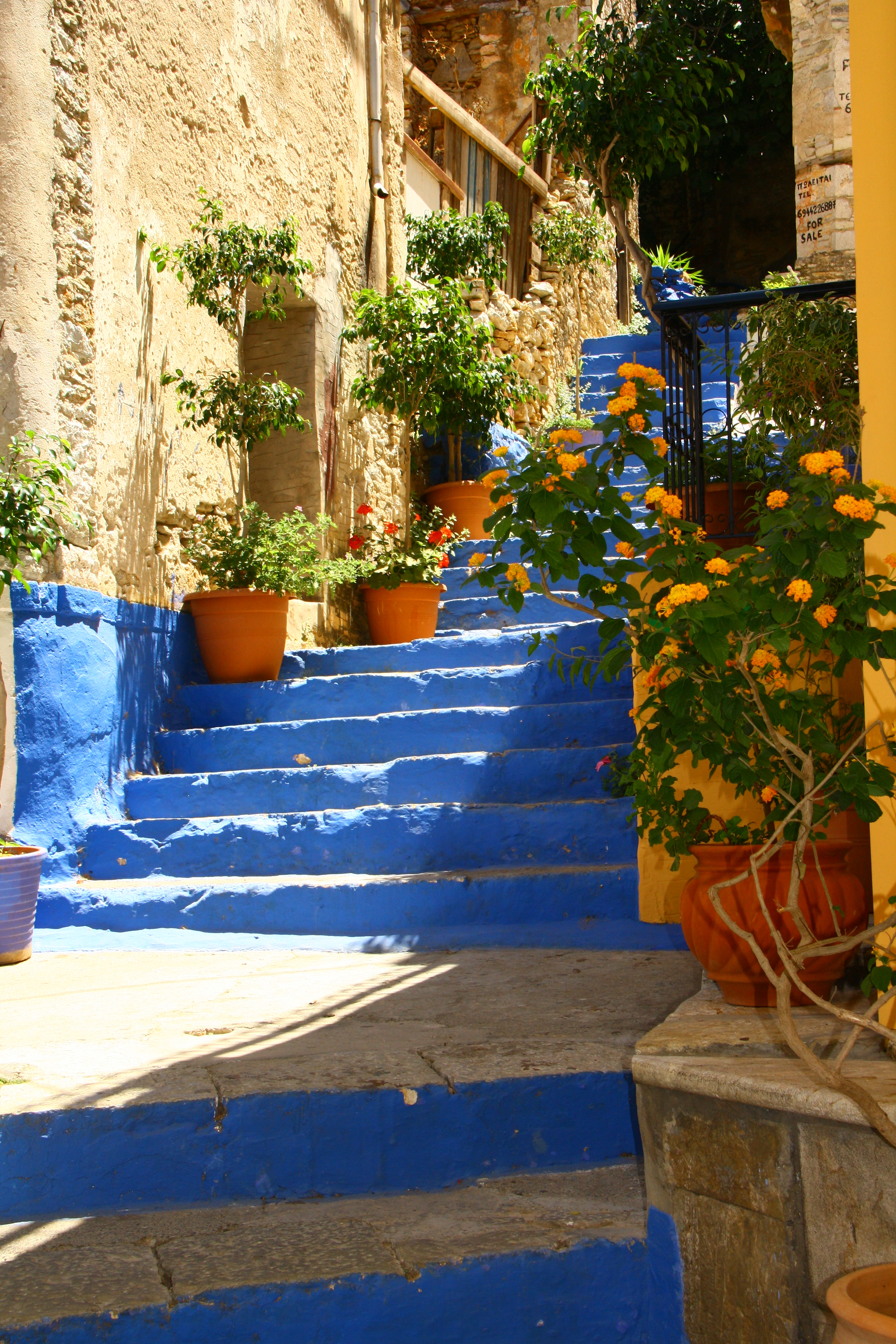
IMG_3535On the northern side of the island, a further 40 minutes by boat, the town of Symi is absolutely stunning!  Bright coral and citrus-coloured neo-classical houses tumble down the hills to the harbour, making the stroll around the two sweeping horseshoe-shaped stretches of waterfront an absolute delight.  It really is one of the most picturesque harbours I’ve seen, dotted with green and blue fishing boats and banked by an array of seafood cafés.  We ate sea bass and moussaka at restaurant right on the water’s edge, also called Nireas coincidentally.  Symi is named in Homer’s Iliad as the home of King Nireus, who fought in the Trojan War on the side of the Greeks, so there is no shortage of places bearing his name.  After a very pleasant couple of hours wandering the colourful streets and a stop for a paddle in the sea, we boarded the boat back to Rhodes.

I’d definitely recommend going to Rhodes for a short, relaxing break, particularly if you’re looking for a few interesting sight-seeing trips to mix things up.

IMG_3497Symi harbour

IMG_3423Rhodes Town port

The Pearl of the Adriatic

Dubrovnik, with its enviable position on the Adriatic coast, was once an important maritime port rivalling its Italian neighbours. It’s now more famous for its tourist trade, boasting one of the prettiest medieval centres in Europe and enjoying hot summer weather. A great place for a weekend break! The Croatian city – formerly under the control of Venice, later becoming independent of, but subordinate to, Hungary, and then part of communist Yugoslavia – is full of history and yet conveniently compact, with nearly all of the main attractions to be found down the Stradun, the main street, or a short walk from Luza Square. You can also easily visit the beautiful Elaphiti Islands on daily boat trips from the port.

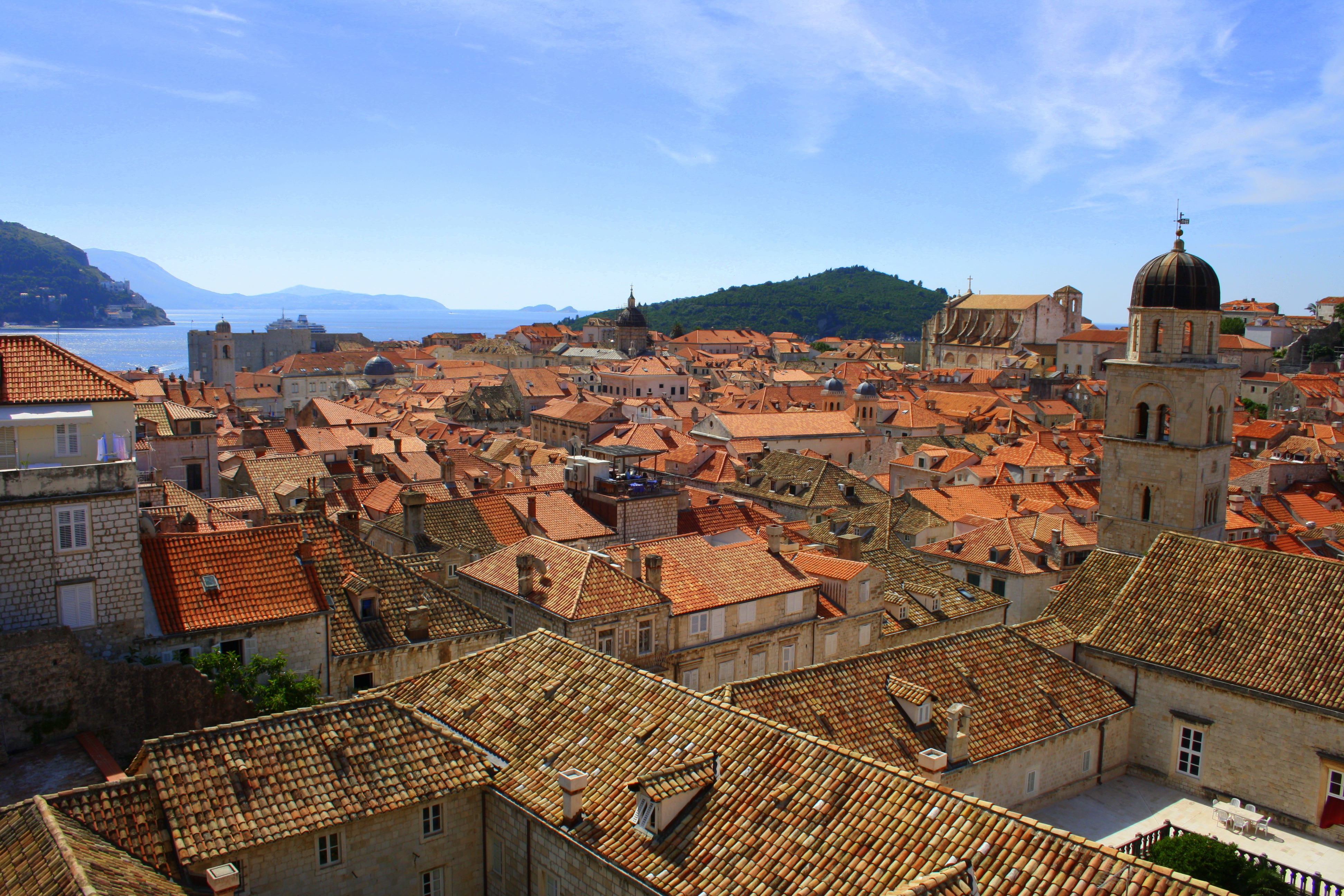
IMG_3580Our hotel was situated just outside the main city centre, at the far end of the Stradun by the draw-bridged Pile Gate, the main entrance to the Old Town. On our first day, after breakfast on the hotel’s sunny terrace, we paid our entrance fee and set about tackling the 2km walk around the city walls and ramparts. The walls are surprisingly intact, having been restored after the city sustained significant damage following the breakup of Yugoslavia and the seven month attack by Serb-Montenegrin forces in 1991. It’s not an easy walk, particularly in 33°C heat, and there are some quite steep sections, but the views are breathtaking. The terracotta rooftops, turrets and towers – and views across to the shimmering sea – are stunning. We spent a couple of hours just slowly ambling along the walls, stopping for the occasional drink in one of the strategically-placed cafés, pausing at Fort St. Johns on the south-eastern side of the city and Fort Minčeta at the highest north-western cornerand taking lots of photos.

Having come full circle, we sat by Onofrio’s Great Fountain and treated ourselves to an ice-cream, which quickly melted and ran down our arms. Next we looked around the Franciscan church, monastery and museum, before strolling down the Stradun and checking out the little boutique shops. At the opposite end of the street, Luza Square is a great spot for lunch. We picked a cute Italian place and hid in the shade enjoying our pasta. Surrounding Luza are the main historic attractions of the city: the Dominican monastery, Sponza Palace, the Rector’s Palace and Cathedral. We saved these for the following day, and instead walked out of the Ploče Gate and around the Old Port. It’s a great setting, the walls literally dropping away into the sea and the little boats and stone jetties being ideal places from which tourists and locals can enjoy a refreshing dip. We walked through the port and out along the coast, past the pebble beach on the edge of the city, in order to look back to the postcard-perfect view of the harbour. It was only right to stop for a swim in the sea, before heading back into the old town and seating ourselves outside a bar in one of the many little squares to watch Spain defeat the Netherlands 1-0 in the 2010 World Cup final.

IMG_3517

The next morning we went up Mount Srdj on the cablecar to enjoy the panoramic vista from the summit. The view of the city is stunning and you can see all the way up the coastline to the Pelješac peninsula. The ride only takes two minutes, but the feel at the top is very different from the bustle below, with stone and scrub land reminiscent of Nevada’s rocky terrain or the Australian outback and an almost eerie solitude.

IMG_3641We looked around deserted bunkers, took pictures from the giant stone cross and had a wander along the rim. Back in the city centre, we headed to Sponza Palace, which at various times has been a customs house, the state mint and a cultural centre, and now houses an art gallery. Tired from our exertions, we headed back for a swim in the hotel pool and a rest before dinner, then – chancing our luck – secured one of the best outdoor tables at (what I think was) a restaurant called Komarda outside the Ploče Gate. As twilight turned to night, the twinkling lights around the harbour, lapping water and sound of bat wings provided a beautiful setting for our seafood dinner. Our luck continued as we headed back into town to the sounds of a concluding open-air classical concert. The Stradun was full to bursting, torches along the street were aflame, and – as we made our way through the crowd – the clock tower lit up with cascading pyrotechnics and fireworks exploded in the sky!

IMG_2276

On our final day, we boarded a boat to the Elaphiti Islands – a collection of small islands in the Adriatic also known as the Deer Archipelago. There are a small handful of tour guides along the harbour, all charging a similar price and all going to the three inhabited islands: Šipan, Koločep and Lopud. The first stop was Šipan, 17km from Dubrovnik and the largest of the islands. We strolled the harbour, alongside the olive, almond and citrus trees, and had a swim in the sea. It was a glorious blue-sky day, as it had been all of our stay. Back on the boat, we enjoyed a grilled fish lunch from an onboard barbeque. I’m usually really squeamish about eating whole fish, finding it difficult to pick around the bones, but this was so delicious I was soon sucking the bones clean.

IMG_2420

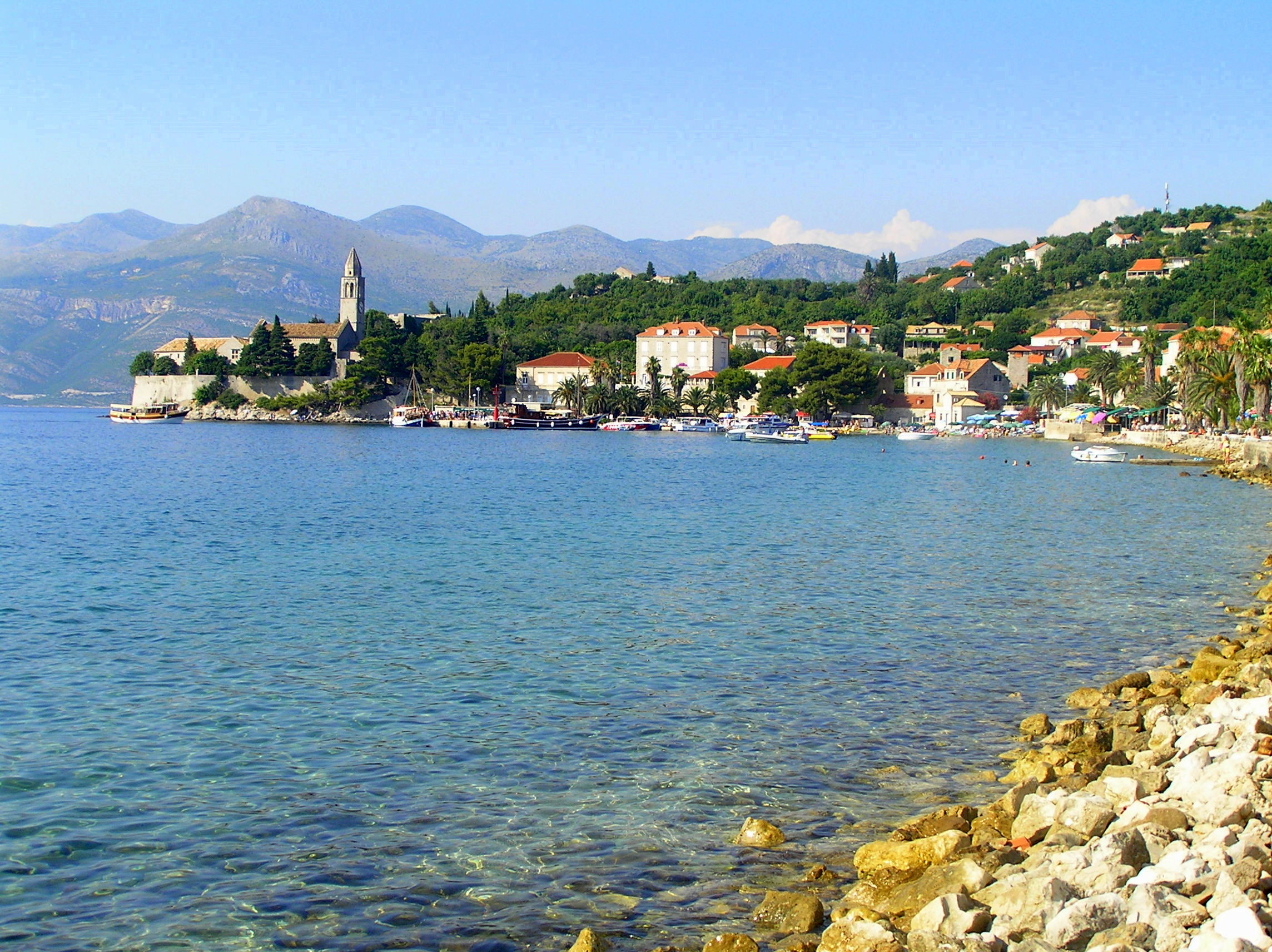
Our longest stop was at Koločep, which has two villages – Gornje Čelo and Donje Čelo – connected by a winding path that leads past small villas, gardens and olive groves, pre-Romanesque churches, and remnants of castles. We walked most of the 3km between the two, jumping aboard one of the golf-cart taxis near the end in order to leave time for a swim in the cove before we had to head onward to Lopud. Located between the other two, we had time enough here for a stroll around the beautiful bay, an ice-cream and a paddle in the sea, looking out at the island’s Franciscan monastery and the hills of the Croatian coast beyond.

I fell asleep on the boat trip back, feeling very satisfied with life. I’d recommend a mini-break in Dubrovnik to anyone. Go there now. Now!

OLYMPUS DIGITAL CAMERA

Jellyfish and Tim Tams

IMG_4113

Our friend Mark moved to Sydney a few years ago, seeking good weather and giant prawns.  I had always fancied a trip to Australia and we were keen to visit him, so in January 2011 we endured the 22 hour flight across the globe.  I say endured, but actually we were surprised by how painless the journey was.  I think it’s because you’re psychologically prepared and expecting the worst, but I’ve definitely been on more boring and uncomfortable flights.  After four films, half a book, plenty of naps and god knows how many meals, we arrived Down Under.  Our first couple of days were spent exploring the centre of Sydney.  We walked around the harbour, sat on the steps of the Opera House, frequented cafés in The Rocks, visited the Royal Botanic Gardens, and enjoyed a free open-air music festival in Hyde Park.  A very pleasant start to the trip.
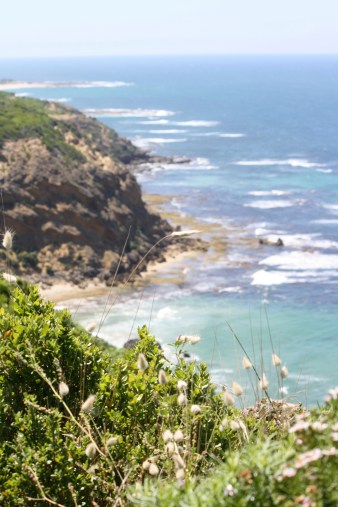
IMG_4243After shaking off the jetlag and getting over the initial shock of paying £8 a beer, we re-boarded a plane and headed to Tasmania.  Mark, his new girlfriend (now fiancé) Gill, and fellow Londoner Andy were waiting for us in Hobart, the state capital.  A few factoids for you: Tasmania is the 26th largest island in the world; one of the closest inhabited places to the Antarctic; and has an extremely homogeneous population, built up from the families of convicts and their guards alongside nine indigenous Aboriginal groups.  The island was originally named ‘Anthony van Diemen’s Land’ by the Dutch explorer Abel Tasman in the 17th century, in honour of the sponsor of his exploratory trip (shortened to Van Diemen’s Land by the British), then later renamed Tasmania in recognition of Abel.  Unfortunately, it was pretty grey and wet for most of our time there, so we didn’t see it at its best.  A real shame, because the landscape is rugged and beautiful.  In particular, I’d have liked to have seen the Bay of Fires illuminated by the sun, with shimmering turquoise water and glittering white sand.  As it was, the sea was a dull, muddy colour, reflecting the dark clouds, and I had to zip up my hoodie to keep out the chill.  This didn’t stop Mark and Andy from having a dip, though they did look quite blue when they came out!
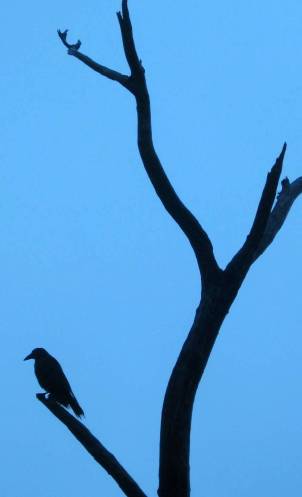
bird on branchWe pootled around the island in a hire car for a week, calling in at various coastal towns and driving through rural beauty-spots like Patersonia, where the people asked after their leader Adrian and we regaled them with stories of his successes in academia.  We ate in some less than salubrious places – though the steak the size of my torso in Sheffield was an experience I wouldn’t have wanted to miss – and narrowly avoided a fight with some Aussies while watching an Ashes game in a local bar-come-bingo-hall.  The highlight of the trip was Cradle Mountain National Park, where – donning our rain macs and walking boots – we circled Lake St Clair, admiring the waterfalls and lush vegetationor what we could see of it through the haze and drizzle.  It was particularly exciting to spot a wallaby sitting lazily in the rain, not fazed in the slightest by the ‘oohs’ and ‘aahs’ around him.

Frustratingly, I came down with a bad cold in Launceston.  I was less than impressed with the city anyway – despite Paul’s efforts to look on the bright side, encouraging me to “look up” where apparently the officious, grey, concrete buildings were somehow prettier, I wasn’t feeling it.  So the snot really didn’t help.  And my coughing and sneezing didn’t win me any friends when, having said goodbye to Mark and Andy for the time being, we caught a plane to Melbourne to start our trip down the Great Ocean Road.  Luckily, my cold eased and I was able to enjoy the stunning scenery as Paul drove us along the coastal highway.  Our first stop was the Otway Fly “Treetop Adventure” in the rainforested area near Geelong.  Those familiar with the similar set-up at Kew will understand the deal: metal walkways and observation desks high above the forest floor.  We drove on to Apollo Bay that evening and stayed in a motel near the beach.  The bay was pleasant enough, but not the idyllic image I’d had of this stretch of coastline.
IMG_4286

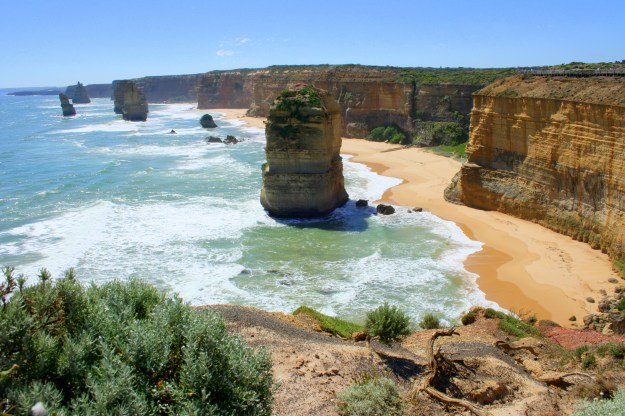
Luckily, I wasn’t to be disappointed the next day, as our journey took us to the Twelve Apostles via Cape Otway.  The lighthouse on the cape is picture-perfect and the eucalyptus trees along the road were full of koalas.  I love koalas!  I was so excited, and kept making a bemused Paul stop so that I could jump out to get a better look and take photos.  The mammoth flight from the UK was worth it just for that stretch of road!
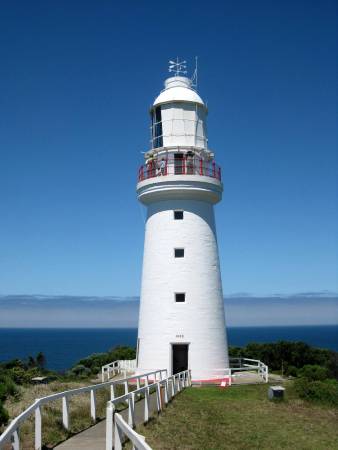
IMG_0717And the Twelve Apostles were spectacular – a beautiful set of limestone stacks off the shore near the Port Campbell National Park.  We dropped down onto the beach and strolled along in the 30° heat, feeling very self-satisfied.  The day ended with a stay at Oscars in Port Fairy, by far the best B&B of the trip (and possibly the best we’ve ever stayed in).  Pricey, but worth it for the “gourmet breakfast” alone.  Port Fairy is a charming little town, where the pace of life is slow and everyone seems to have their own boat moored at their own jetty and frequent the same small restaurants.  We bought fish and chips and ate them by the water as the sun set.  Aah, happy days.

On the way back to Melbourne, we spent a few hours at the Tower Hill game reserve – a protected conservation area inside a dormant volcano.  Wild emus, kangaroos, birds, koalas and echidnas roam the area and we had a great time stalking them quietly through the bush and around the lake.  Back in Melbourne, we explored the city and ate in some of the most amazing restaurants.  Cumulus Inc. serves delicious oysters, charcuterie and fish dishes in a very slick art space on Flinders Lane and MoVida Aqui on Bourke Street is one of the best tapas restaurants in the world.

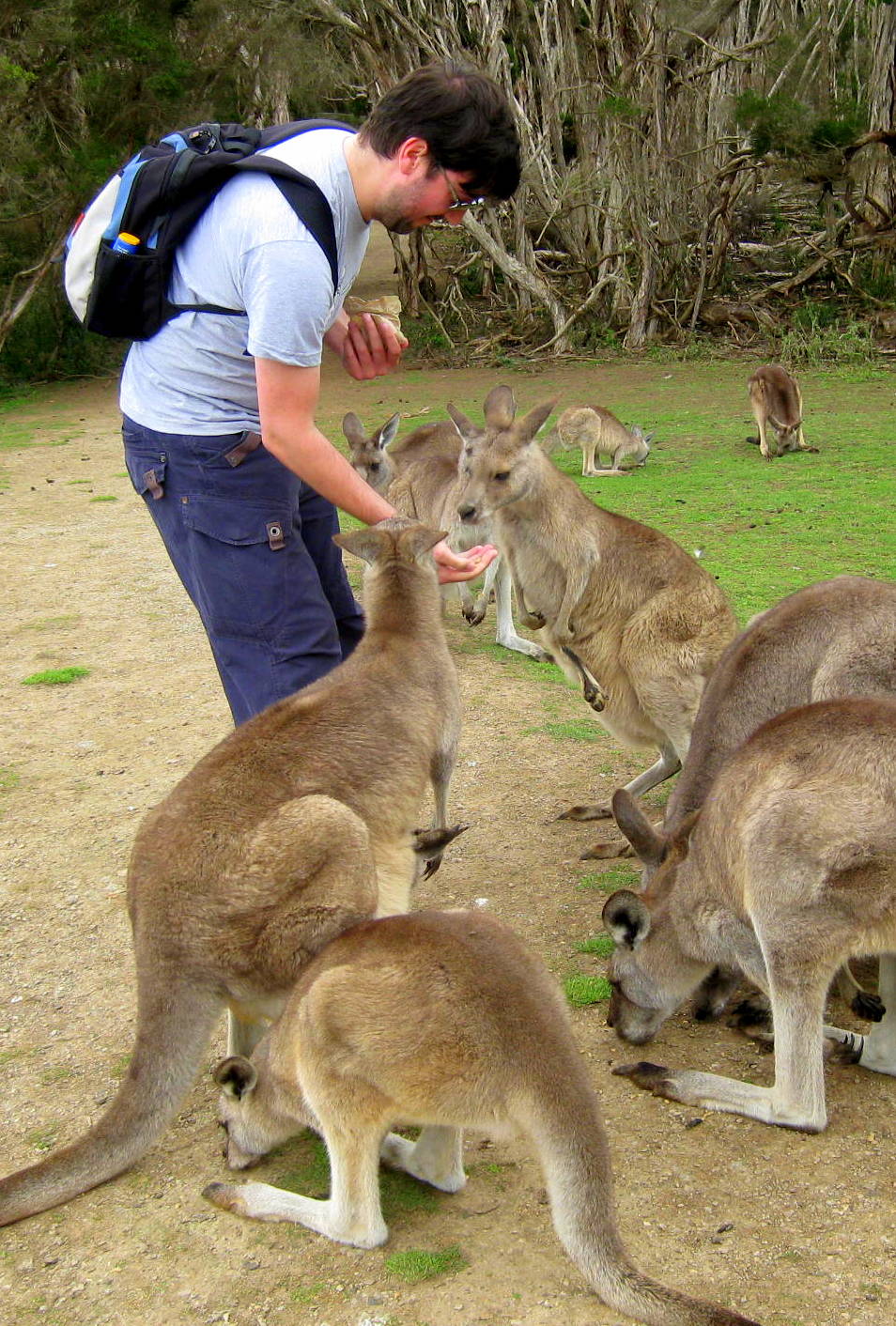
IMG_0816Determined to see the famous penguins on the beach, we also spent a day on Phillip Island.  A 90 minute drive out of the city and linked by road to the mainland, the island is a popular holiday destination for Australians, with beaches, walking trails, surfing, a wildlife park, visitor centre, and the all-important birds.  We’d not read anything about the park in advance and it turned out to be really good fun.  Tons of indigenous animals – red kangeroos, wombats, tasmanian devils, kookaburra, emu, wallabies, cassowaries, dingos – are to be found, many of which roam freely and are happy to be fed by the hand.  At one point, Paul found himself surrounded by eight kangaroos vying for his attention – and they are pretty darn big and powerful up close!  We also took a stroll along the boardwalks around Swan Lake, spying unusual breeds of bird, and wandered around the coves spotting seals offshore.  The main attraction, though, is the foundation set up to protect the island’s colony of 30,000 little penguins.  As the sun began to set, we drove to the headland for a prime spot on the beach and watched as hundreds of them popped out of the sea, waddled across the sand, and made their way up the cliffs to their burrows.  Very sweet; I just wish there’d been fewer people.  Damn those tourists!  Tsk.

Our next stop was the Northern Territory.  The three-hour flight to Alice Springs reminded us just how vast the country is, and when we touched down we better appreciated how climatically, culturally and scenically diverse it is as well.  Alice is a tiny, red, hot place, with the feel of a frontier town.  Straddling the dry Todd River, it is essentially just a few streets of shops and bars, outside of which sit homeless Arrernte Aborigines mistakenly forced to assimilate with the modern world and now spending their days begging and drinking.  The town stands awkwardly alongside the large ‘luxury’ casino hotels on the outskirts, where holiday-makers assemble before their trips into the country’s Red Centre.
IMG_0867

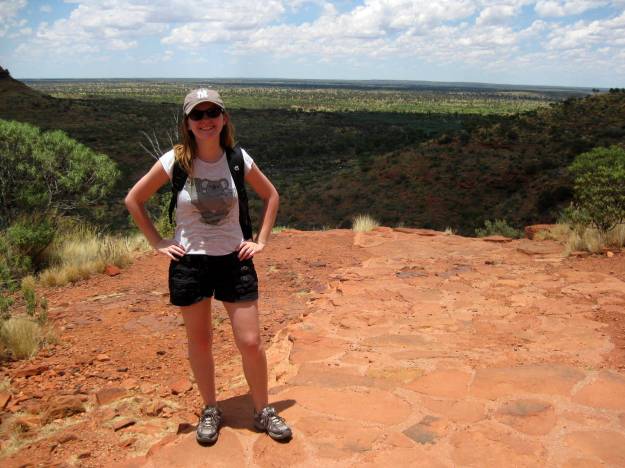
Being two such tourists, we were soon headed into the outback down long, deserted, dusty roads.  Passing the MacDonnell Ranges and then vast areas of red, rocky, almost moonscape land, we arrived at our accommodation for the night – a small motel with a liberal splattering of ‘Beware: Spiders’ signs.  I did spot a ginormous one in the ladies, but bravely ignored the panicked yelps of other guests and inched my way under the web to use the facilities.  Spiders (including the Funnel Web, TrapDoor and Bird-Eating (yes!) Tarantula) are only some of the many things trying to kill you in Australia – also to be avoided are the crocodiles, snakes, the Great White Shark, cassowary, and Box Jellyfish (the deadliest creature, bar none, on the planet).  Good to be kept on your toes.  The next day we drove to Watarrka National Park and braved a 12 mile hike around the rim of King’s Canyon.  The walk started with a steep climb up ‘heart attack hill’ and went downhill – figuratively speaking – from there!  Technically our guide shouldn’t have allowed us to make the trek in the desperately uncomfortable 42° heat, but – even though my asthmatic lungs have never struggled so much – I was really glad to have done it.  The views were incredible, the path rugged and adventurous, and we enjoyed a refreshing dip in a waterhole half way round.  I’ve never felt as completely isolated and far from civilisation.  And it only took three beakers of electrolytes and four bottles of water to see me right at the end!
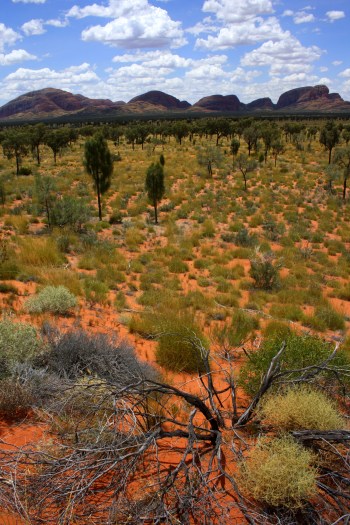
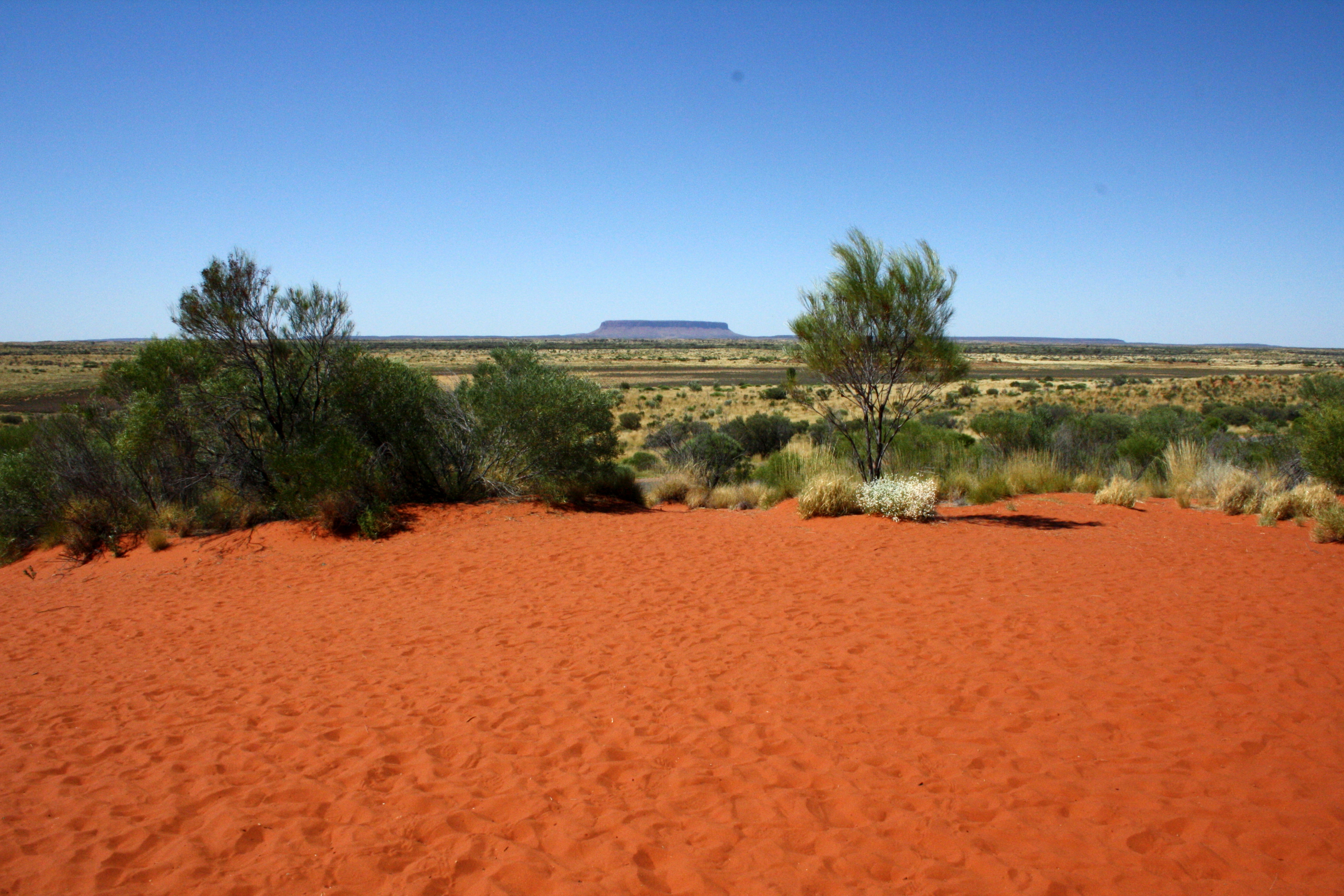
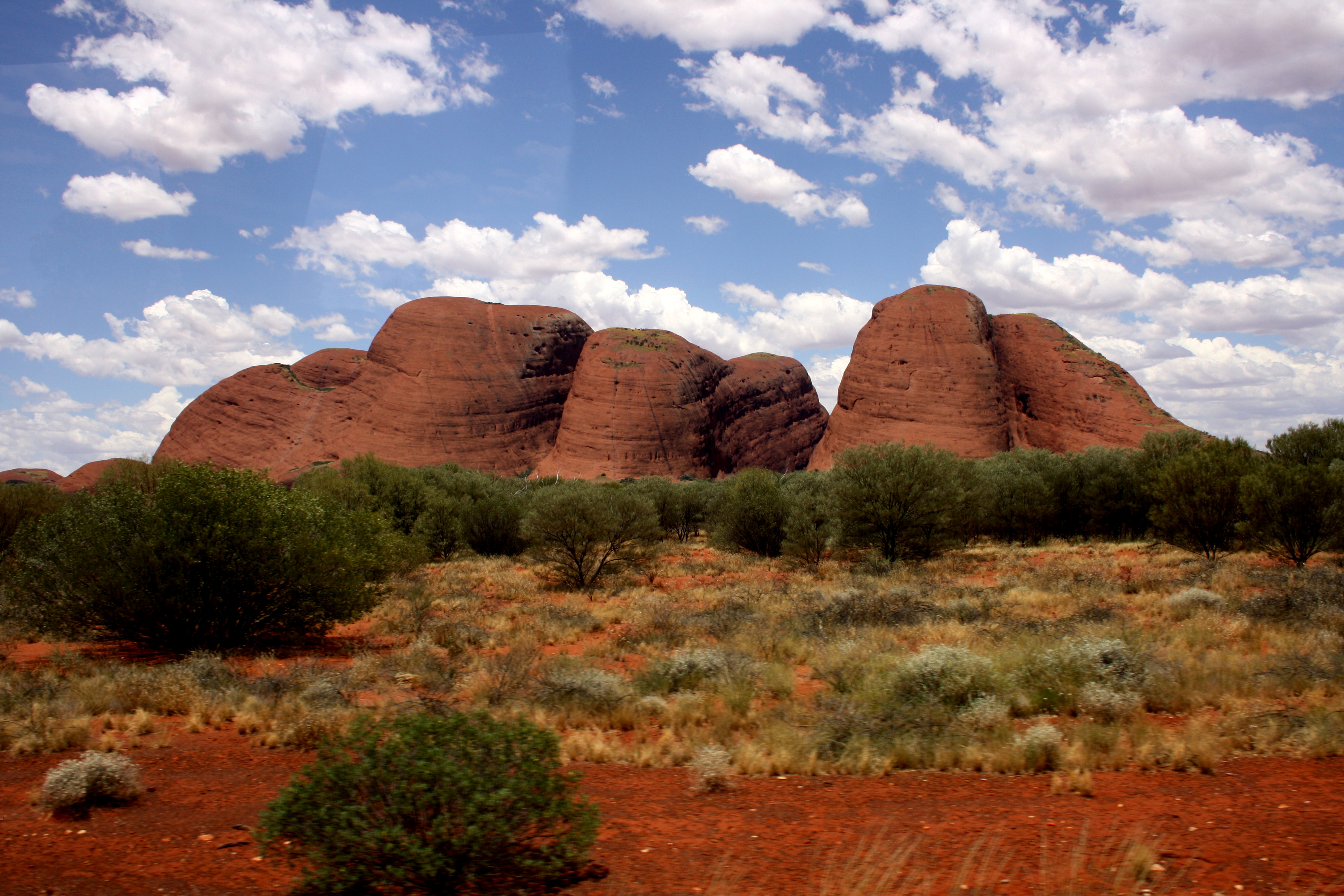
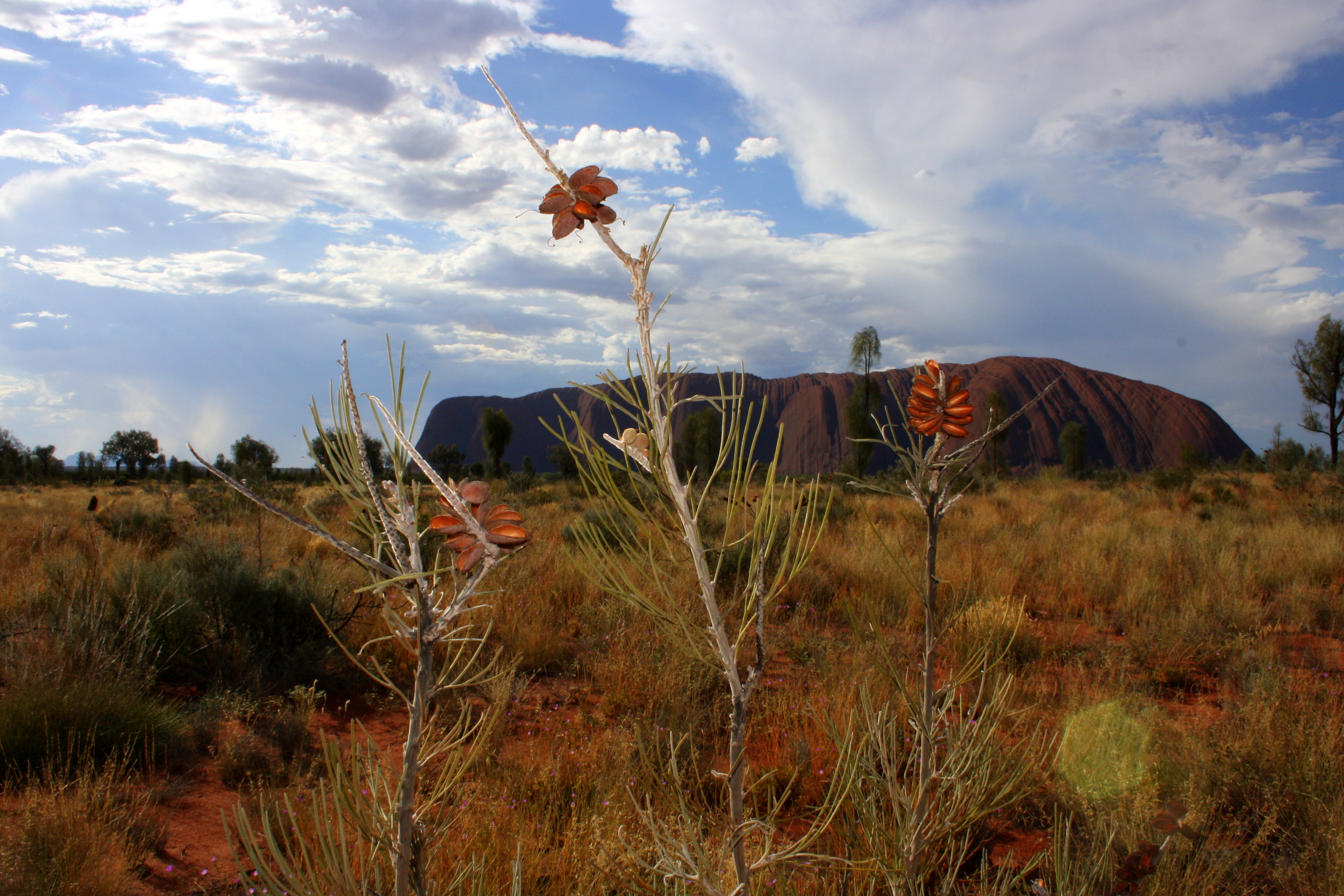
IMG_4559Finally, over 300km from Alice, we arrived at Uluṟru-Kata Tjuṯta National Park.  Some more factoids for you: Uluru, better known in the west as Ayers Rock, was created over 600 million years; it originally sat at the bottom of a sea, but today stands 300m+ above ground, the result of erosion and shifting climates.  It is approximately 3.6kms long and nearly 2kms wide and the oxidation of its iron content has given it its orange-red colour.  The Anangu Aborigines who ‘own’ it have been in the area for the last 10,000 years and currently lease the land to the Australian government.  The nearby Kata Tjuta – or Olgas – are about the same age and are thought to have originally been one massive monolith, as opposed to the 36 separate domes they are today.  Our guide took us around each site, showing us the rock art in little nooks and caves and explaining the fascinating Tjukurpa cultural heritage, with its creation myths and ancestral journeys (or ‘songlines’).  I was even starting to find plausible the account of a god-like worm creating the cracks and crevices on the surface of the rocks.  The area is beautiful and the day ended with a barbeque looking out at the setting sun behind Uluru.  The best part of the trip by far.

IMG_1104Our time in Australia concluded back in Sydney.  We stayed in Mark’s flat in Balmain, a pleasant ferry ride from the centre, and explored more of the city.  Thanks to Gill’s excellent hosting, we enjoyed a lovely picnic and swim at Chinaman’s Beach on ‘Straya Day, had fish and chips on the beach in Manly, and were pointed in the direction of the best boutique shops and cafés in Newtown and Glebe.  We visited the aquarium; had a super-sized seafood lunch at the fish market; enjoyed an Annie Leibovitz photography exhibition at the Museum of Contemporary Art; ate at the fantastic Rockpool restaurant on George Street; walked along the coast from Coogee to Bondi; and visited the freaky Luna Park funfair.  And on one of the days we borrowed Mark’s car and drove out to Katoomba to see the Blue Mountains, where we dangled precariously from a cable car high above the Jamison Valley, with stunning views of the Three Sisters and beyond.

I also experienced my first one-day international cricket game: England vs Australia at Sydney Cricket Ground.  I learned that any sporting outing is made immeasurably more pleasurable when you are wearing thongs (flip-flops) and sunhats and have an esky (coolbag) full of strawberries, Tim Tams and cider.  On days like that I can understand why you might uproot yourself and move to the other side of the world.  The 22 hour flight home reminded us why we couldn’t do it, but we’ll definitely be back one day to experience more of the country and visit the soon-to-be-married couple and their Aussie brood.

Next time: Aussie critters and shots of mighty big rocks…

Italia Uno: Liguria

Last time I was talking about how much I love London. This week I genuinely saw a woman point to a 6cm2 space near the door of a bulging, sweaty tube of office-bound commuters and exclaim indignantly “Look, there’s plenty of room!” as the doors shut in her face. It’s a wonderful city, no doubt, but sometimes it’s useful to be reminded why it’s important – nay, essential – to escape regularly!  So, this time I return to the theme of weekend breaks

OLYMPUS DIGITAL CAMERA

My good friend and ex-housemate Rob spent a few months teaching English in Sestri Levante in 2006.  The small town in Liguria has become a favourite holiday destination for Italians, with two beaches and lots of nice restaurants, so it was pretty shrewd on his part.  It’s also an area known for pestosay no more, Nick was there.  So one weekend in spring, Steph, Molly, Nick and I boarded an Easyjet flight for Genoa.  I’m not entirely certain now, but I think it was my first Easyjet experience.  I definitely remember thinking what a scrum it was to get on the plane and how terrible the seats were, and given that’s long since failed to surprise, I suspect I was a Stelios virgin at the time (if you excuse my mixed airlines).  I also remember Steph and Molly declaring themselves fearful fliers, and being slightly bemused that Molly showed no signs of being such – chatting animatedly throughout – while Steph left fingernail marks in my hand.

OLYMPUS DIGITAL CAMERAHaving landed in Genoa, we caught a bus to the train station, negotiated the purchase of tickets – revealing our collective ignorance of the language – and travelled onward to the coast.  Rob was sharing a flat on the edge of the town centre and, after picking up his keys and dropping off our stuff, we nipped to the supermarket for provisions.  Nick couldn’t get over how nice the Italian tomatoes were (to become a recurring theme of our stay) and, after a delicious spread of cheeses, hams, bread, olives and fruit, we headed to the beach.  Sestri has two bays: Baia delle Favole (Bay of Fables/Fairy Tales) and Baia del Silenzio (Bay of Silence) on either side of a peninsula.  It was a little cloudy and only some of us had packed our swimwear, but Nick decided a dip was in order while we waited for Rob to finish work and join us.  Rolling up his jeans, he waded out looking for crabs.  The clothing precautions proved futile, however, as he was soon up to his waist and gave up completely when Rob joined him in the sea.  We got some strange looks from the locals as we headed back to the flat more than a little sodden!

The bars and restaurants are great in Sestri.  It helped, of course, that we had a temporary resident with us, who was now conversant in Italian – particularly the Italian necessary to decipher food and drink menus!  We ate in a great trattoria that night – clam linguine, octopus, musselsand pesto pasta for Nick, of course!

OLYMPUS DIGITAL CAMERA

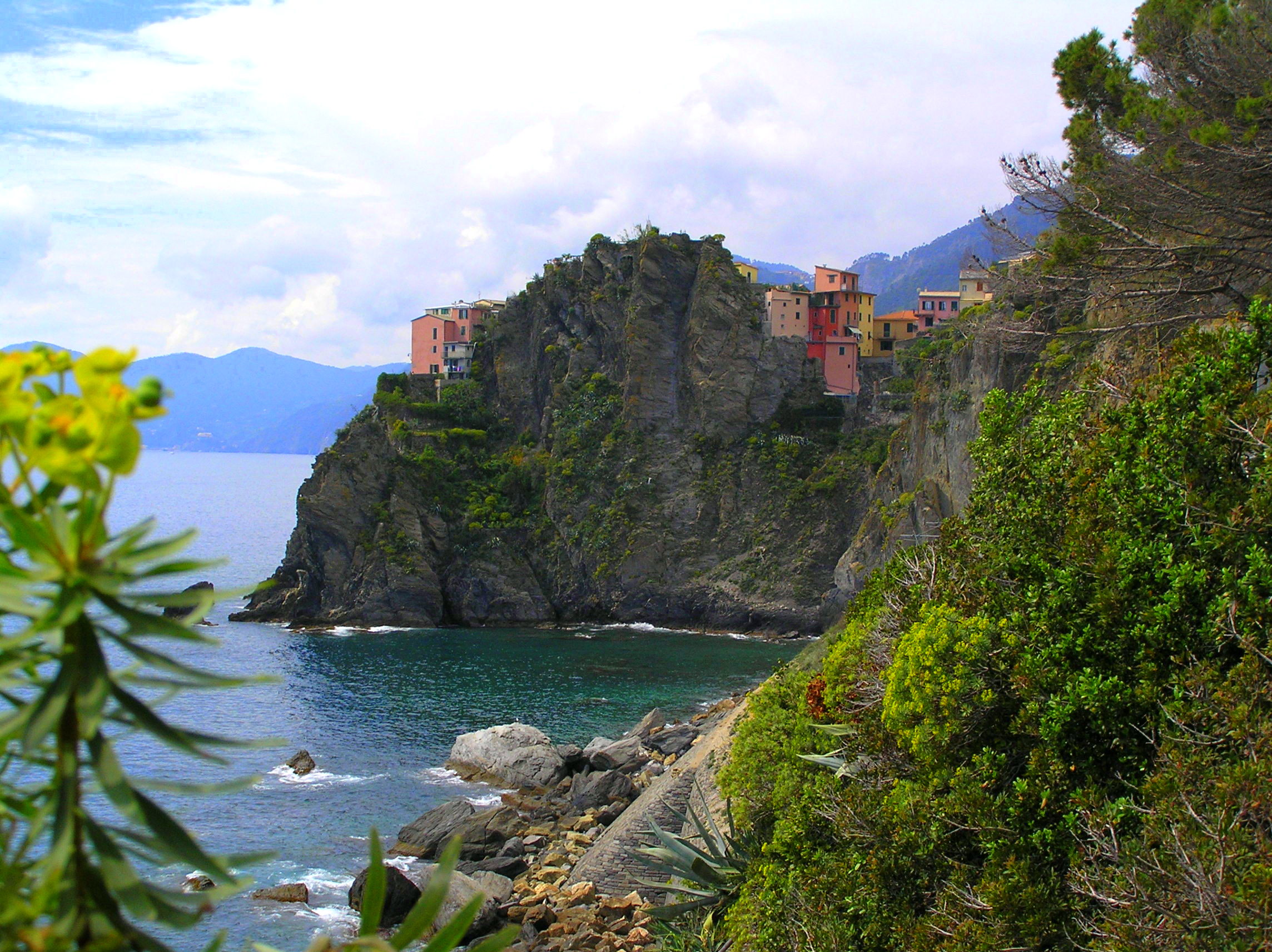
The next day we got up early and headed to Cinque Terre (‘the Five Lands’).  This gorgeous stretch of coastline, with its five picture-perfect villages, was wisely set up as a protected marine area in 1998 and as a national park in 1999.  It’s now a UNESCO World Heritage Site and I would recommend it to anyone in a heartbeat.  We caught a train to the furthest point, the village of Riomaggiore, where we had lunch at a sweet little trattoria high above the rocky bay.  Branching out, Nick had pesto lasagne.  Sated, we next walked part of the Sentiero Azzurro trail connecting the five villages.  It was a hot day, but there was a nice breeze from the sea, and the walk past the second hamlet – Manarola – and onward to Corniglia, was beautiful.  The trail literally winds along the edge of the cliff, with the clear blue sea below and beautiful flowers and cacti clinging to the rocks.

OLYMPUS DIGITAL CAMERA

Skipping Vernazza, we jumped back on the train to Monterosso while it was still warm and light and spent a couple of hours chilling on the beach.  Monterosso is, in my view, the least picturesque of the five, with the train line running along its front, but it was still a great place to lie with a book and an ice-cream.  The sea was warm too – a lot warmer than the day before in Sestri – and everyone had their bikinis and trunks this time!  We returned to Vernazza for tea, just as the sun was starting to dip and the pretty harbour was bathed in golden light.  I love that time of day, especially when you have the smell of suncream on your skin, salt in your hair, your cheeks are glowing and you’re looking forward to dinner.  We ate in Belforte, a restaurant cut into the cliff, with its tables precipitously perched overlooking the sea.  The food was delicious and we looked out on a stunning orange and pink sunset as we polished off our dessert.  A perfect day!

OLYMPUS DIGITAL CAMERA

The Sunday was spent pottering around the shops and bars in Sestri.  In the evening we ate in a great pizzeria, Steph having now learned how to pronounce the Italian for peach and thus avoiding ordering fish juice for a second time and Nick having learned how to say “definitely no anchovies”.  Our trip ended with cocktails in the rooftop bar of Hotel Vis a Vis, enjoying the great views of the peninsula with the twinkling lights along the coast.  Viva l‘Italia!

Andalucía

Seville is big. It’s the fourth largest city in Spain. It was founded by the Romans, occupied by the Moors, and latterly conquered by the Christian King Ferdinand III in the 13th century. The city – like much of Andalucía – is now an exciting mix of Gothic, Moorish and Renaissance architecture. So: it’s big and has lots of interesting things to see. Not a great idea to attempt to cover it in two days, then. But that’s what I did. Actually, my trip – in September 2006 – took in Córdoba and Granada as well. So, it was actually an attempt to cover the highlights of Andalucía in four days. Much better!

We stayed on the outskirts of the old quarter, a 30 minute walk to the imposing Cathedral of St. Mary.  Interestingly, for those of you paying attention, on its completion in the 16th century St. Mary unseated Aya Sofya as the world’s largest cathedral (see previous post for more on Istanbul).  Other interesting facts: it is the burial site of Christopher Columbus and its famous bell tower – the Giralda – was originally a minaret of the mosque that stood on the site.  There are ramps inside the Giralda, rather than stairs, so that the muezzin could ride on horseback to the top to call the people to prayer.  Don’t say I don’t try to teach you things!

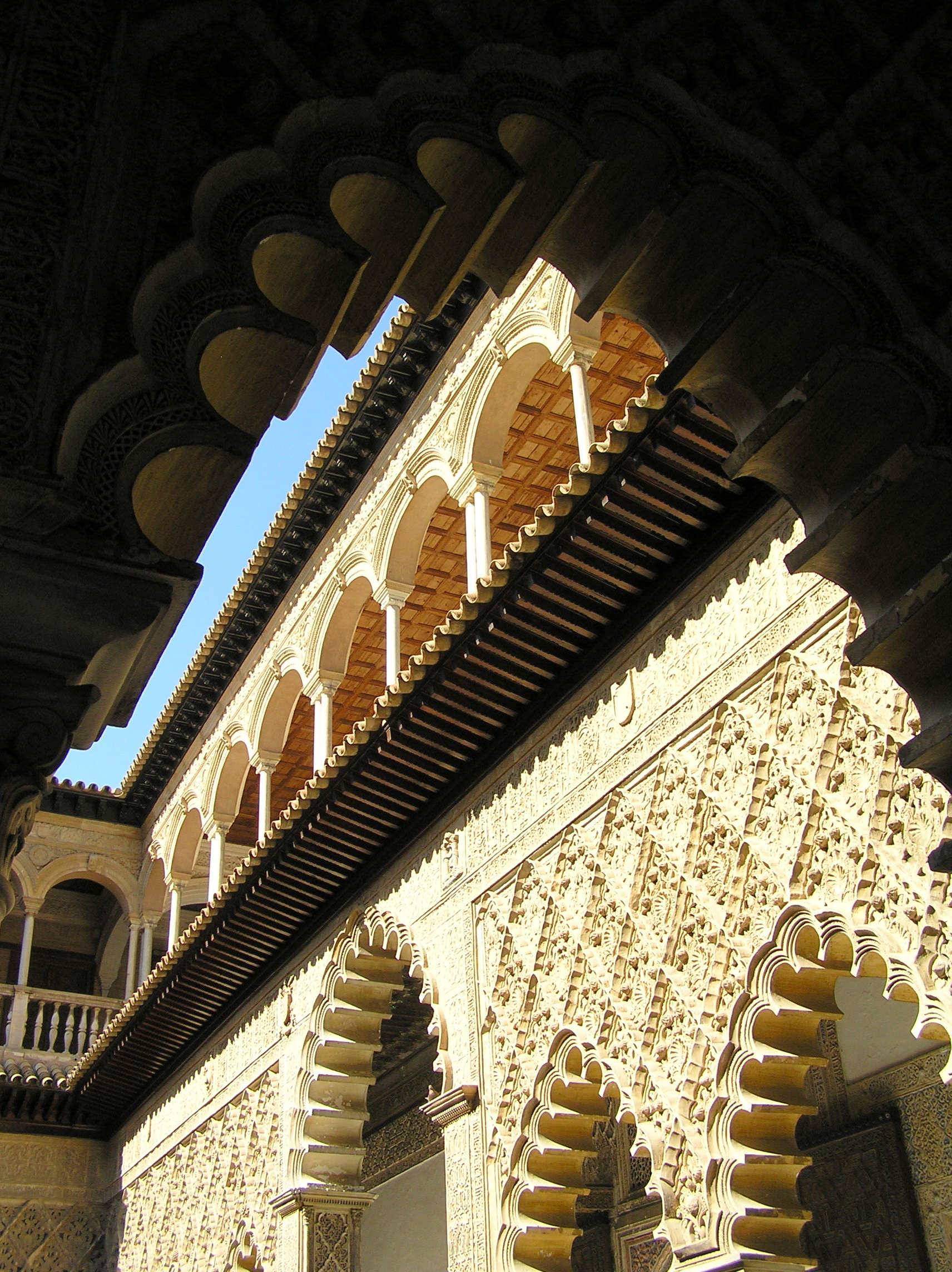
OLYMPUS DIGITAL CAMERAAs impressive as the cathedral is, the Alcázar is more so.  The palace is the oldest still in use in Europe (being used by the Royal Family when they visit the city) and is a beautiful Mudéjar complex.  The Mudéjar were the Moors who remained in Iberia after the Christian conquest and the palace started life as a Moorish fort before being enhanced by subsequent monarchs in renaissance style.  It’s beautiful.  Archways, terraces, courtyards, gardens, and water features make an intricate yet peaceful compound.

We also explored the expansive, and cooling, Parque de Maria Luisa, a lovely area that contains Plaza de España and other monuments of the 1929 Exposición Ibero-Americana (World’s Fair), and we walked along parts of the Guadalquivir River, beside which stands the Torre del Oro watchtower.

OLYMPUS DIGITAL CAMERAAfter all that sight-seeing (well…before, in-between, after, anytime we could really!) we ate in some amazing tapas bars and restaurants.  I can’t remember the names of them all, unfortunately, but I do remember the one I treated my dad to on his 50th birthday.  Bar Eslava, located in a pretty square in the San Lorenzo district, had been recommended by my friend Helen who lived in Seville for a short time.  I admit to being a little dubious when we passed earlier in the day to discover it was very small and completely empty, but I’m glad I kept the faith.  When we returned in the evening, people were queuing out of the door and the staff were run off their feet.  The menu was only in Spanish and we couldn’t decipher a word, so we just put our trust in the waiter and asked him to start by bringing us six things to try.  The best tapas I’ve ever had (sorry Chris!).  Pork cheek in sherry, marinated anchovies, stuffed mushrooms, jamón iberico, and so many more delights that I can’t now recall.  And by the time we’d finished, our food and wine came to about 25 euros in total.  I’d have felt a bit sheepish about choosing the place for ‘treat night’ except we both left with massive beams on our faces, so job done.

OLYMPUS DIGITAL CAMERA

Our trip to Córdoba fell on the hottest day.  Luckily we spent much of our time in the cool and dark Mezquita.  Formerly a mosque and now a Catholic cathedral, the space is a fascinating fusion of the two and its main hall, with its multiple red and white striped arches, is stunning.  Back in the sun, the old town (the largest urban area in the world declared a UNESCO World Heritage site) was a wonderful place to wander around.  The Calleja de las Flores, with its postcard view back down to the Mezquita, was quite crowded, but the rest of the town was reasonably quiet and we enjoyed meandering through the streets and in-and-out of shaded courtyards.

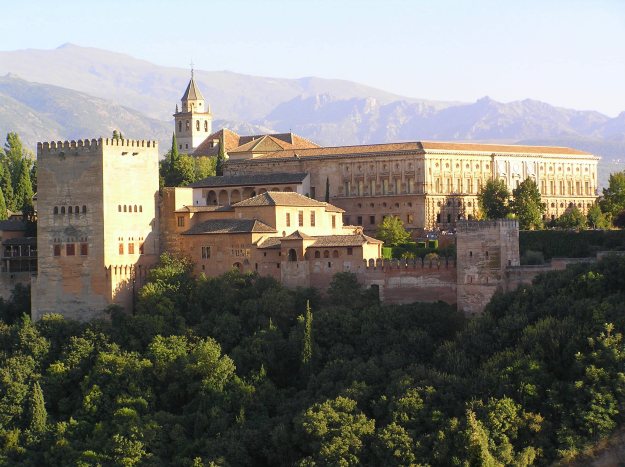
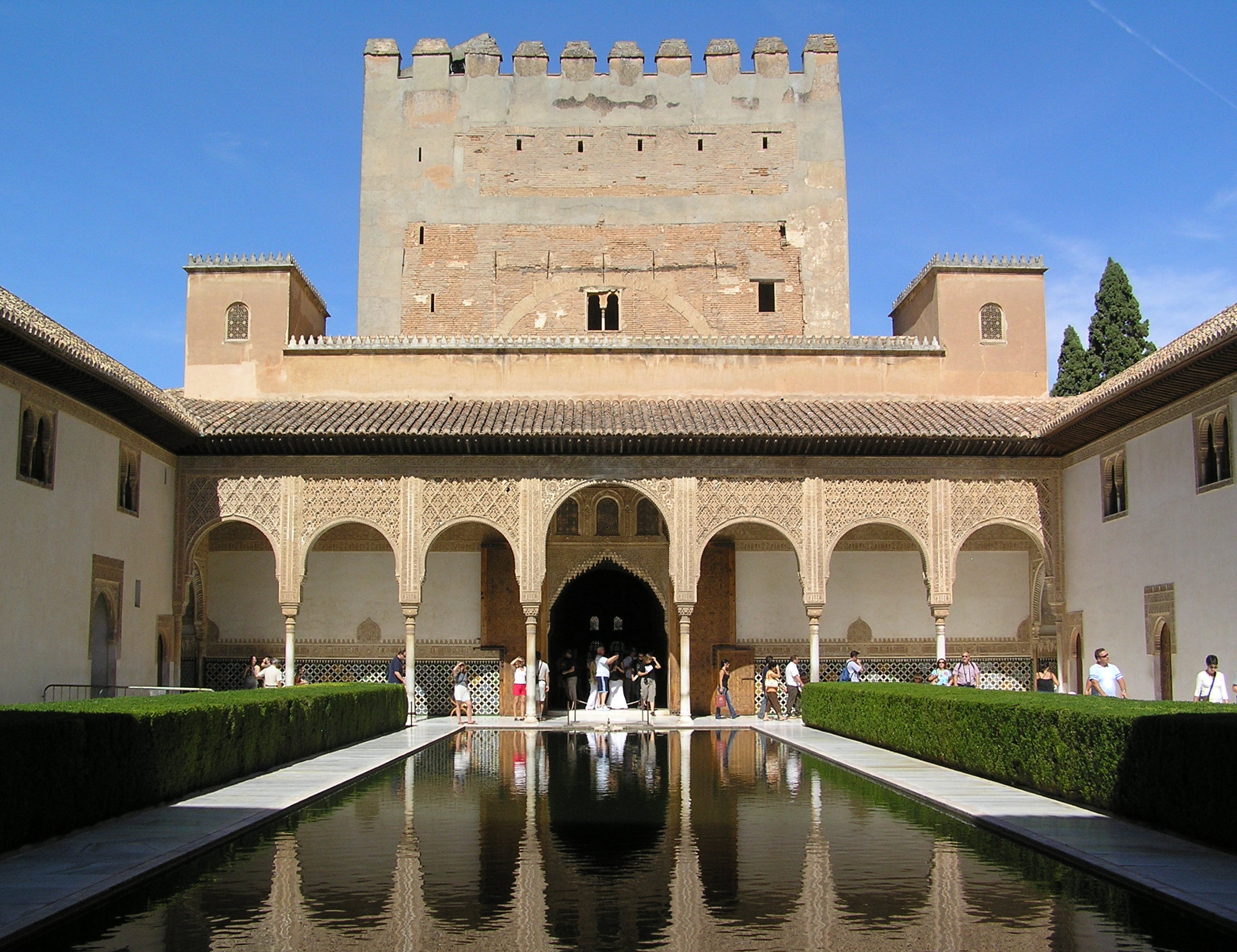
P9300974Which leaves Granada…I saved the best ‘til last!  An early start was needed for the 3 hour train journey, but I’d happily have travelled ten times as far to see the Alhambra.  The Nasrid palace was built mostly in the 14th century, when it was converted into a palace from a fort by Yusuf I, the Sultan of Granada.  The Muslim rulers were attempting to create ‘paradise on earth’, and I’d say they came pretty darn close.  Together with the Generalife palace and gardens, the huge complex is simply breathtaking.  The architecture is hard to beat and the different layers and spaces reveal new delights around every corner, with reflecting pools, archways and fountains providing endless photo opportunities.  I’m not going to pretend I wasn’t clicking away the whole time.

Obviously, for a view of the Alhambra in its entirety you need to be on the other side of the valley.  The Albaicín district on the hill opposite, with its narrow Moorish streets and white-washed homes, has the perfect vantage point: Mirador San Nicholas.  With dusk approaching, I sat looking at the Alhambra dappled in golden light, with the Sierra Nevada mountains as a backdrop.  Heavenly.

OLYMPUS DIGITAL CAMERA


After some seafood paella in a square near the cathedral, we headed back for the train.  What should have been a simple journey – if we’d have walked, as my dad suggested – became much more dramatic when it became clear our bus was headed for the coach station rather than the train station.  Given we were catching the last train of the day, the urgency of correcting our (my!) error was acute.  Stopping numerous times to ask baffled locals for directions, we sprinted in what we hoped was the general direction for about 20 mins, literally leaping on to the train just as it was about to depart.  Indiana Jones eat your heart out!  The train pulled out of the station and promptly stopped ten feet from the end of the platform for close to half an hour while a fault was seen to.  Typical!

OLYMPUS DIGITAL CAMERAThe Tourist Shot

OLYMPUS DIGITAL CAMERACulture Clash

OLYMPUS DIGITAL CAMERAReflecting on Things

Wats and ‘Phants

I spent an amazing three weeks in South-East Asia in the autumn of 2008. Hong Kong and Singapore were fabulous (more on those another time), but it was Thailand that I really fell in love with. It’s hard not to when the food, people, sights and culture are so vibrant and exotic.

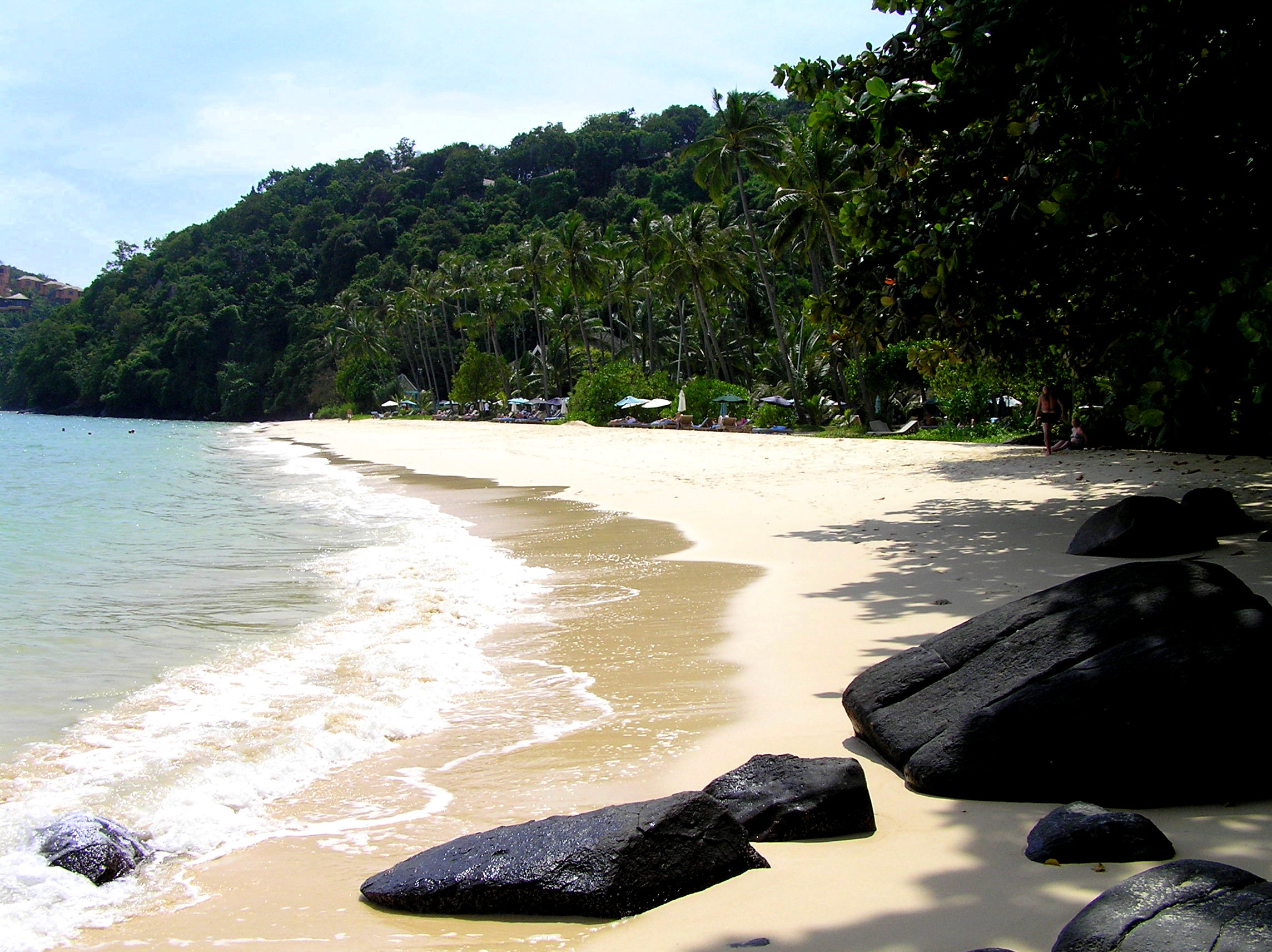
We first flew to the island of Phuket. Our hotel – The Cape Panwa – was in an idyllic, secluded bay of white sand and crystal-clear turquoise water. Heavenly! There was a colonial-style restaurant right on the beach and the hotel had its own jetty into the sea. The food was incredible – giant langoustines, thai curries and delicious cardamom rice pudding – and the beach was the nicest I’ve ever been to. Swimming, sunbathing, reading, and seeking out crabs were the order of the day.

OLYMPUS DIGITAL CAMERA

As tempting as it would have been to lie in a hammock for a week, Phuket has many other attractions. You can’t visit without taking a long tail boat trip into the Andaman Sea to Phang Nga National Park, with its many beautiful islands. We stopped at James Bond Island (so named for featuring in The Man With the Golden Gun) for a look around, spying iguanas on the beach and wading through rock pools. You wouldn’t know that the area had been devastated by the Tsunami in 2004. It’s simply stunning. We also stopped at Ko Panyi, a Muslim fishing village built on stilts by Indonesian fisherman from Java. We visited the small primary school and floating football pitch, and strolled along the raised streets, where hundreds of chillies were hanging from washing lines drying in the sun.

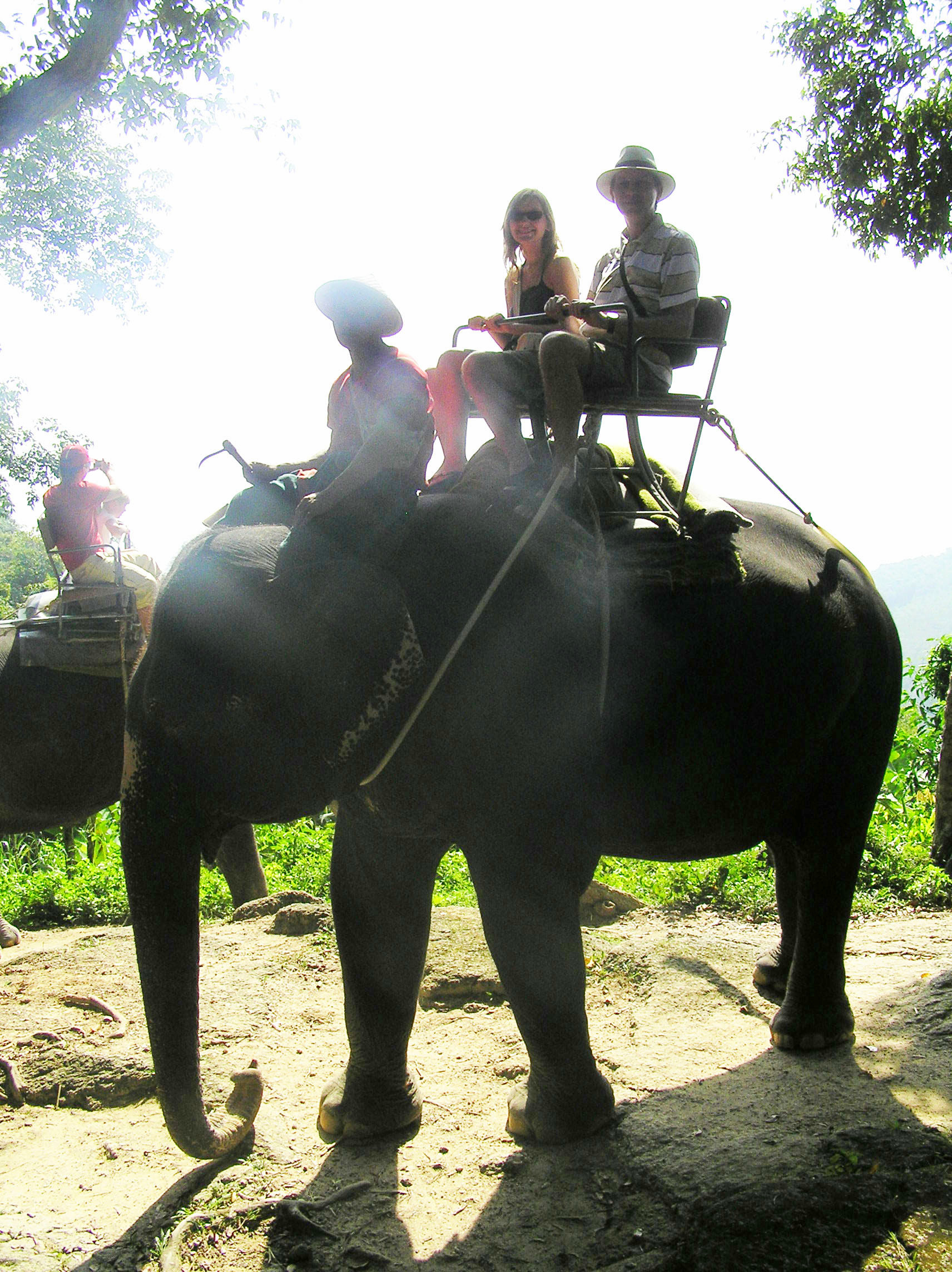
OLYMPUS DIGITAL CAMERAWe also headed into the hills for an elephant trek. This was a real highlight for me. We were able to feed the baby ‘phants with bananas, stroking their trunks as they pulled the fruit from our hands, before climbing onto the backs of their parents for a journey through the jungle rainforests and up to a mountain village. The views over the island were lovely and our elephant was beautiful, giving us a smooth ride. We meandered at a leisurely pace, occasionally stopping for some shade. In the village, we had a cookery lesson – making a spicy red curry – and a ride on a cart pulled by a water buffalo. We were also shown how the villagers make baskets from coconut husks and how to tap rubber trees. Great fun!

Bidding a fond farewell to paradise, we flew on to the capital: Krungthepmahanakhon Amonrattanakosin Mahintharayutthaya Mahadilokphop Noppharatratchathaniburirom Udomratchaniwetmahasathan Amonphimanawatansathit Sakkathattiyawitsanukamprasit (or Bangkok to you). The city’s ceremonial name translates as “City of angels, great city of immortals, magnificent city of the nine gems, seat of the king, city of royal palaces, home of gods incarnate, erected by Visvakarman at Indra’s behest”. Nice, huh? After checking in at our hotel on Rajdamri Road, we caught a taxi to the riverfront and jumped on a boat down the Chao Phraya. The taxi driver had ripped us off, it transpired, but given I’m used to London prices I didn’t notice. It was only after comparing the price of the return journey that I realised we’d paid about six times too much. Still, you live and learn. The boat trip was lovely, taking us past Wat Arun and many other famous sights, then down tributaries into more residential areas, with the houses perched precariously on stilts driven into the alluvial plains. An Asian buffet atop Baiyoke Tower II, the tallest building in the city, and a stroll through the Ratchathewi and Pathumwan districts concluded the day.

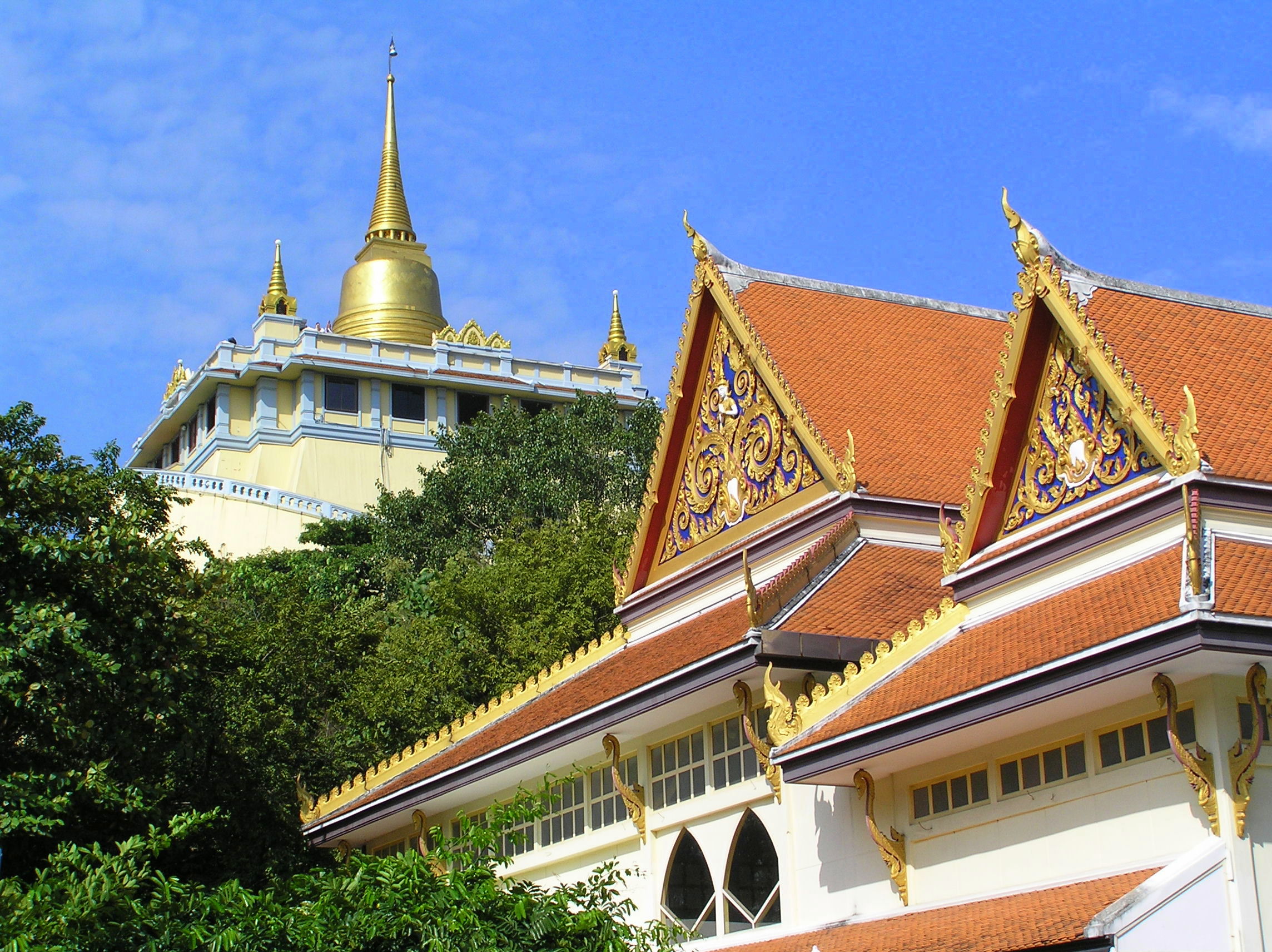
OLYMPUS DIGITAL CAMERAThe next morning we tried to get to Dusit Palace, but – fearful of political unrest and protests against the Prime Minister which were taking place in the area – our taxi driver instead suggested a visit to Wat Saket and The Golden Mount. It’s worth the climb to the top of the Mount for the views over Bangkok, and without the usual throng of tourists the temple is one of the most peaceful in the city. Having waited patiently for us while we wandered around, and only charging us about £3 for doing so (further reinforcing my conviction that yesterday’s driver was a ne’er do well), we went on to the Phra Nakhon district. The Grand Palace was also disappointingly off-limits, the result of a royal birthday or funeral (I forget which), so it’s difficult to say how it would have compared, but Wat Pho was certainly one of the most impressive places I’ve been to.

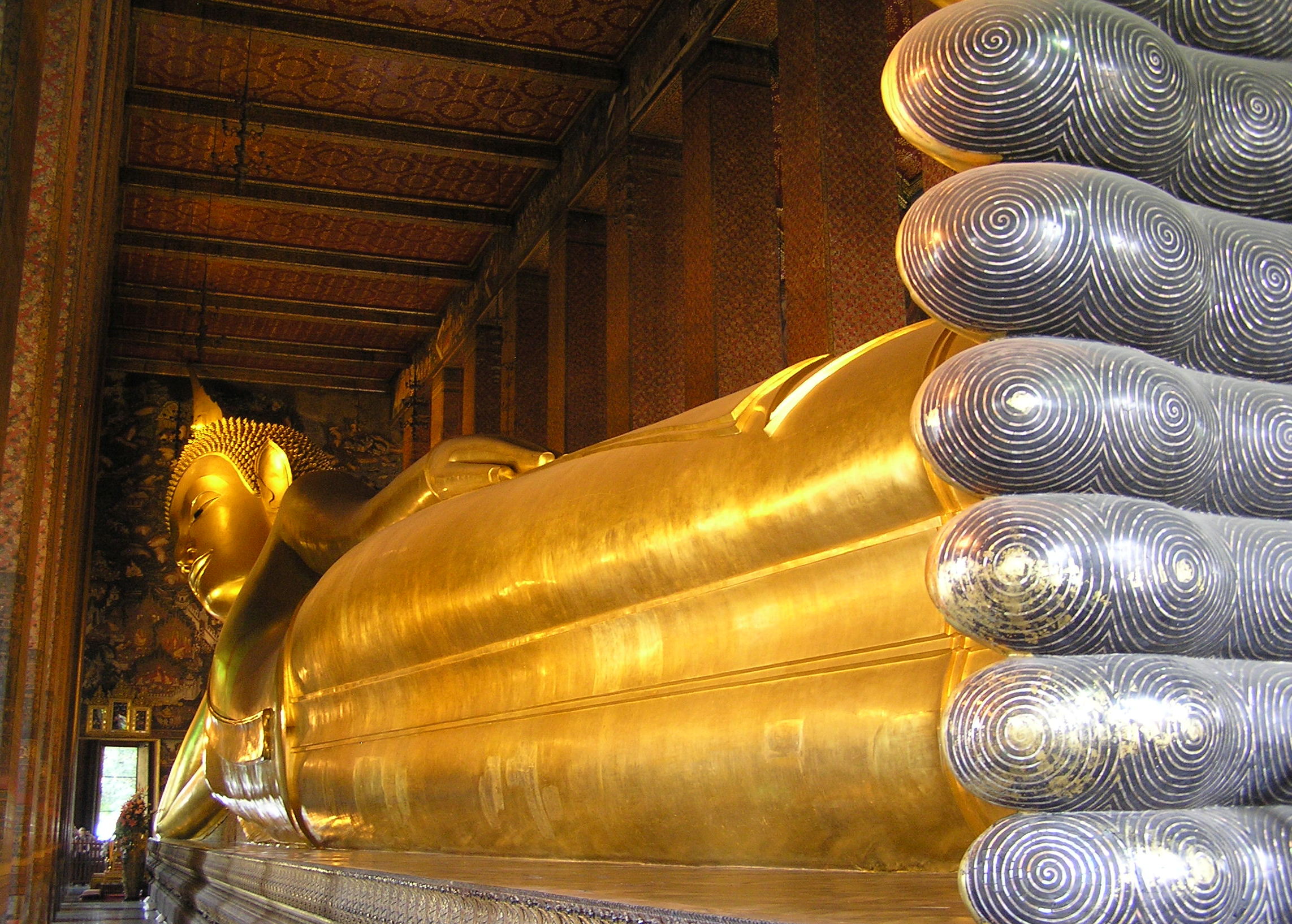
OLYMPUS DIGITAL CAMERAIt’s named after the monastery in India where Buddha is thought to have lived and is home to the gigantic (160 foot) Reclining Buddha as well as over 1,000 other images of ya main man. The large temple complex takes a long time to get round, with its various shrines, gates, statues and courtyards, and we were ready for a sit down in a cafe by the end. Only a short pause though, before we headed into the district of Samphanthawong in Chinatown and to Wat Traimit, home of the largest solid gold statue in the world (Buddha, of course). Here I received a blessing from a Buddhist monk (for a small fee) and we were able to sit in the shade for a while, our legs having started to ache. Time to head back to Thanon Ratchadamri, with its western shopping malls and restaurants, for a bite to eat. An outdoor beer festival was in full swing, so we tried some Thai brew and got a bowl of the spiciest soup I’ve ever tasted thrown in as a free accompaniment. No longer able to feel my tongue or lips, it was time to call it a night.

OLYMPUS DIGITAL CAMERA

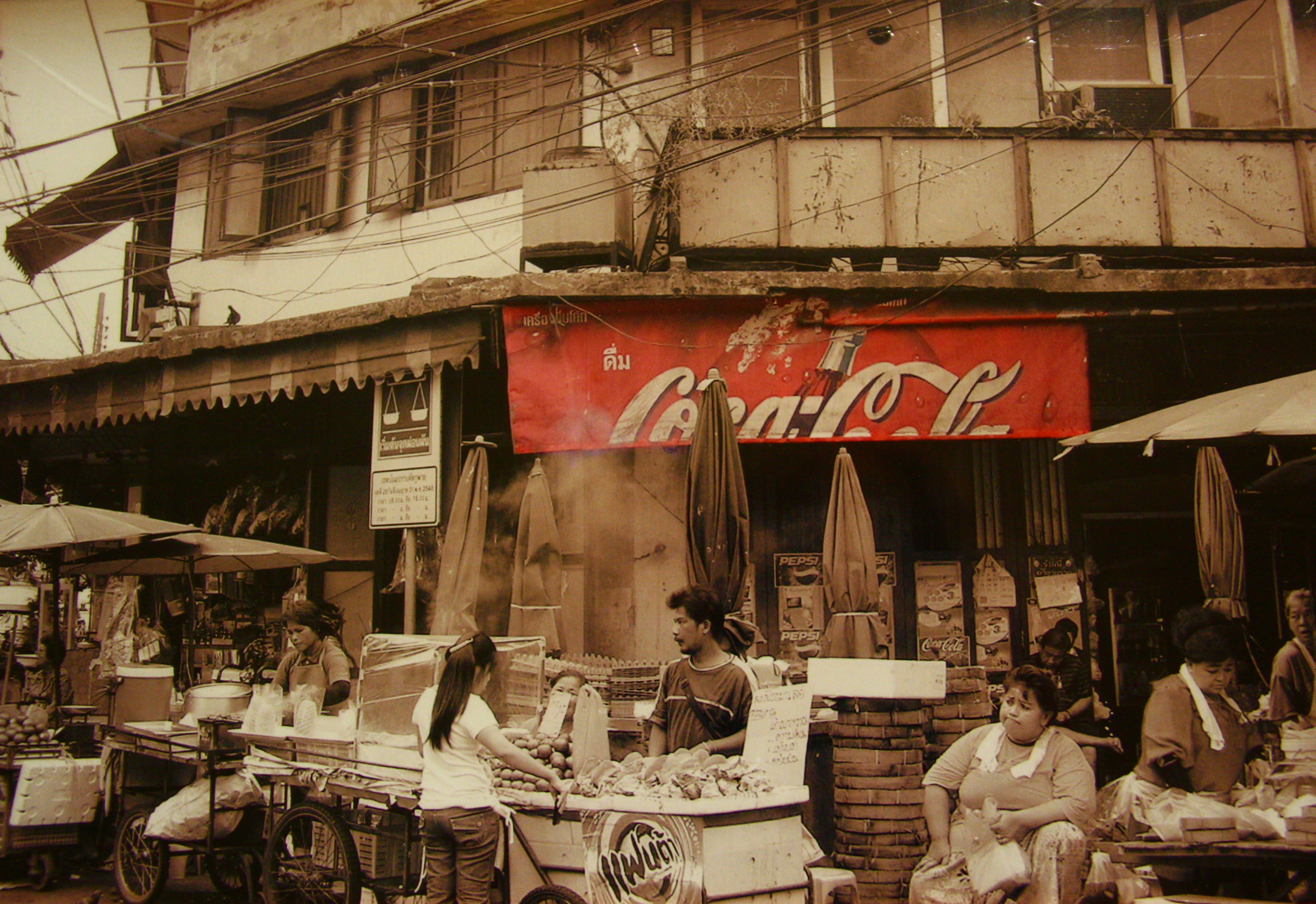
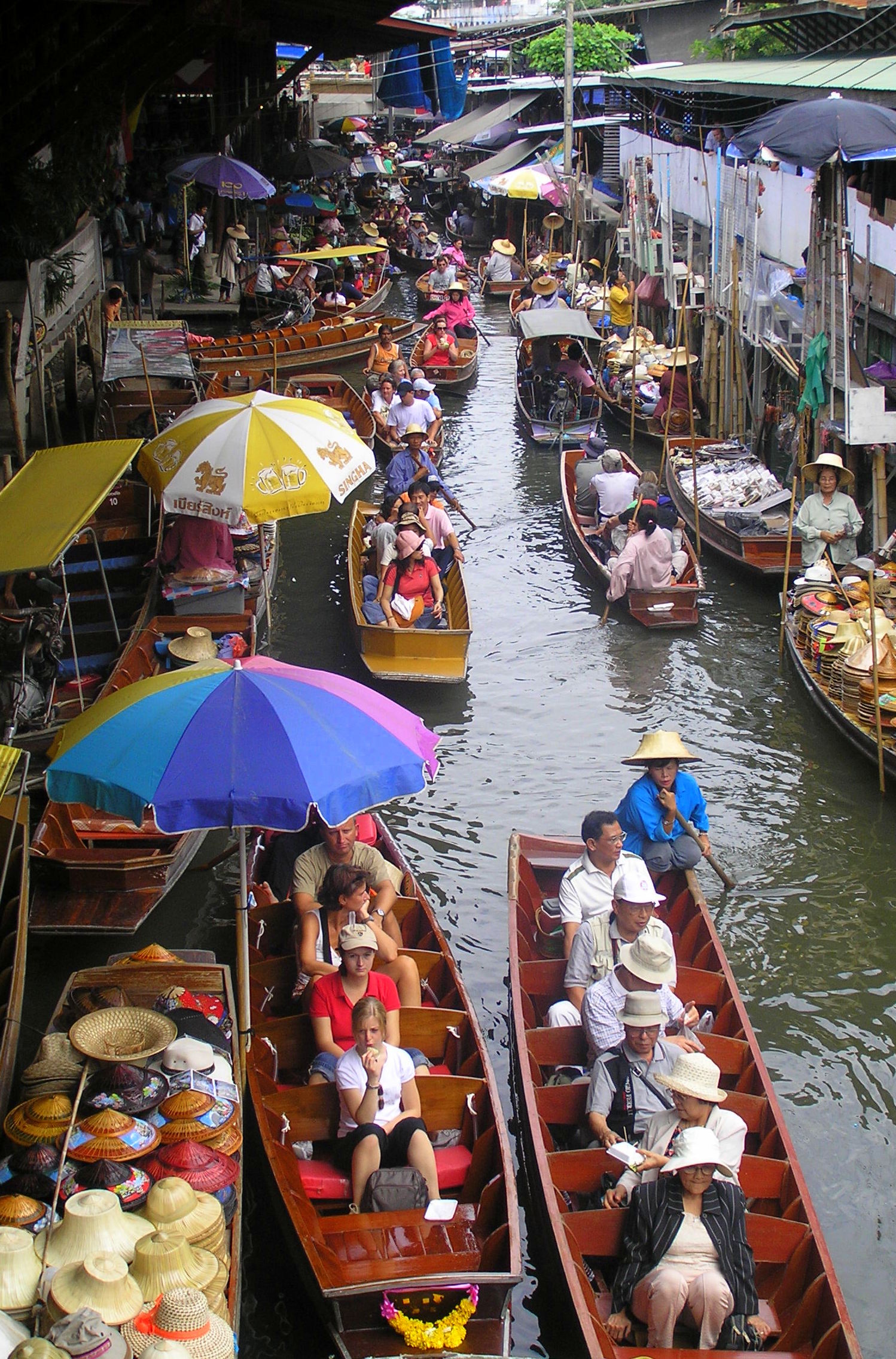
The next morning, we rose at the crack of dawn and drove out of the city, boarding a long tail boat to Damnoen Saduak. Sailing past salt fields and rice paddies, you arrive at the network of canals that form the traditional floating market. It’s really bustling, with women in straw hats paddling in boats laden with mangoes, coconuts, Chinese grapefruit and other exotic fruits and vegetables. Some were also cooking up large cauldrons of broth and curry.  The smells and sounds were fantastic. I didn’t dare barter for anything – it was all too frantic and several of the traders had large snakes around their necks – but it was enough to soak it all in. Next we travelled to Phra Pathom Chedi in the town of Nakhon Pathom and climbed the many steps – in the now searing midday head – to the largest pagoda in Thailand. The pagoda is a huge upside-down bell-shaped structure, surrounded by some of the more uniquely-posed Buddha statues. After that it was on to the Rose Garden cultural centre, where were saw a performance of fingernail dancing, Thai boxing, an elephant parade and a recreation of a traditional Thai wedding ceremony. A great end to our Thailand adventure!

Luckily we flew onward to Hong Kong before the take-over of Bangkok’s Suvarnabhumi Airport by the activists of the People’s Alliance for Democracy, which saw around 3,000 tourists and locals trapped in the terminal for about a week. While I would happily have spent longer in the country, it was most definitely a lucky escape!

OLYMPUS DIGITAL CAMERABig feet, Big shoes

OLYMPUS DIGITAL CAMERAWat Dat

IMG_2687East meets West

OLYMPUS DIGITAL CAMERABetter than Tesco

OLYMPUS DIGITAL CAMERAParadise

Bazaar and Beautiful

My first trip to Istanbul was with my dad in September 2005.  We arrived during Ramadan and spent our first evening wandering around the food stalls that lined Sultanahmet Square and the Hippodrome.  The local residents had started queuing well before sundown in order to be first to enjoy the array of delights: stuffed aubergines, lamb kebabs and baklavaas well as the more touristy fare of popcorn, turkish delight and toffee apples.  There were fairy lights, crafts stalls, live music and a really friendly, festive atmosphere.  The obelisk in the Hippodrome was dramatically illuminated and both Aya Sofya and Sultan Ahmed Mosque, situated at either end of the square, were covered in lights and set off in all their splendour.  I decided immediately that I loved the city.

OLYMPUS DIGITAL CAMERA

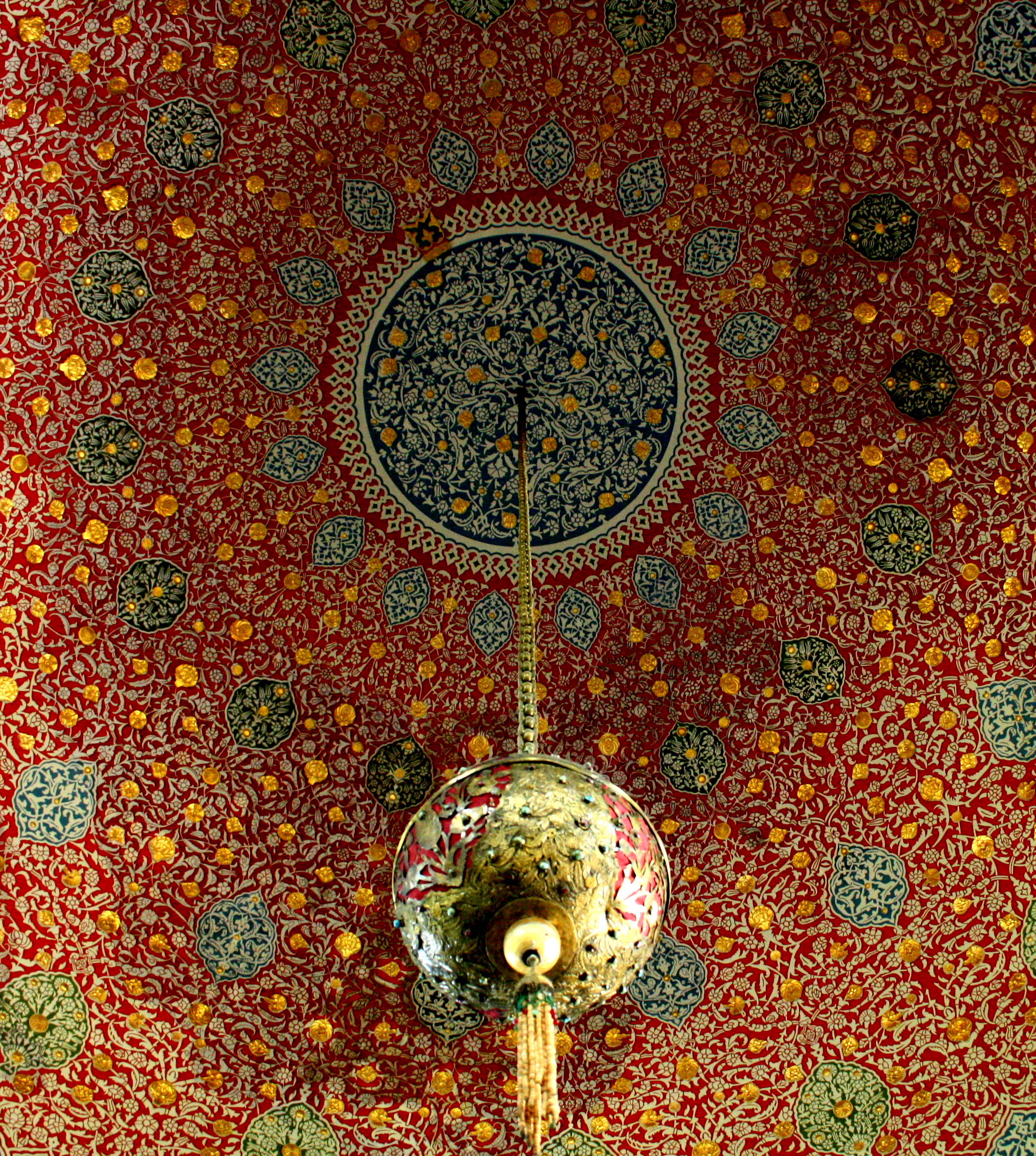
There are too many wonderful sights in Istanbul to list them all, but I’ll mention just a few.  First, Topkapı Palace.  Built in the 15th century, the palace was the royal residence of the Ottoman Sultans for 400 years.  Converted into a museum in the early 20th century, it now contains various holy relics of the Muslim world, Islamic calligraphic manuscripts and murals, and a host of Ottoman treasures and jewellery.  Passing though the Imperial Gate and the Court of the Janissaries, you reach the impressive Gate of Salutation that leads you IMG_0961into the palace itself.  The complex is vast, with hundreds of rooms, grassed courtyards and fountains.  Aside from the Treasury, with its stunning array of sceptres, jewel-encrusted daggers, and random piles of ‘spare’ giant rubies and emeralds, the Imperial Harem was the highlight.  Home to the Sultan’s mother, his concubines, eunuchs, wives, children and servants, the labyrinth of passageways, secret doors and terraced rooms is a gateway to a completely unfamiliar time and culture.  The Imperial Sofa (throne room) and crown prince’s apartment – where he was kept in isolation in a gilded cage – are opulent and colourful, yet have a real sense of foreboding.  The feeling soon dissipates, however, as you exit to the İftar Pavilion with its beautiful view over the Golden Horn.  With the sun beating down, I could have happily stayed there for the rest of the day.

IMG_0952

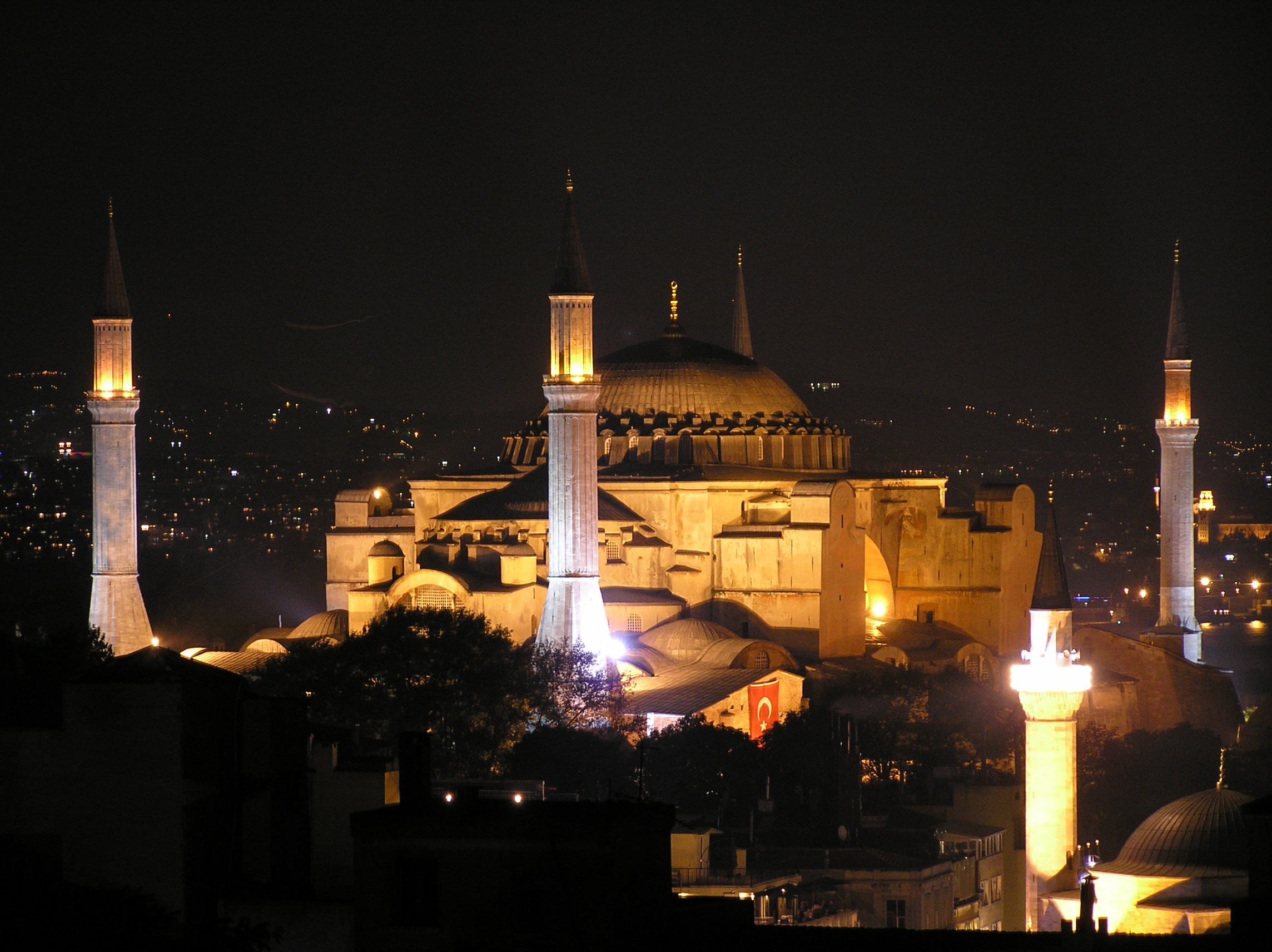
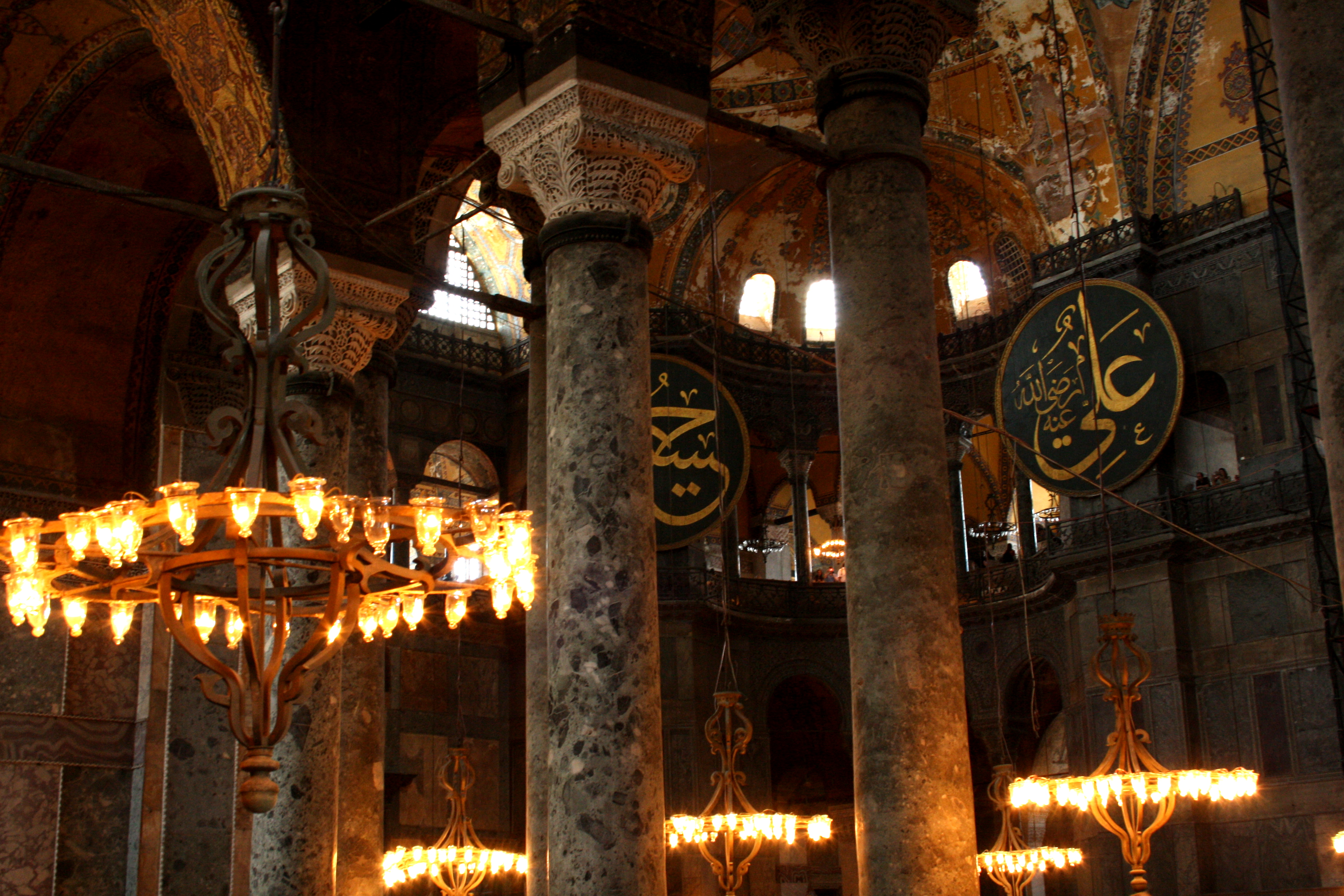
But then I’d have missed seeing what has become my favourite building in the world: Aya Sofya.  The original building was constructed in only five years, opening in 537 under the Roman Emperor Justinianos.  It was used as a church for 916 years (being the world’s largest cathedral for most of that time) and then, following the conquest of Istanbul by Fatih Sultan Mehmed, the building was converted into a mosque.  It was used as a mosque for almost 500 years and then in 1935 under the order of Atatürk (the first President of the Republic of Turkey) it was converted into a museum.  I can’t describe how amazing this building is.  Standing in the centre, looking up at the domed basilica, takes your breath away.  Golded mosaics and gigantic boards of calligraphy adorn the interior, and the exterior – with its four tall minarets and salmon walls –is equally impressive.  I must have taken about 100 photos!

IMG_0933

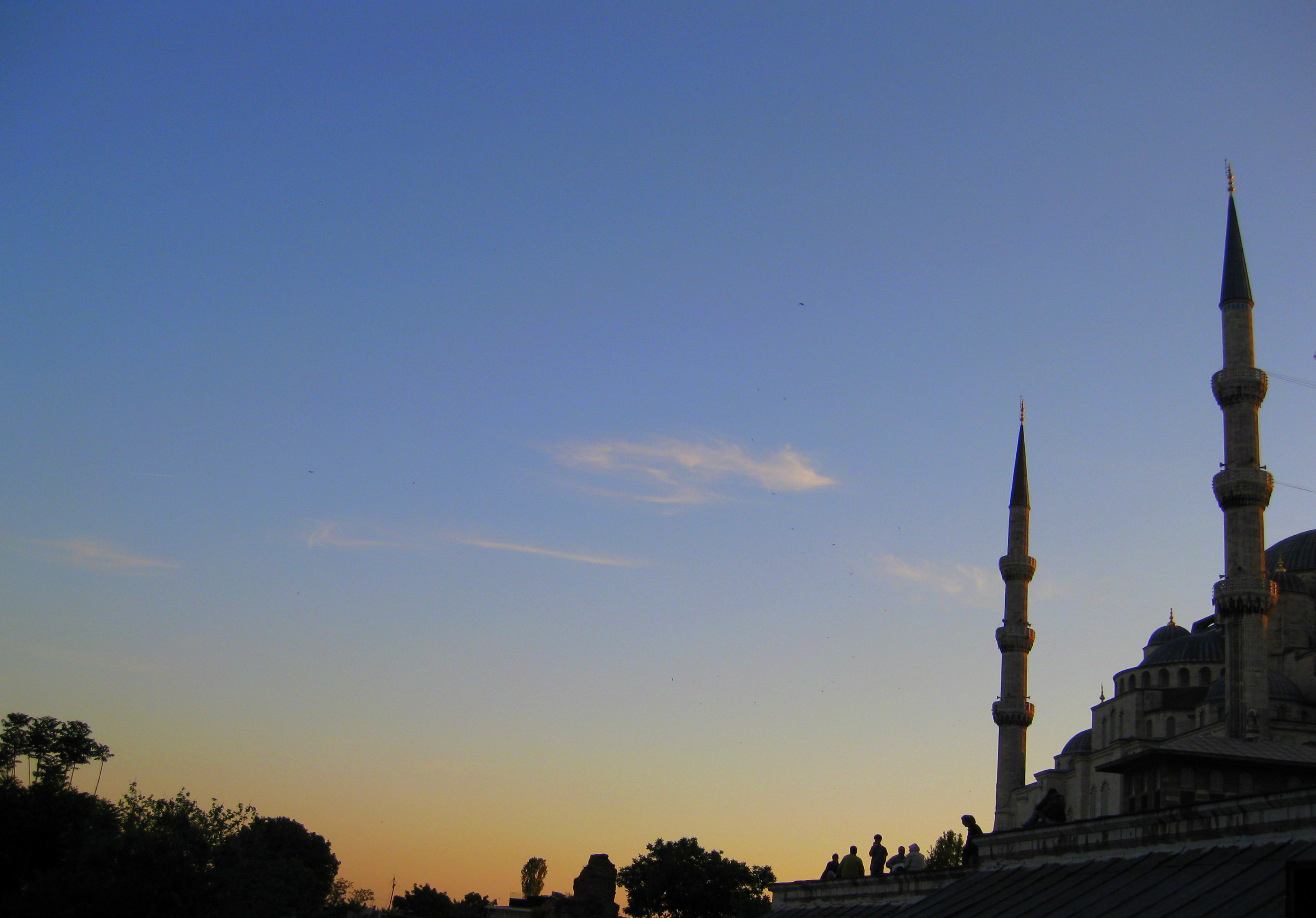
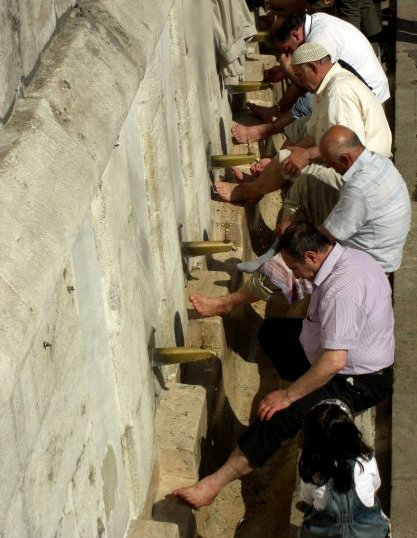
Whilst nothing could top it, Istanbul is not short of other fantastic architecture.  Both Sultan Ahmed Mosque (better known as the Blue Mosque) and Süleymaniye Mosque are remarkable and still working places of worship.  With your shoes off and head covered (if you’re a lady), it’s easy to see why the buildings evoke such a sense of wonder and majesty in OLYMPUS DIGITAL CAMERAtheir congregation. On my second visit with Paul and his family in 2009, we sat for some time on the Blue Mosque’s courtyard steps just as dusk was approaching, admiring how the stunning golden light lit the nine domes.  The Grand Bazaar is also spectacular.  One of the largest and oldest covered markets in the world, with 60+ covered streets and over 3,000 shops: it is very easy to get lost!  My first proper experience of haggling (if you don’t count the time in Tunisia when my dad tried to swap me for camels) was semi-successful – I definitely talked the shop-owner down, but don’t really think I came away with a bargain.  Still, the glass lamp is in our bedroom to this day and looks lovely.

Just two more buildings I have to mention… the Church of St. Saviour in Chora, which my dad and I sought out, and Dolmabahçe Palace on the Bosphorus strait, which we visited on my second trip.  Now a museum, St. Saviour’s is considered to be one of the most beautiful surviving examples of a Byzantine church and is covered in exquisite mosaics.  It was well worth the taxi trip, though the walk back took us through one of the poorest neighbourhoods and it was difficult to witness barefoot children searching for metal scraps to sell.  A reminder that outside the tourist centre Istanbul unfortunately still has areas of real poverty.  The glamorous Dolmabahçe was built in the 19th century as the administrative centre of the late Ottoman Empire and has the world’s largest crystal chandelier.  I’d seen it from a boat on our first trip and so was glad to have the opportunity to go inside.  Patrolled by the palace guard and accessible only via guided tour, it is a strikingly lavish building reminiscent of Versailles in France.
IMG_0901

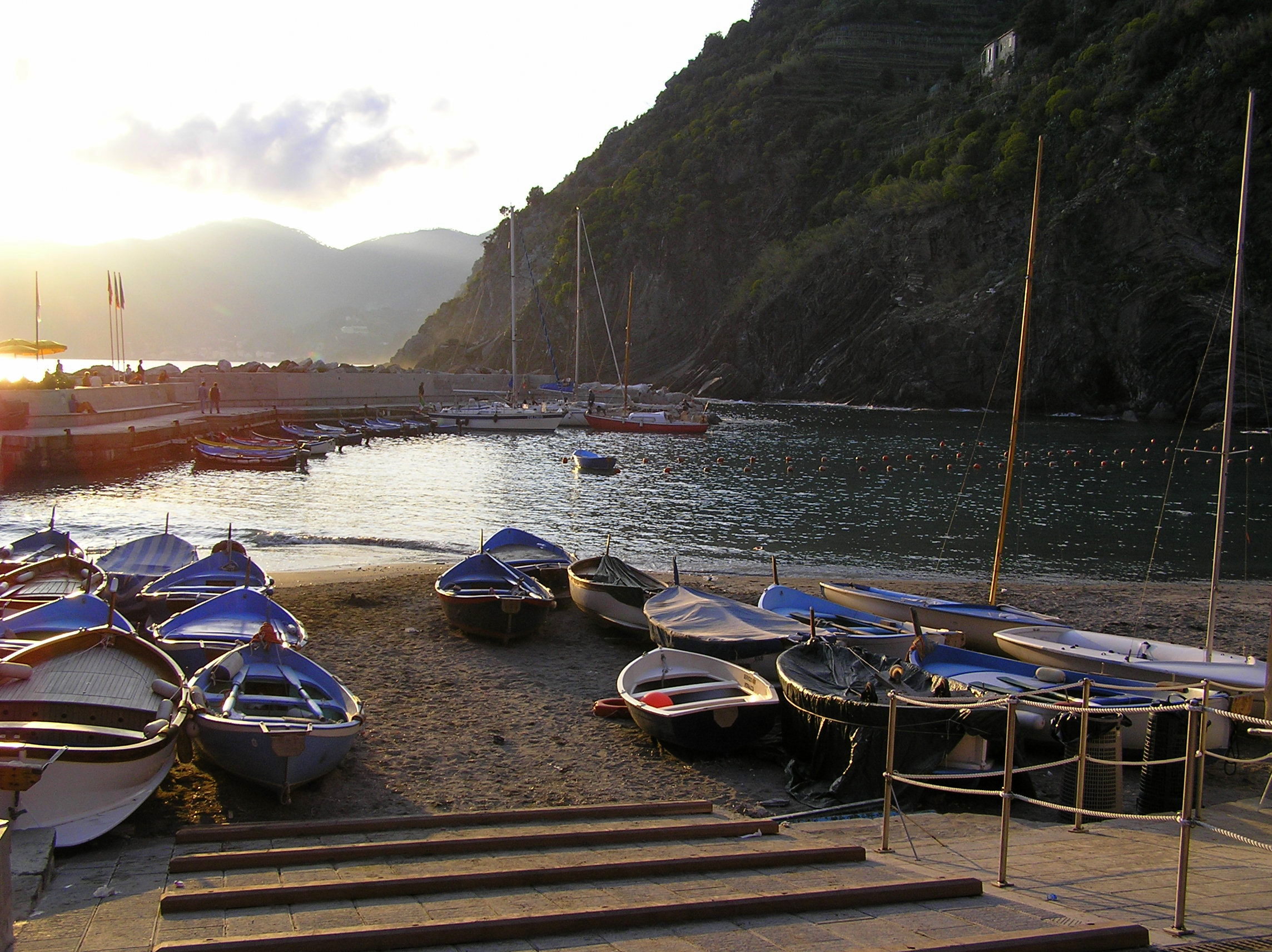
Since I’ve mentioned the boat trip, I would definitely recommend taking a tour from Emınönü port around the Sea of Mamara and up the Bosphorus to the mouth of the Black Sea.  Our trip lasted about 4 hours, I think, taking us past watchtowers, bridges and lighthouses, and providing time to wander around Rumeli fort at the furthest point along the river.  Oh, and you should go up Galata Tower in the Karaköy quarter too.  And to the Spice Market.  And eat lots of Anatolian casserole.  And, and, and

Istanbul 019Dusk at Sultan Ahmed Mosque

feet

Cleansing

Istanbul100

To Be Enthroned

OLYMPUS DIGITAL CAMERARooftops of the Old City

The Big Easy

New Orleans is an absolutely fantastic place.  There’s music everywhere, all sorts of weird and wonderful people, and a real sense that anything goes.  The main tourist strip of Bourbon Street in the French Quarter is pretty gruesome to behold of an evening, and we tended to avoid it, but our B&B – the Royal Street Courtyard – was actually closer to Frenchmen Street, which is full of excellent music clubs and bars.

IMG_0859After receiving a very friendly and comprehensive welcome and induction from our host Philip, we spent our first afternoon and then the next day strolling and riding the trolley in the French Quarter and Garden District.  Both areas are packed full of beautiful architecture, antique and art shops, and of course great bars for the necessary cold beers (the best way to tackle the humidity).  We also called in for the obligatory coffee and beignets at Cafe Du Monde, and oyster lunch at Acme.  Musically, we warmed up for the weekend with a night out around Frenchmen and Decatur.  We started with lovely Creole tapas and stomping piano at The Three Muses, then took in a great young brass band, a club with a DJ playing vintage soul, and finished off with trad jazz in the lovely Spotted Cat.

All great stuff but then came the main event

Jazz Fest was two days packed full of some of the best music, sunshine, lovely food and the friendliest crowd you could wish for.  Hard to do it justice really, but the highlights were Irma Thomas, Bonnie Raitt and the Rebirth Brass Band.  We also squeezed in Herbie Hancock, Allen Toussaint, the Meters, Foo Fighters, Preservation Hall Brass Band and a few gospel and blues acts.  And I can’t not mention the food.  OMG (as the kids say)!  Soft shell crab po’boys, crawfish monica, gumbo…heavenly!  We finished our second day with huge grins on our faces, and a determination to do this again soon!

IMG_0881

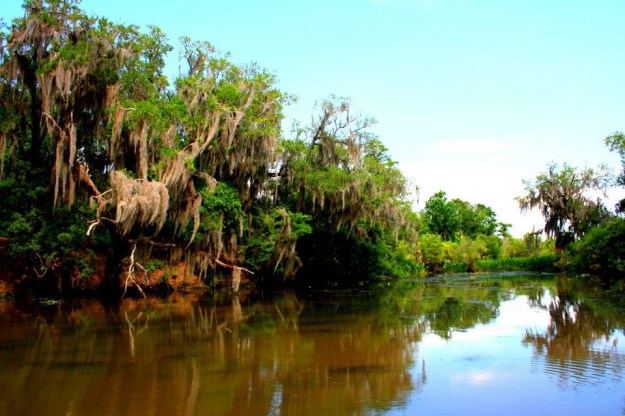
Driving south out of NOLA, post-Jazz, we boarded an airboat with our guide Louis in the Jean Lafitte wetland area. Speeding through Lake Salvador and the cypress waterways, Louis regaled us with stories of Cajun swamp life, pirates, Creole history and the battle of New Orleans.  And then the boat slowed to a cruising pace and we were suddenly surrounded by alligators.  I’m not exaggerating when I say they were literally bumping up against the boat.  Louis fed them marshmallows and even got out onto the bank to get up close and personal.  Lunatic!  After some initial trepidation, however, we both bravely held a small ‘gator, proudly posing for a photo.

IMG_0887The following day, we took the trolley along the riverfront and up Canal Street to the City Park, a lush, sprawling area in Mid-City.  Among the many innovatively-named areas of the park, my personal favourites were ‘Big Lake’, ‘Great Lawn’ and ‘Middling-Sized Pond’ (though I may have made the last one up).  After spending a really pleasant hour meandering through the Sculpture Garden, admiring the eclectic mix of pieces by Rodin, Miro, Plensa, Moore, Bourgeois and many others, it became critical to find shade.  Luckily, the New Orleans Modern Art Museum was our next port of call, with its welcoming (if not overly-aggressive) air-con.  With collections of Native American and Louisiana artwork, as well as a fascinating photography exhibition, we whiled away more hours, before returning to the B&B to freshen up and head out to Bacchanal, a grungy courtyard wine bar.  Twinkly fairy lights, delicious food and a jazz trio: another big tick.

For our final day in Nawlins, we took in the Louis Armstrong Park and St Louis No. 1 Cemetery in Treme, then headed through the arty Warehouse District to Cochon Butcher, a favourite of chefs and food critics.  Yum!  With weary legs, we decided to spend the afternoon aboard Steamboat Natchez.  The Mississippi river isn’t picturesque, but we enjoyed sunning ourselves and sipping cocktails on deck.  And, as a last treat, we went out in the evening to Cafe Amelie, a swish courtyard restaurant.  A simply wonderful end to the holiday.

IMG_0899

But it wasn’t quite the end of the trip.  First, we had to get back to Atlanta airport.  As a result of the frankly ludicrous American hire-car industry’s refusal to accept a credit card from anyone other than the driver of the car (and Paul’s lack of said credit card), we were forced to drop off the car in the same location as we’d picked it up.  So, having cancelled our internal flight from NOLA, we took a scenic coastal drive, stopping in Biloxi on the Gulf of Mexico for shrimp and a quick stroll on the beach, then continued onward to Birmingham, where we stayed overnight before driving to the airport.  The least said about Birmingham the better.  Suffice to say, Paul now has a credit card.

IMG_0880

IMG_0883