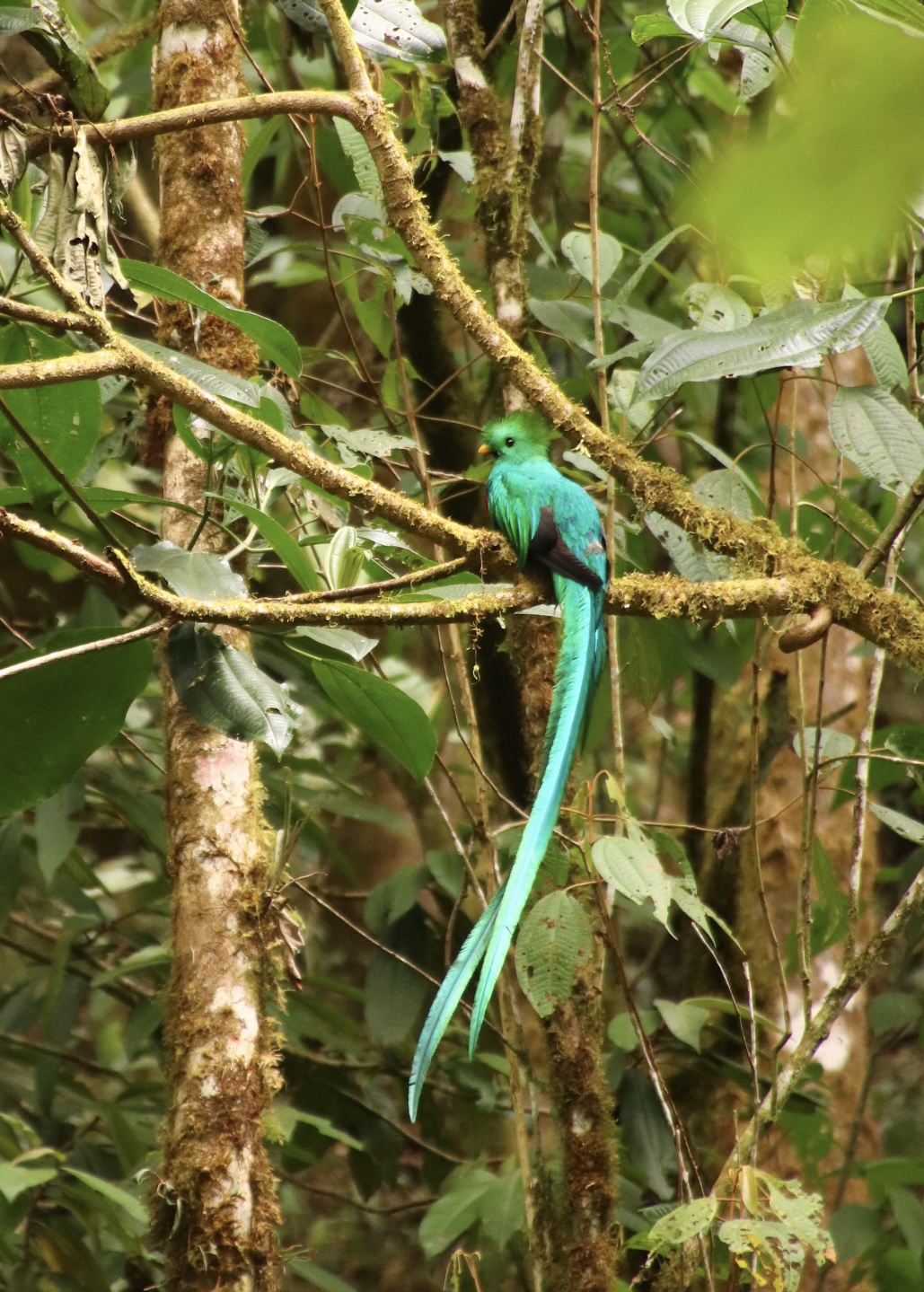
I mentioned this amazing bird in one of my previous blogs, but don’t think I did it justice. Some keen twitchers make dozens and dozens of trips to Costa Rica, spending many thousands of pounds, in search of this elusive wonder.
Belonging to the ‘trogan’ family, and considered sacred by Mesoamerican civilizations, the male Resplendent Quetzal (to give him his full title) has a shimmering plumage of metallic blues, greens, and reds, a crest of golden-green feathers and – during breeding season – elongated upper tail feathers that form a long, flowing train. It was thought to be the spirit guide of the Mayan prince and hero Tecún Umán, who fought against the Spanish conquest. According to legend, the prince was killed as he fought the conquistador Pedro de Alvarado and, as he lay dying, a bird flew down and landed on his chest, dipping its feathers in his blood. This is supposedly how the quetzal acquired its red breast and belly feathers.
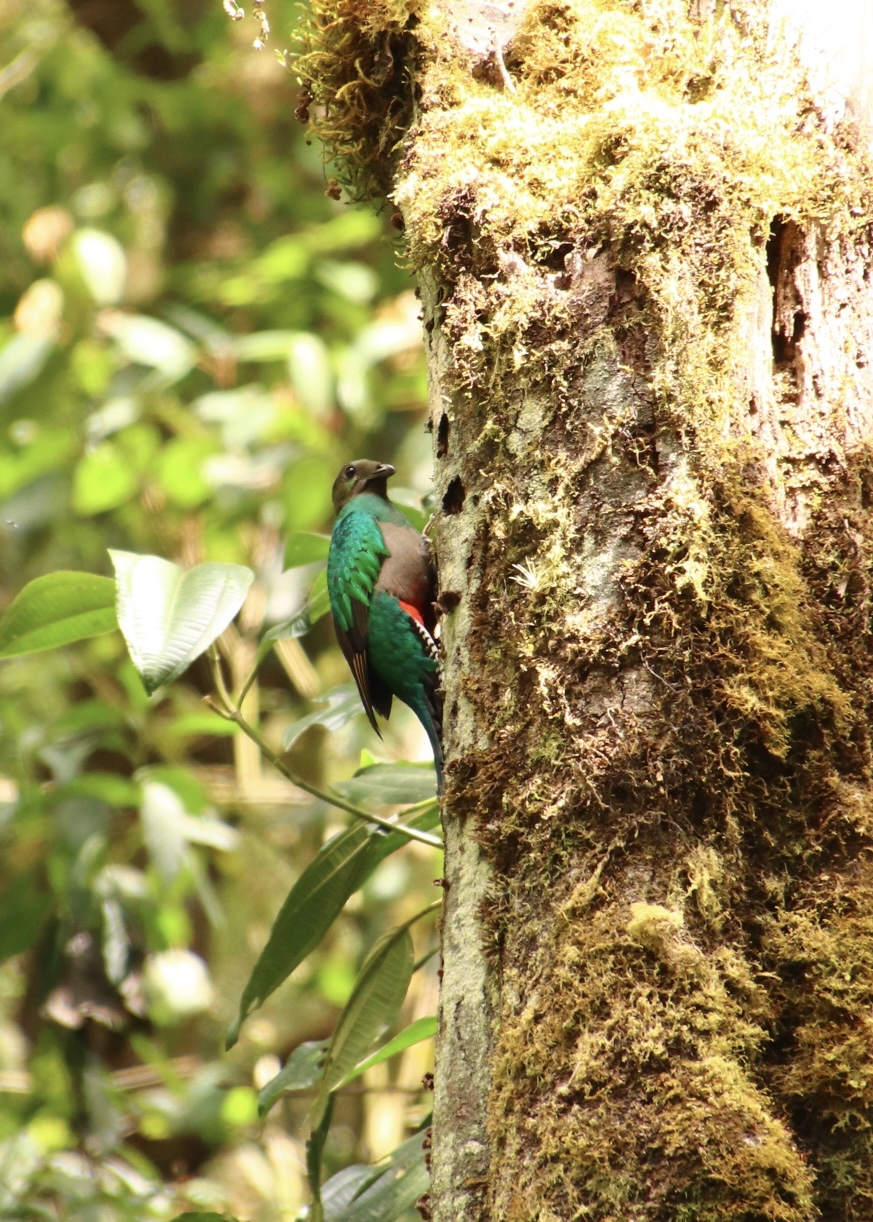
It is truly stunning; and we were so so lucky to see it up close on our trip. I’ve posted below a few of my (literally hundreds of) snaps of a mating pair building their nest.
Costa Rica’s rich biodiversity is not limited to its larger creatures; it’s also home to a dazzling array of tiny jewels of the skies – the hummingbirds. Known for their iridescent plumage and rapid wingbeats, these avian wonders are a delightful sight to behold.
During my journey through Costa Rica, I had the incredible opportunity to witness these miniature marvels in various locations, each offering a unique glimpse into their enchanting world.
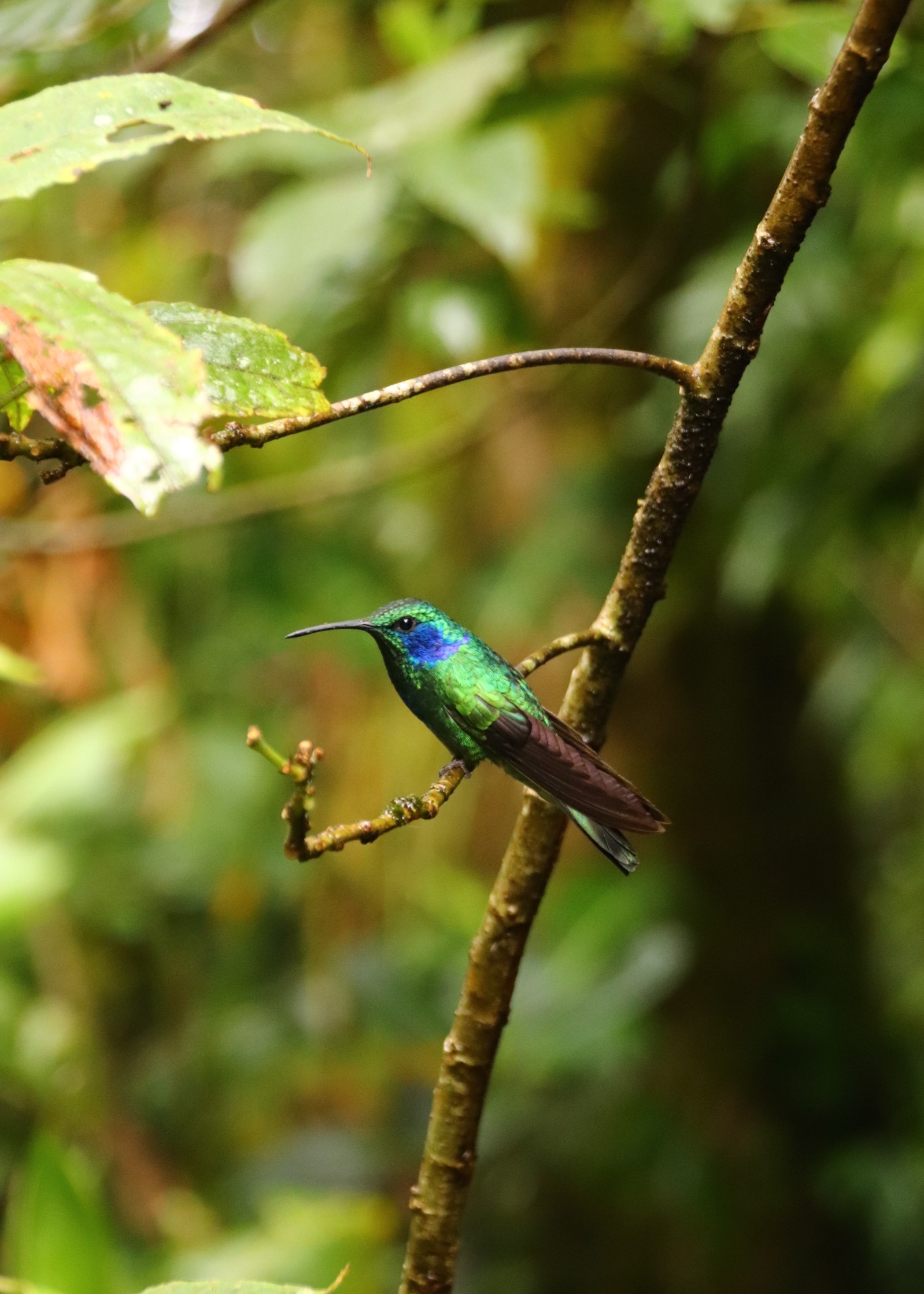
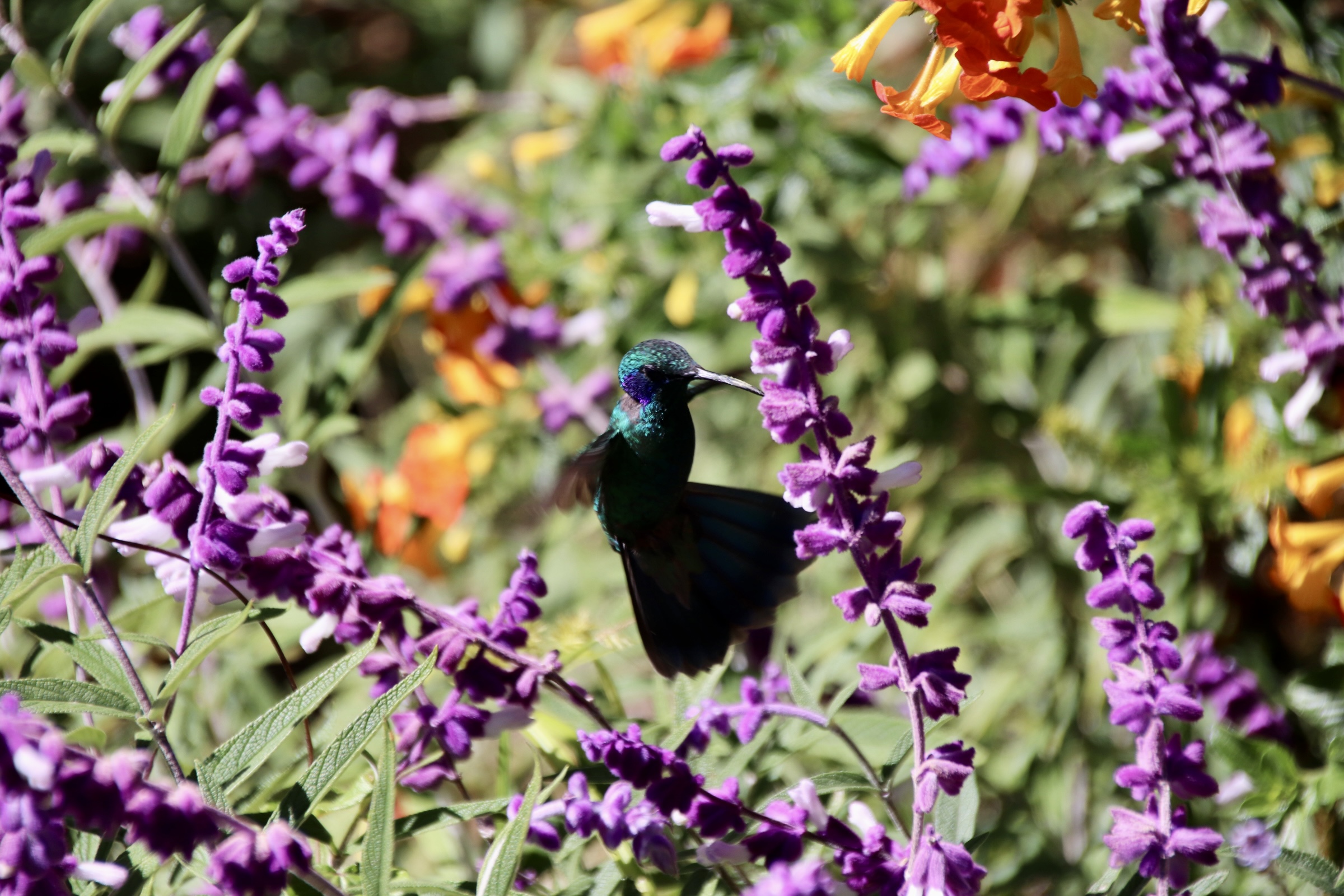
In Monteverde National Park, the Cloud Forest provides a perfect habitat for hummingbirds. But whilst we saw plenty of them in the wild there, it did feel sort-of cheating, since the rangers had hung sugar syrup trays out to attract them. As I stood amidst the lush foliage, I spotted the dazzling Violet-Sabrewing Hummingbird, with its vibrant purple crown that seemed to change hues with every angle. The Green Lesser Violetear, adorned with striking emerald-green feathers, was also a constant visitor to the park’s enticing bird tables, hovering in mid-air as it sipped the syrup.
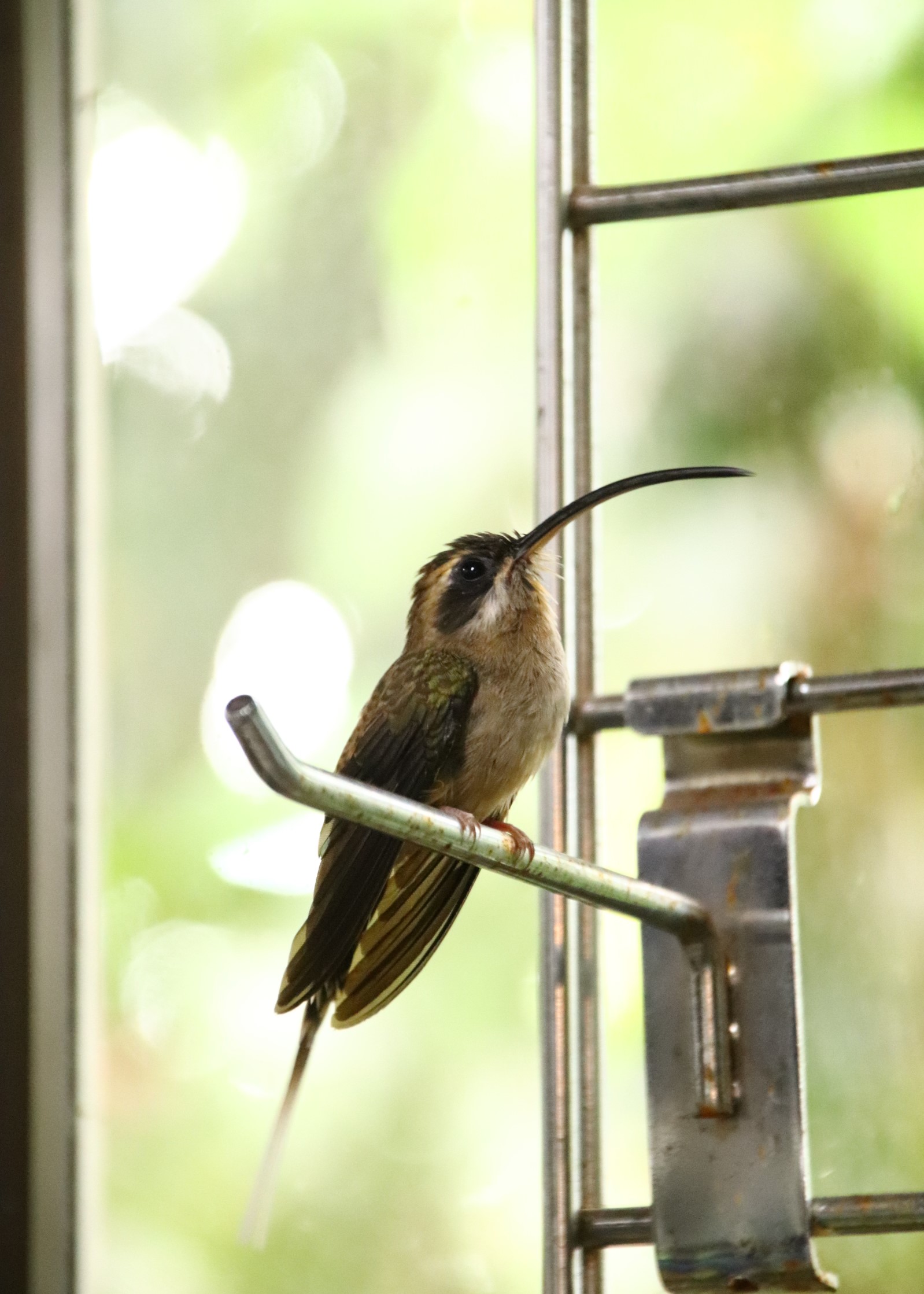
In Sarapiqui, by contrast, I spent a happy 20 minutes watching a Long-Billed Hermit Hummingbird buzz around a shop. Although I felt sorry for it at first, it appeared to have an unimpeded exit, which it repeatedly chose to ignore, so in the end I concluded it must enjoy hanging out with the brightly-coloured towels and plastic beach paraphernalia.
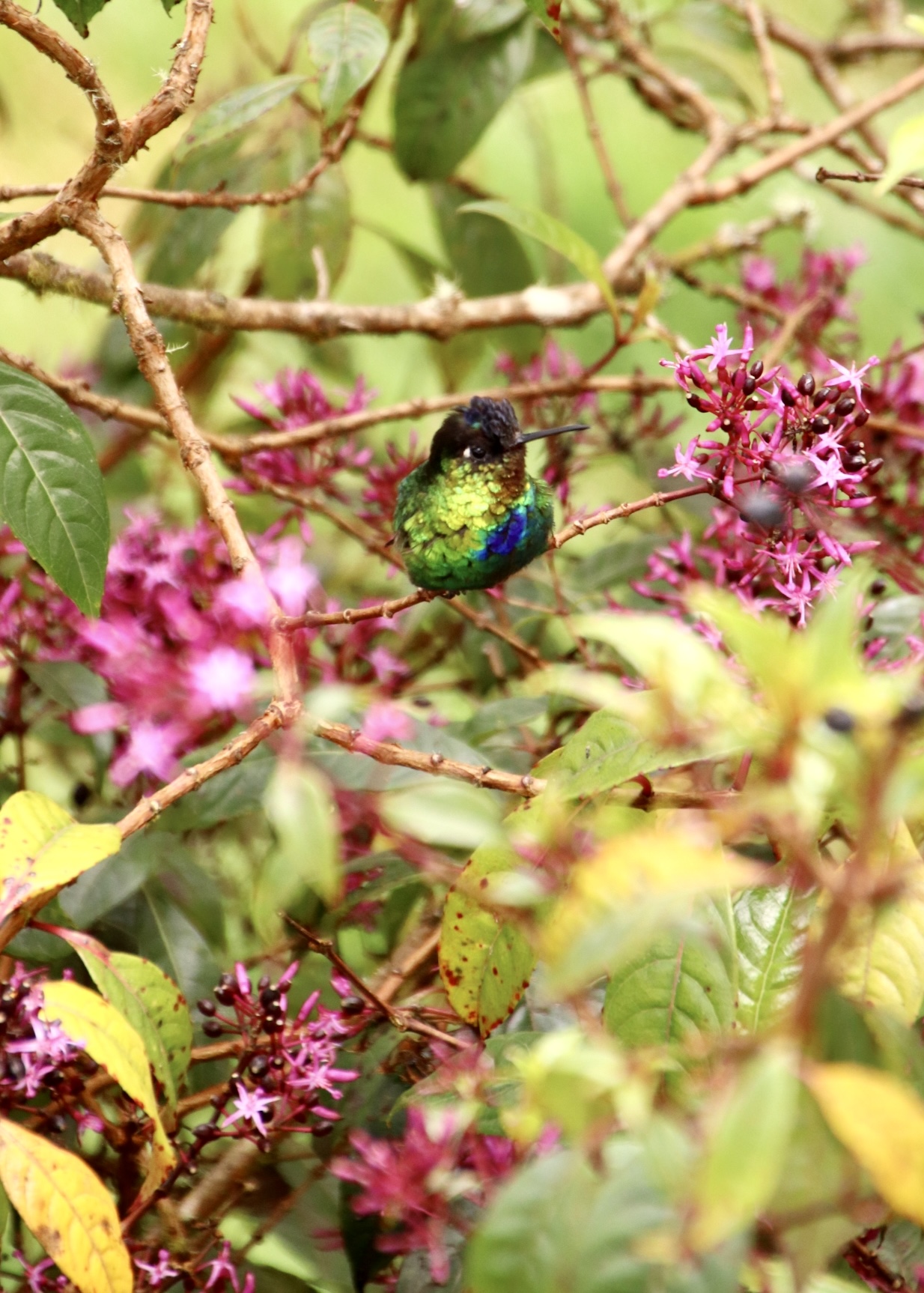
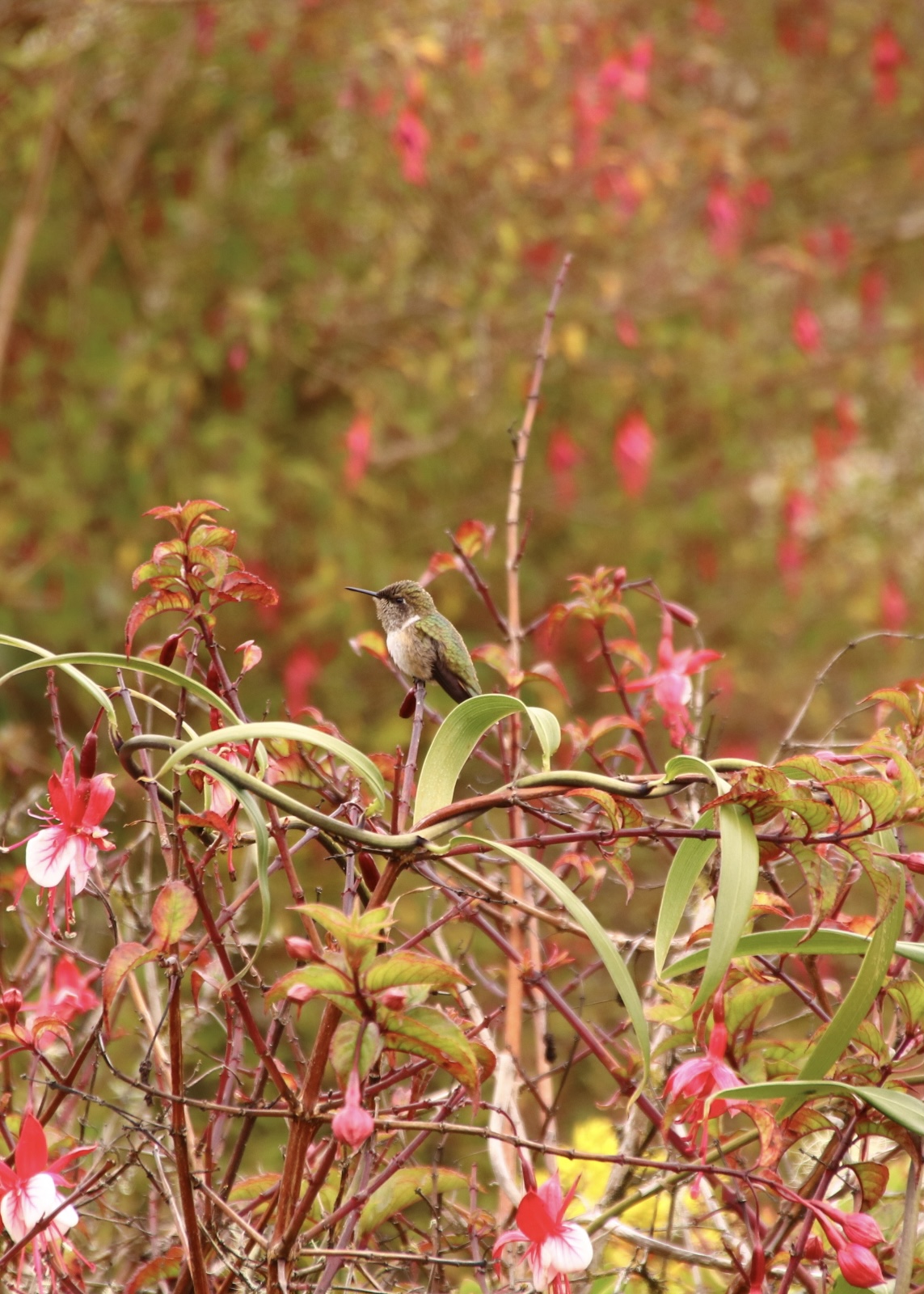
As we ventured into the Talamanca Mountains, Los Quetzales offered yet another hummingbird haven. The Fiery-throated Hummingbird lived up to its name, with its pinkish-red throat contrasting against its shimmering green and blue plumage. It was a true spectacle to witness these tiny birds engage in aerial acrobatics, darting from flower to flower with unmatched agility. I think the Fiery-throat was probably my favourite of the different species we saw.
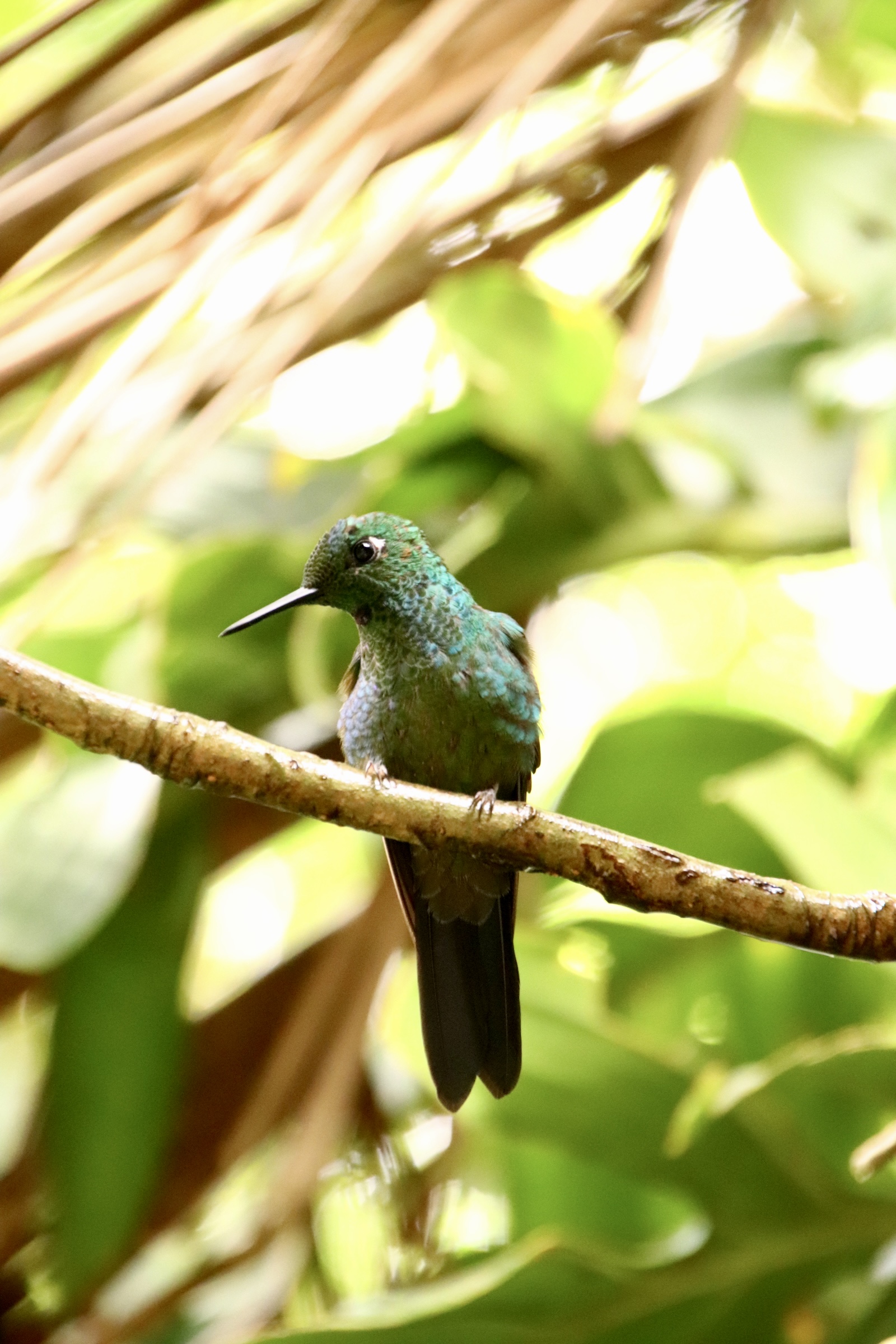
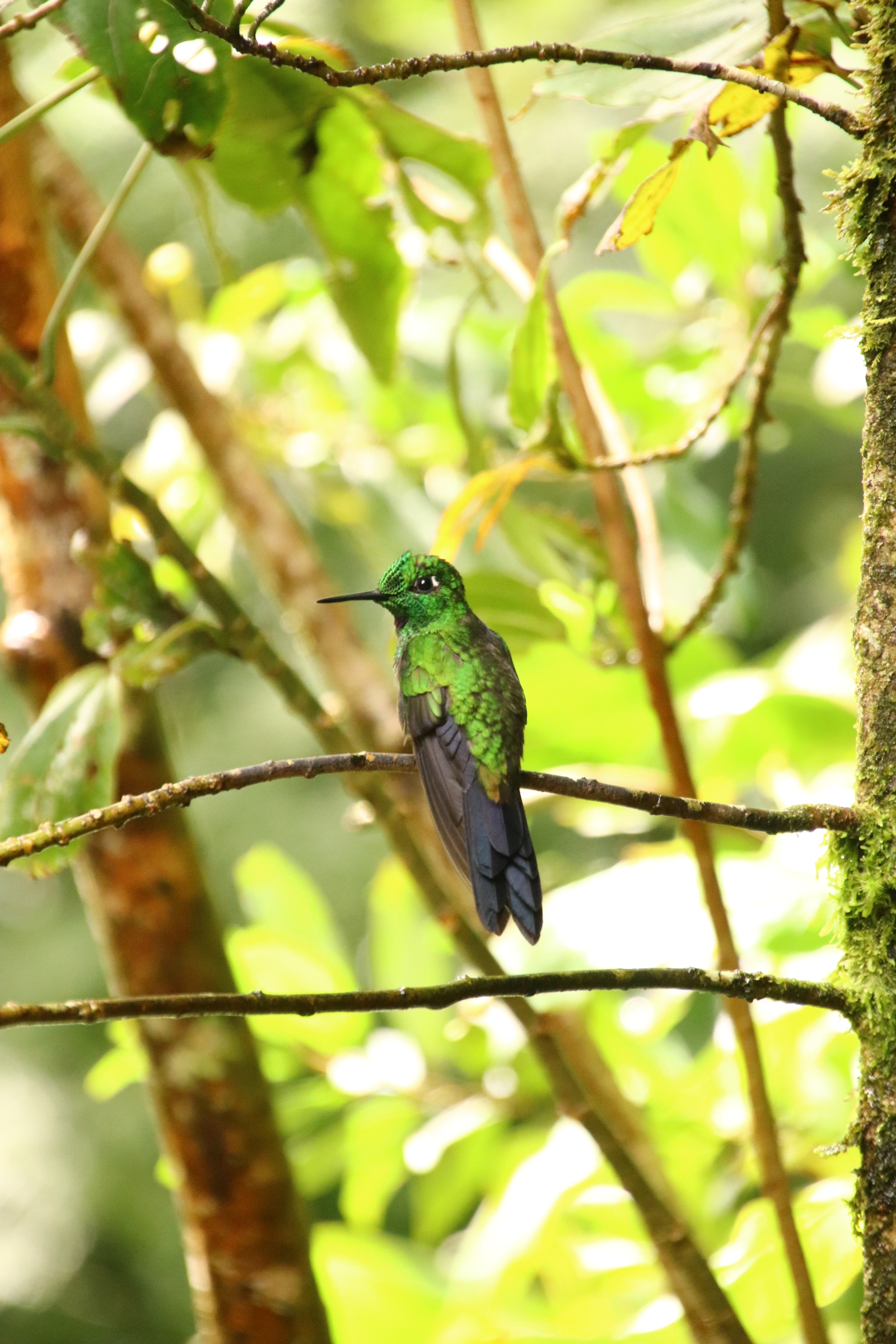
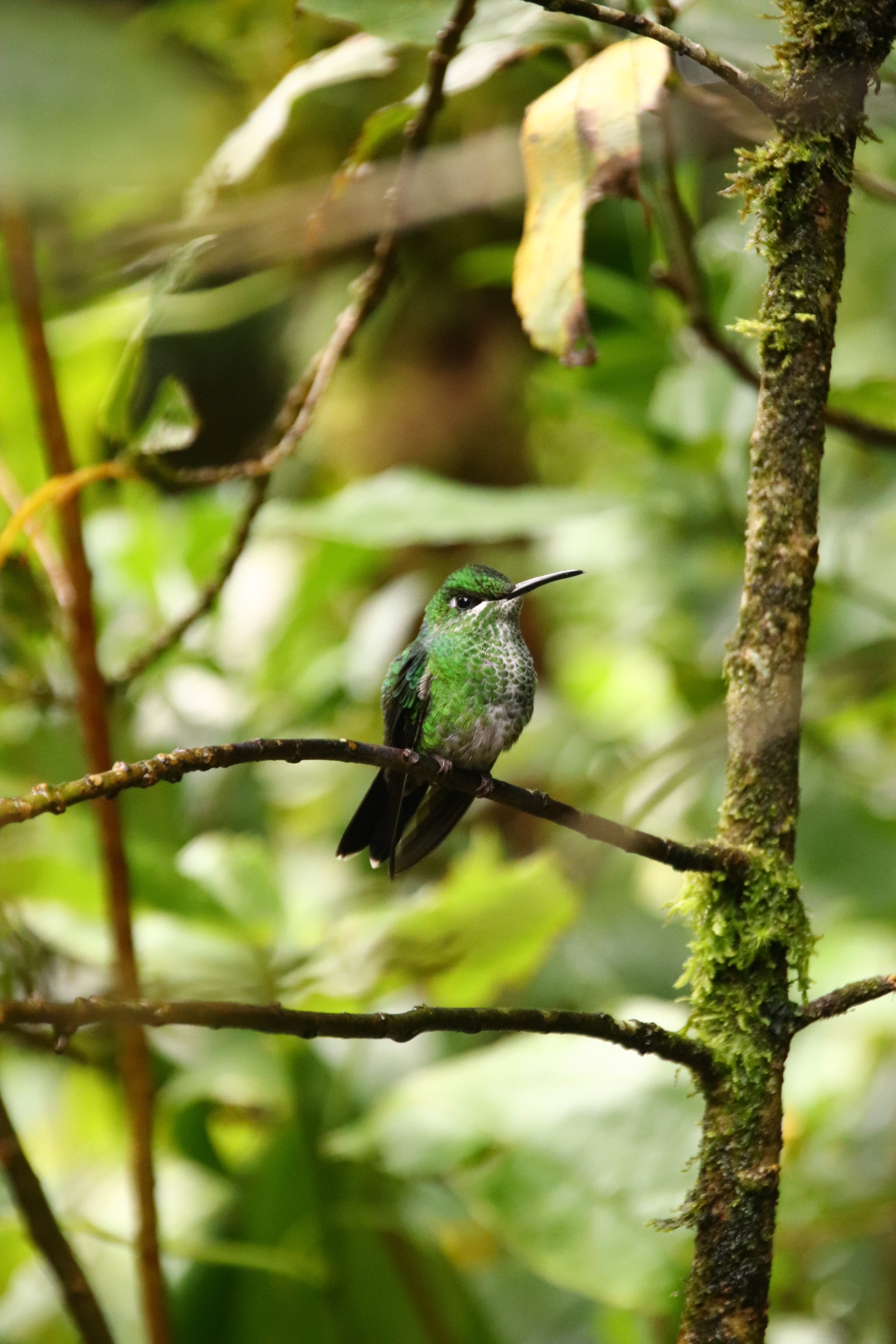
The most remarkable encounter, however, was in San Gerardo de Dota, where the Long-tailed Silky-Flycatcher, Green-Crowned Brilliant, Purple-throated Mountain-Gem and Rufous-Tailed Hummingbird, along with many others, darted amongst the tall trees and flowers surrounding the hotel we were staying in. We were able to get incredibly close to these completely wild creatures, and they created a mesmerizing sight as they zipped from one plant to another, sipping the sweet nectar.
As you’ll know, hummingbirds are highly-specialized nectar feeders, relying on the energy-rich food to sustain their rapid metabolism. Their wingbeats can reach up to 80 times per second (or even more in some species) and this remarkable ability allows them to hover in mid-air, fly backward, and perform incredible aerial manoeuvres.
We even saw a nest with some recently-hatched chicks – though we were careful to keep our distance and leave the mother to do her thing. Hummingbirds build intricate nests made of plant materials, spider silk, and feathers, often secured to the branches of trees or shrubs. The female typically incubates the eggs and cares for the young, while the male defends the territory.
The sheer diversity of hummingbirds in Costa Rica is fantastic. It is home to over 50 different species, making it one of the most varied hummingbird habitats in the world. Each species has its unique charm and left a lasting impression. I really hope they can be enjoyed for generations to come! Hummingbirds face threats from habitat loss, climate change, and a myriad of other human activities. Conservation efforts are crucial to protect their homes and ensure their survival.
I found it hard to narrow down from my collection… So here are a few more, for good measure:
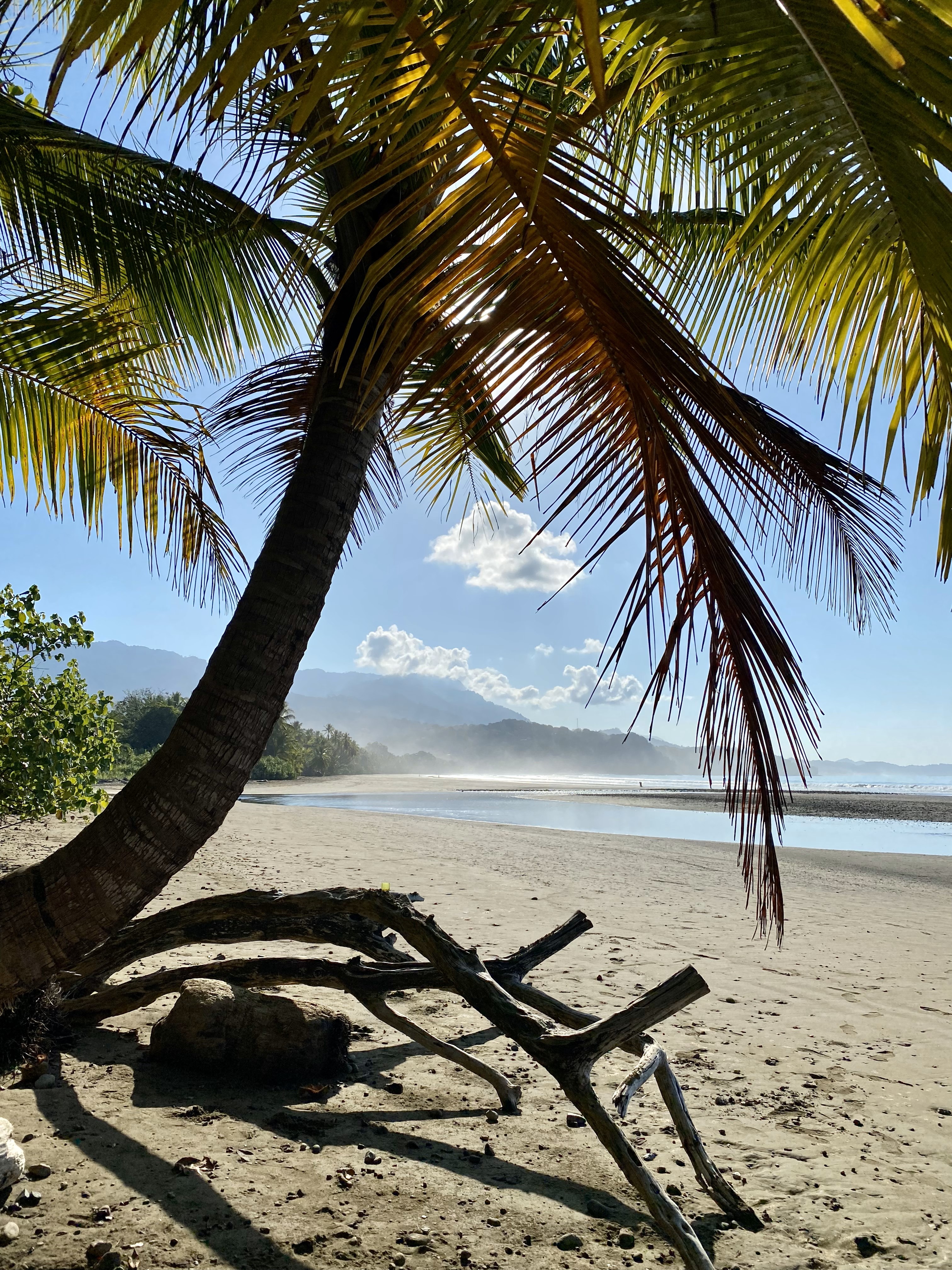
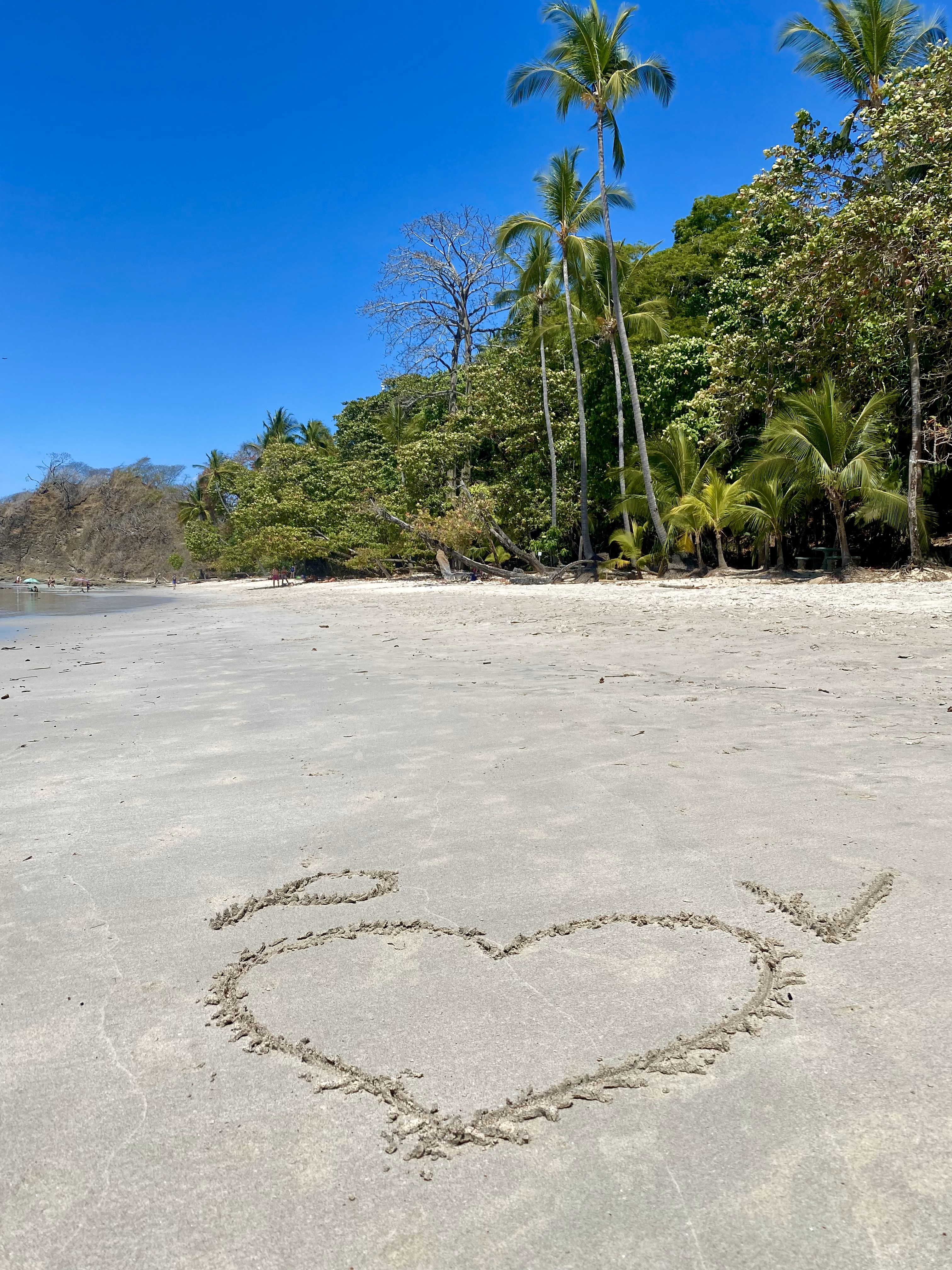
No Costa Rican adventure can be complete without indulging in the tranquillity of its sun-kissed Pacific Coast beaches. Gosh, I sound like a travel agent! But it was really nice to unwind on the golden sands of Punta Leona, on the Gulf of Nicoya, for a couple of days. Cocktail, book, ice-cream: bliss.
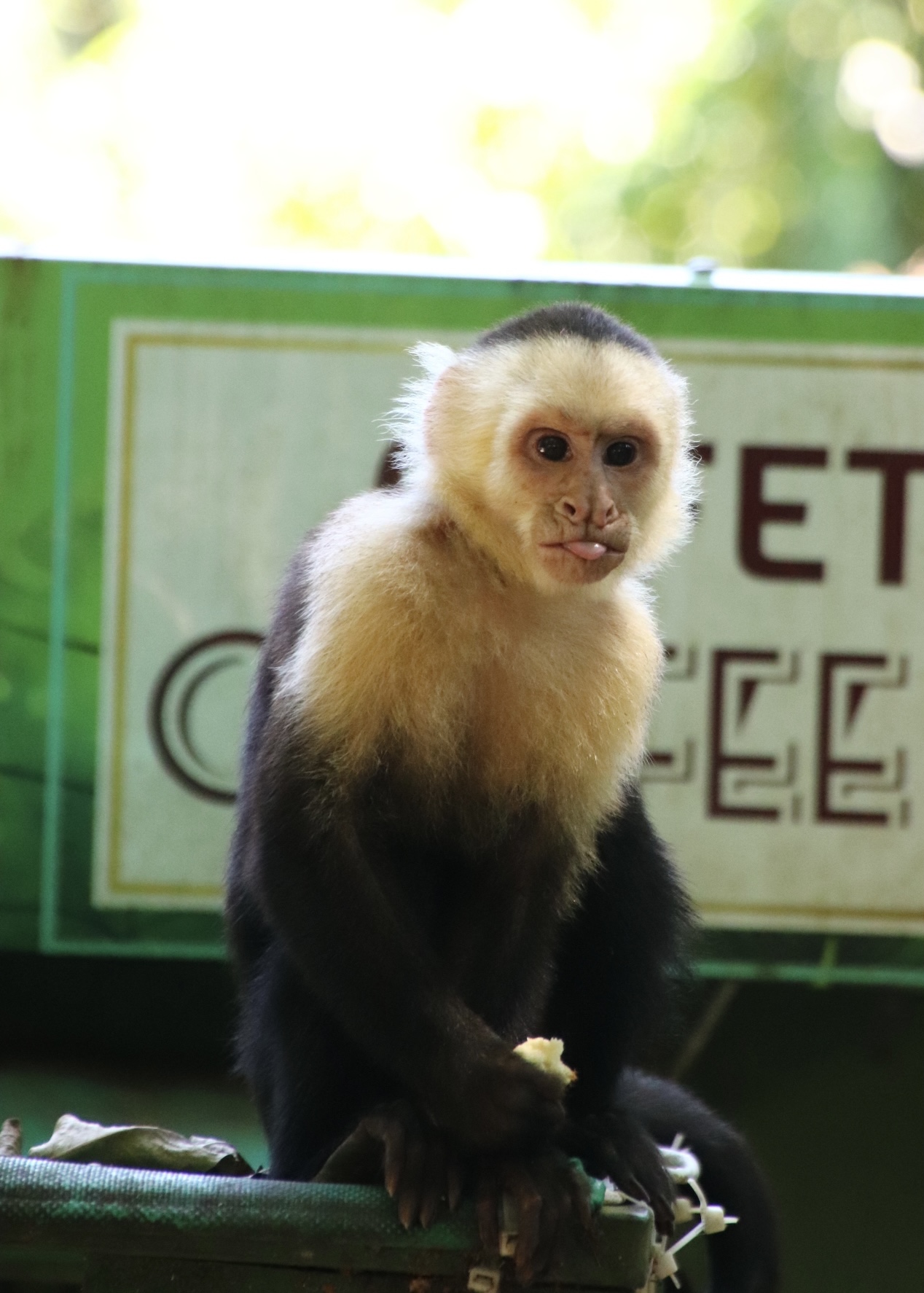
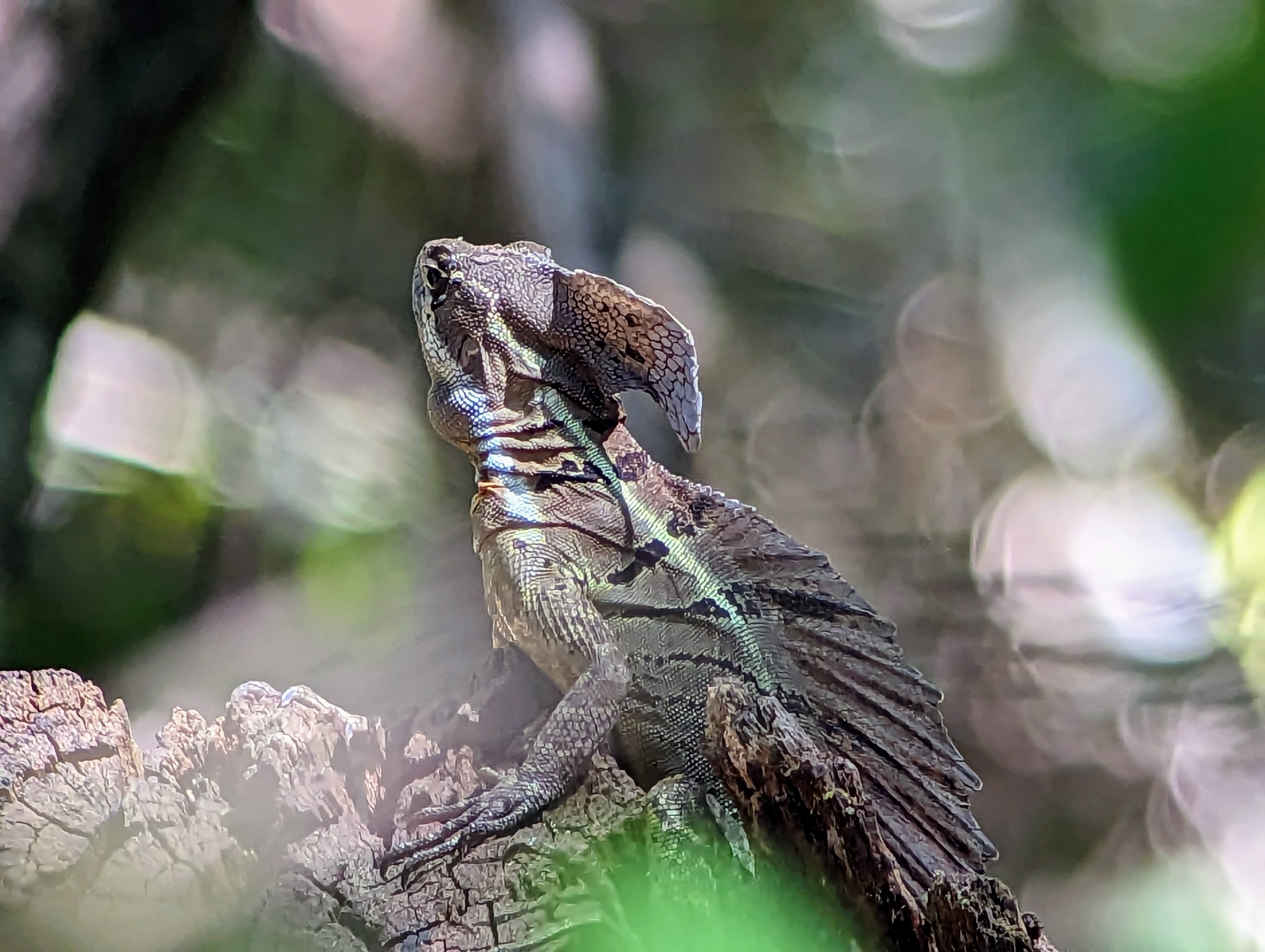
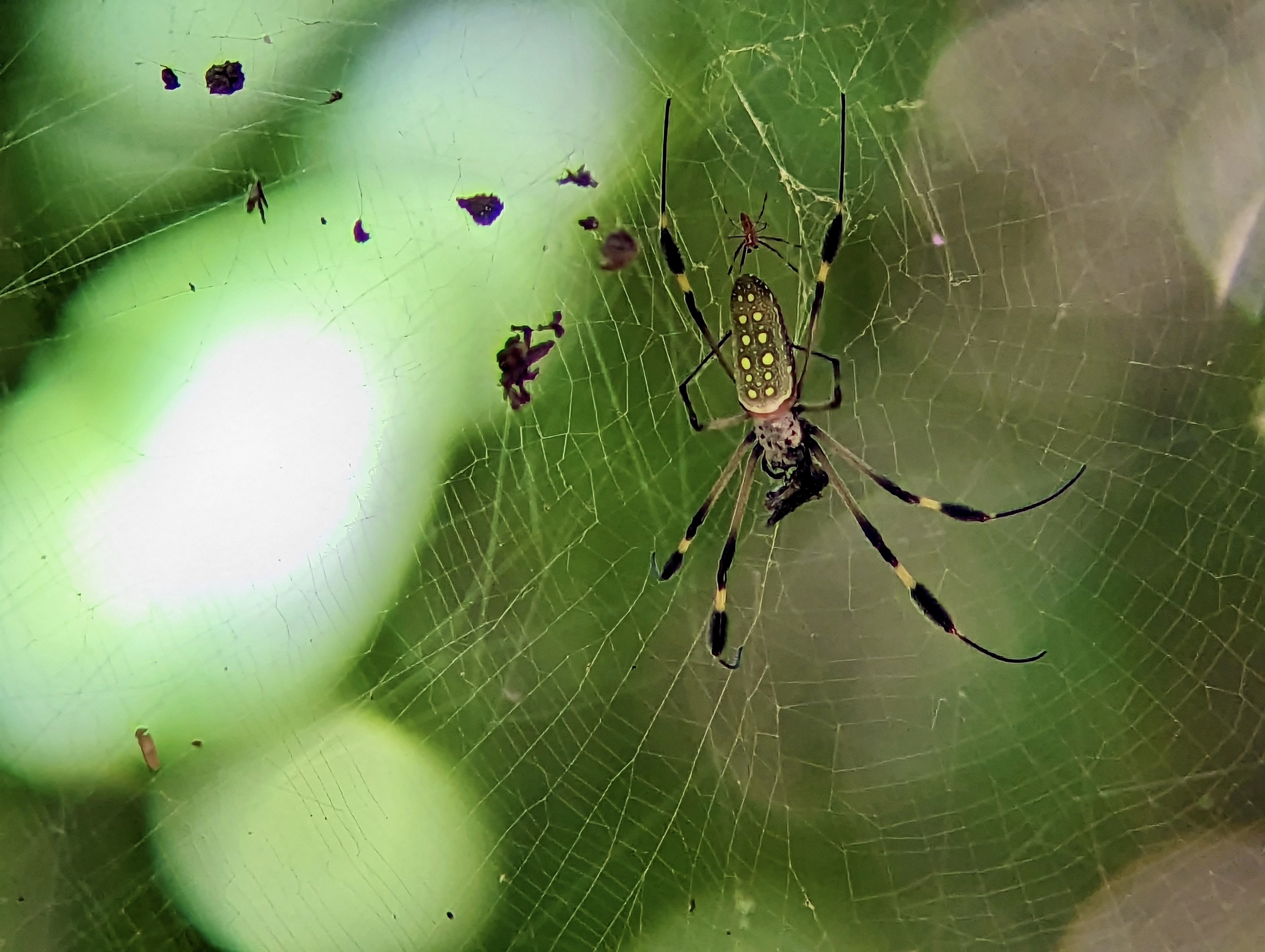
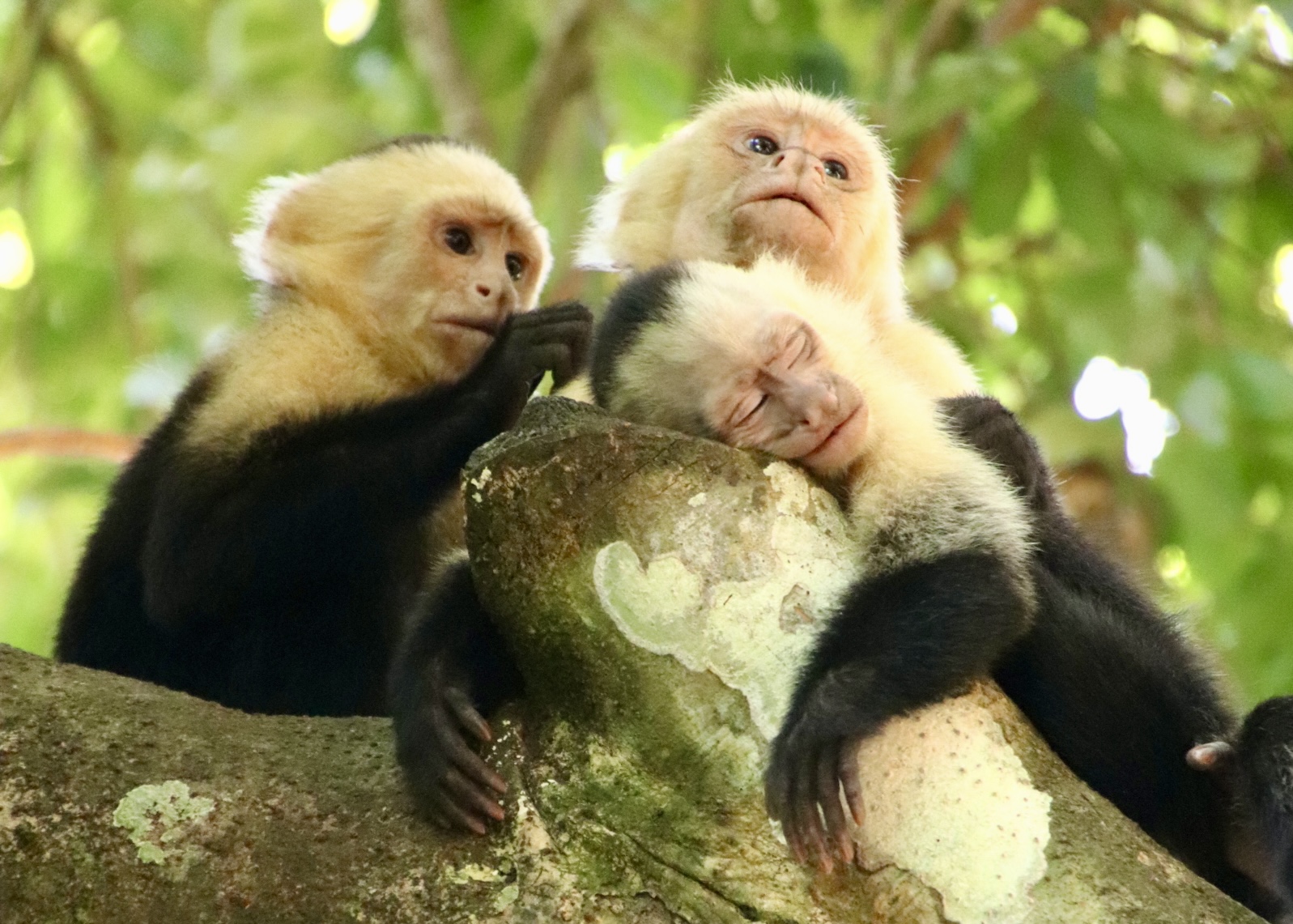
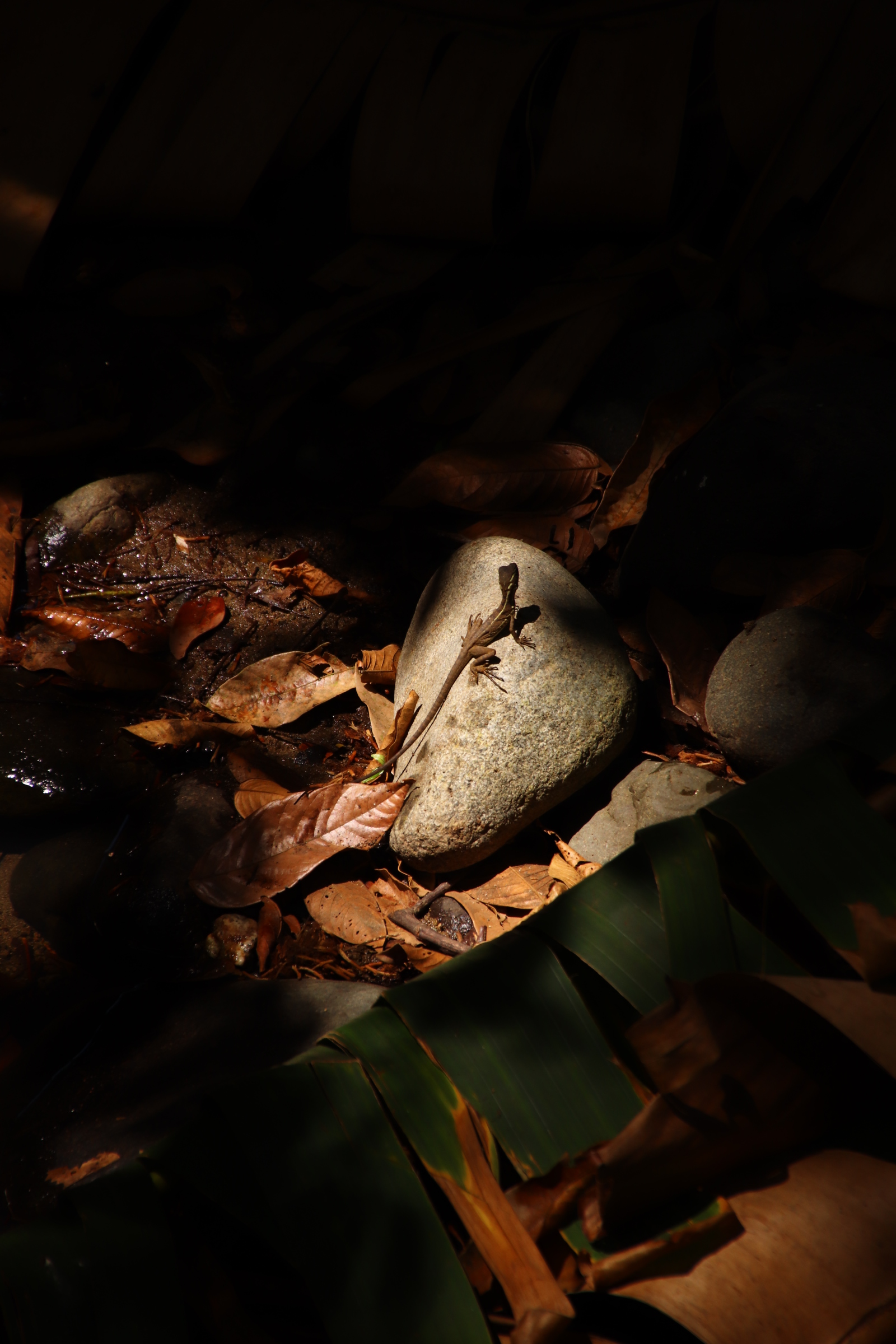
After some proper R&R, we took in two of the most renowned parks in the country. Manuel Antonio, located just a little further down the Pacific Coast, is a natural gem renowned for its breath-taking beauty and abundant wildlife. As you venture into this coastal rainforest, you’re greeted by the park’s most endearing residents – the playful capuchin monkeys. These mischievous creatures are well-known for their entertaining antics, constantly attempting to sneak snacks from visitors or run away with hats and sunglasses. We sat for a while, watching them groom each other and nimbly reach fruit from high branches. Along with the monkeys, the park is also home to three-toed sloths, large green iguanas, and a myriad of bird species. On our particular visit, we also saw some less-striking (but equally impressive) residents: a Broadwing Falcon, a well-camouflaged nightjar, zigzag spiders, brown basilisks and a colony of tent-making bats.
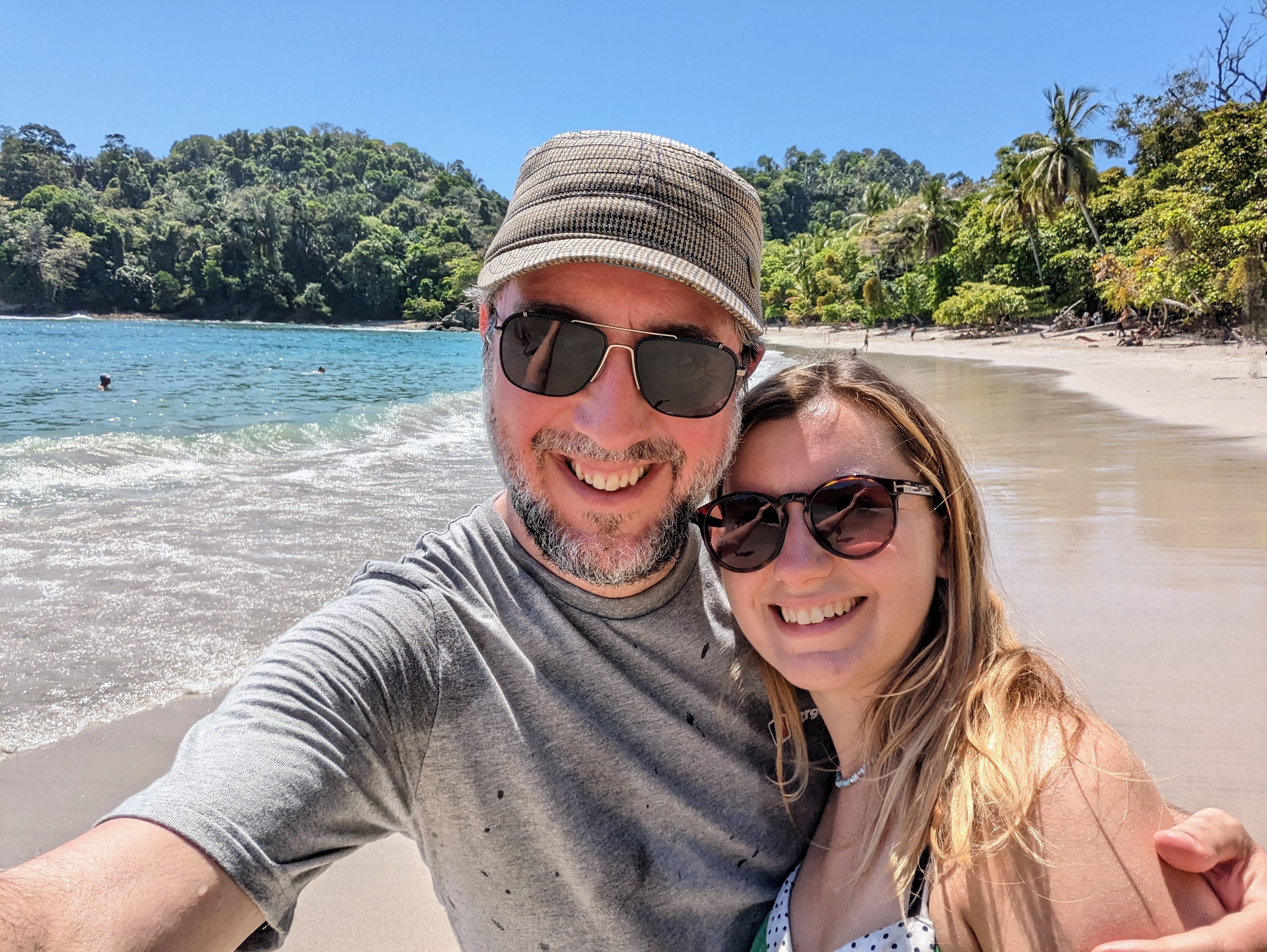
Manuel Antonio was not my favourite though. It’s incredibly popular and so had far more people than we’d been used to seeing. It was also unbearably hot – the sweat poured off us all day, and dehydration threatened. Its crystal-clear waters were, however, glorious. I wish we’d have more time to swim and enjoy the immaculate beaches.
Which brings us neatly and naturally to the question: What was your favourite park then? Thanks for asking. Well, Corcovado of course. Untamed wilderness at its absolute finest. Corcovado is the crown jewel of Costa Rica’s national park system. Accessible only by boat, this remote treasure offers an unrivalled immersion into pristine rainforests and secluded beaches. It is simple stunning. I felt like Indiana Jones…or Bear Grylls…or some do-gooder in Jurassic Park trying to save the diplodocus (but inevitably releasing the raptors to chaotic yet 5-star entertainment effect).
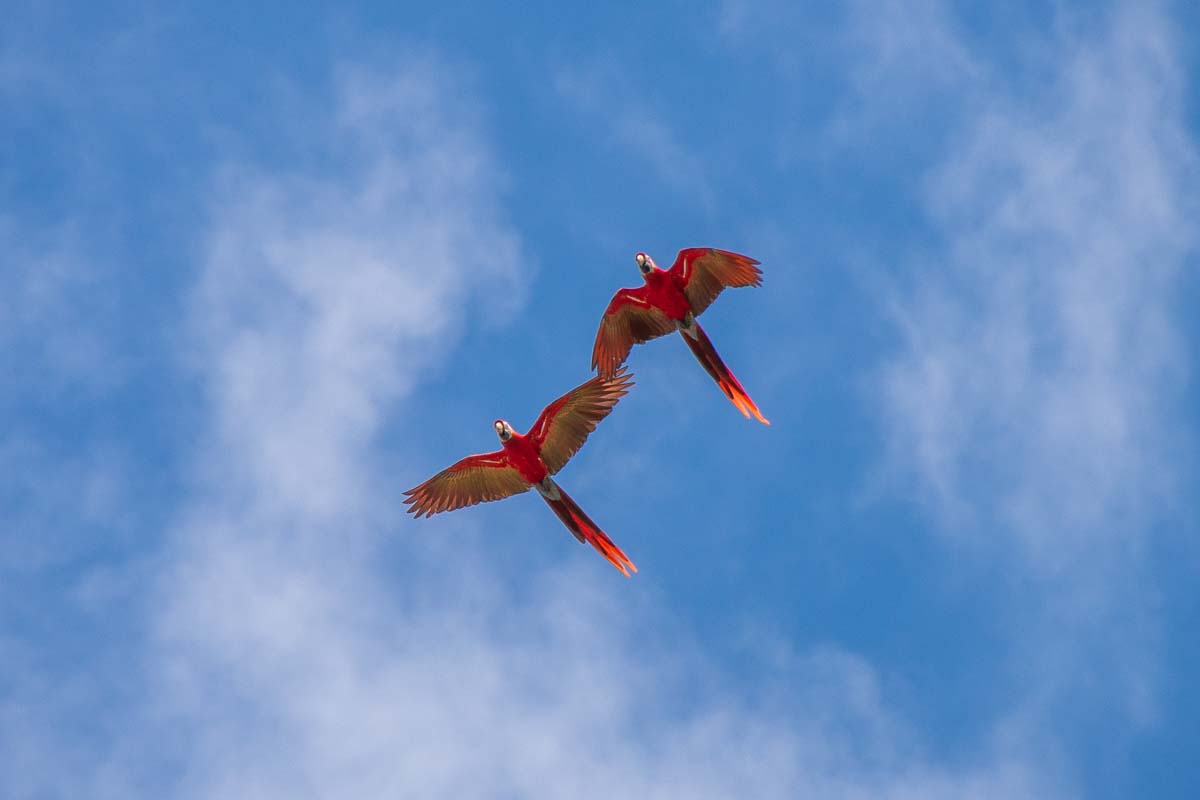
One of the most captivating sights in Corcovado was the presence of vibrant scarlet macaws. With their stunning red, blue, and yellow plumage, these awesome birds added a frequent burst of colour to the lush greenery. I watched in awe as they soared through the canopy or gathered in pairs, displaying their affection with their loud calls and tomfoolery. The macaws’ presence is testament to the park’s successful conservation efforts. And if my habitat was as clean and carefully protected as this, I’d be pretty happy to stay too!
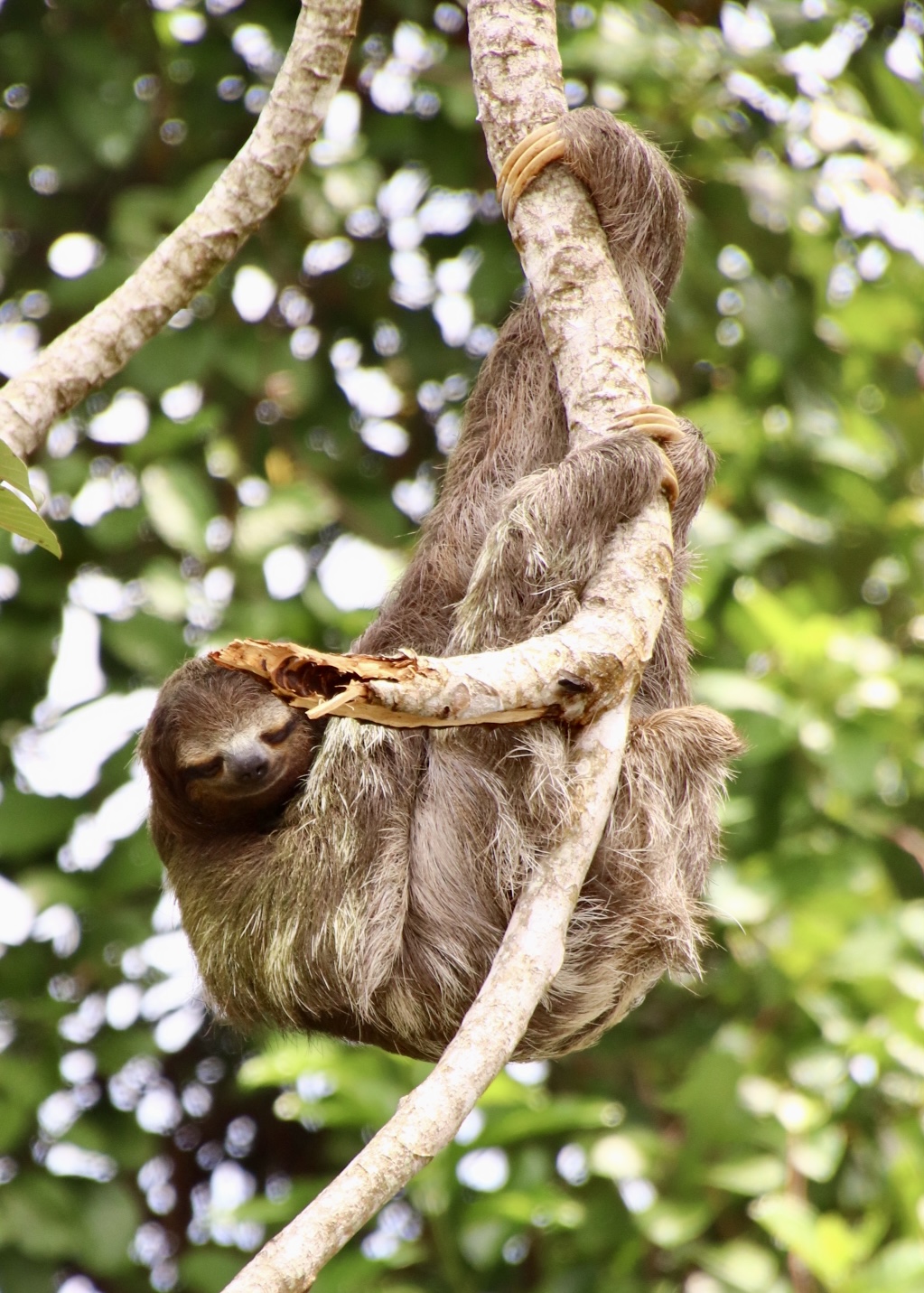
Whilst exploring the dense foliage, creeping under vines and scrambling over branches like Lara Croft (ooh yes, I’ll settle on Lara), I was fortunate enough to spot again the enigmatic sloths high in the trees. It feels like sloths are somewhat the mammal du jour, with children everywhere clutching soft-toy versions and their cute faces adorning t-shirts, mugs and a variety of other merch. But I want to make clear they were mine before they became fashionable! With their slow and deliberate movements, sloths have a unique charm, and speak to the very core of my being. 🙂
After a late lunch of plantain, pineapple, papaya, melon, chicken stew and the ubiquitous gallo pinto, we bid a sad farewell to Corcovado and made our way back on the speedboat. But the surprises continued! Gliding through the sparkling waters, we suddenly found ourselves surrounded by a pod of dolphins. The playful and intelligent creatures danced in the boat’s wake, and we even got to see an infant leaping in the air.
Back from Peninsula de Osa, where the park is located, we spent a day in hippy Dominical, a surfing village with excellent cocktail bars. I was worn out though! After a swim, a piña colada (or three) and a really delicious hibiscus mezcal concoction, it was time for an early night. I slept very very well.
Our last stop was San Gerardo de Dota, nestled in the Talamanca Mountain Range and Los Quetzales National Park. This is one of the lesser-visited parts of the country, but is known for being one of the best places to spot the elusive Resplendent Quetzal (again, part of its name rather than a gushing adjective).
The Resplendent Quetzal, considered one of the most beautiful birds in the world, had a storied place in ancient Mesoamerican mythology and remains a symbol of freedom and beauty. With its iridescent green feathers, crimson chest, and striking tail feathers, the quetzal is a sight to behold and a dream for any bird enthusiast. Some twitchers spend hundreds – thousands! – of pounds on guides to take them through the forest in an attempt to spot the bird. We were fortunate enough to have a rare encounter with these stunning creatures without even really trying.
We were actually on a walk to a local waterfall when we witnessed the remarkable event: a male and female quetzal meticulously building a nest together. The male’s vivid colours shimmered in the dappled sunlight as he diligently searched for the perfect twigs and nesting materials, while the female attended to her house-building duties. Observing this intimate moment left us both with a sense of awe…and me with c.200 photos to edit!
Right, I think I’ve done Costa Rica justice. From the ethereal beauty of Monteverde Cloud Forest, the verdant waterways of Tortuguero, the excitement of Sarapiqui’s rapids…elusive sloths, pristine beaches, volcanoes, dolphins, toucans, and memorable sunsets – this Costa Rican odyssey was an unforgettable journey that will forever stay etched in my heart.
There’ll be some extra posts no doubt focused on specific animals, but for now (and for always): Pura Vida!
A short one today! Situated on the border of the Central and South Pacific regions of Costa Rica, Carara National Park is a unique reserve that’s a Mecca for avian enthusiasts, boasting a spectacular variety of bird species.
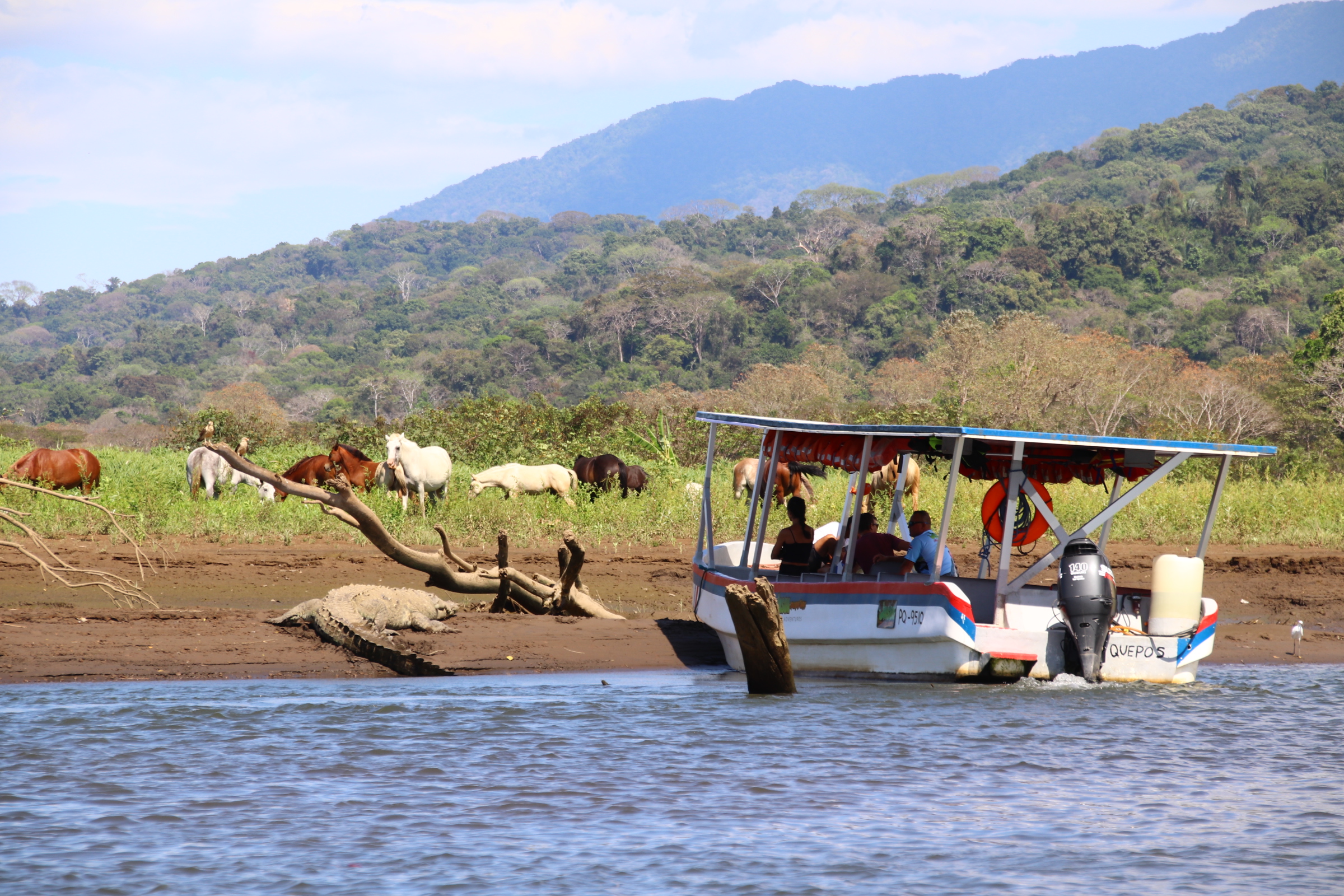
Boarding a small boat to navigate the waterways, I hadn’t appreciated the park is also home to the impressive American crocodiles. One notable – and colossal – croc named Captain Hook stood out due to (yep, you guessed it) the loss of one of its limbs. I felt a tad apprehensive as we passed slowly by the sleeping giant. But the egrets perched on his back seemed pretty non-plussed. Witnessing these ancient reptiles in their natural habitat was quite special.
My eyes were quickly drawn to the skies though, where a symphony of winged wonders greeted us. Perched atop trees and soaring through the skies, we spotted beautiful Ospreys, also known as fish hawks, exhibiting their exceptional fishing skills. With keen eyesight, they hovered above the water before swooping down with talons outstretched to catch their slippery prey. Anhingas, white ibis, mangrove swallows, a variety of egrets and herons, sandpipers, whimbrels and kingfishers were all spotted.
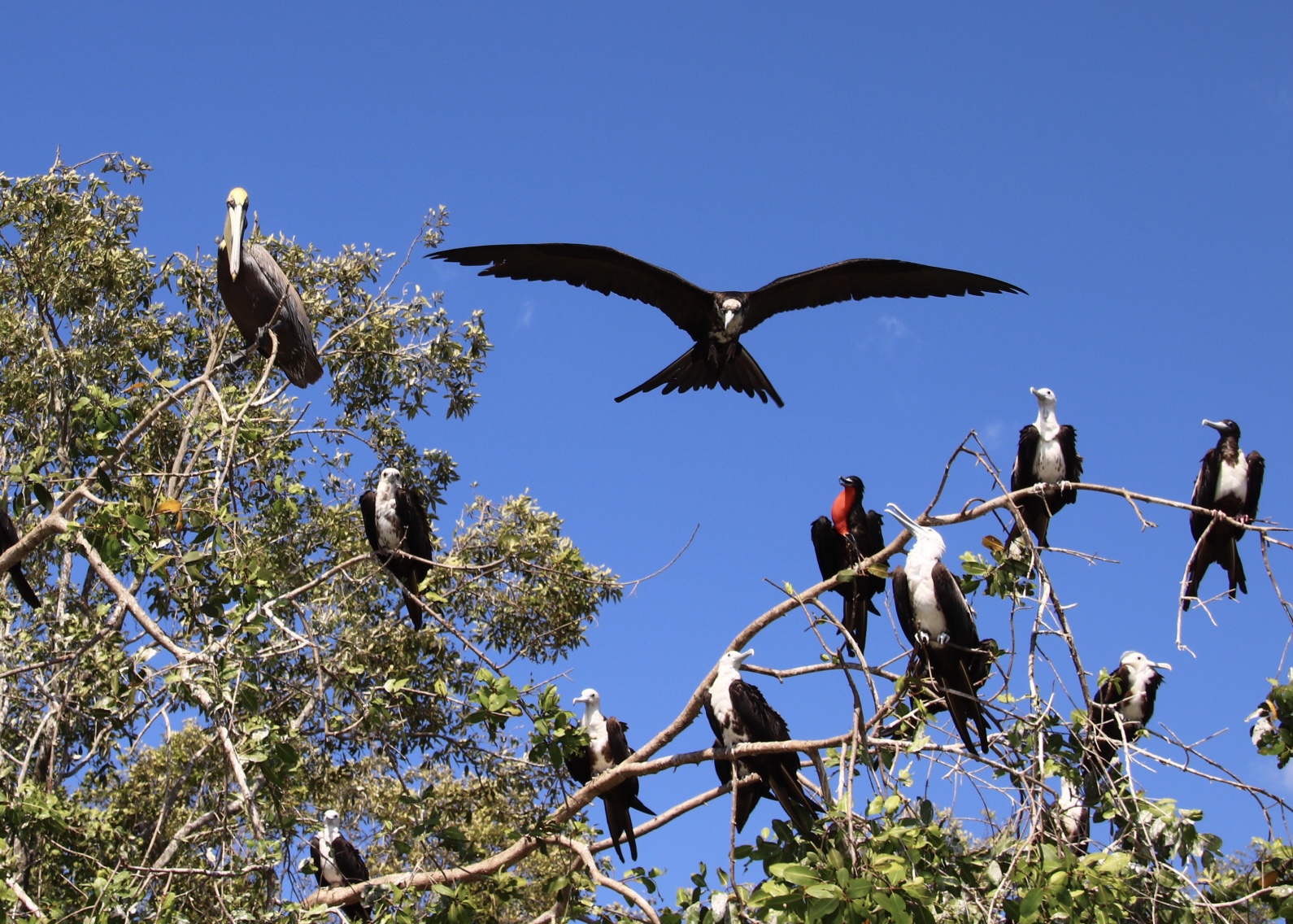
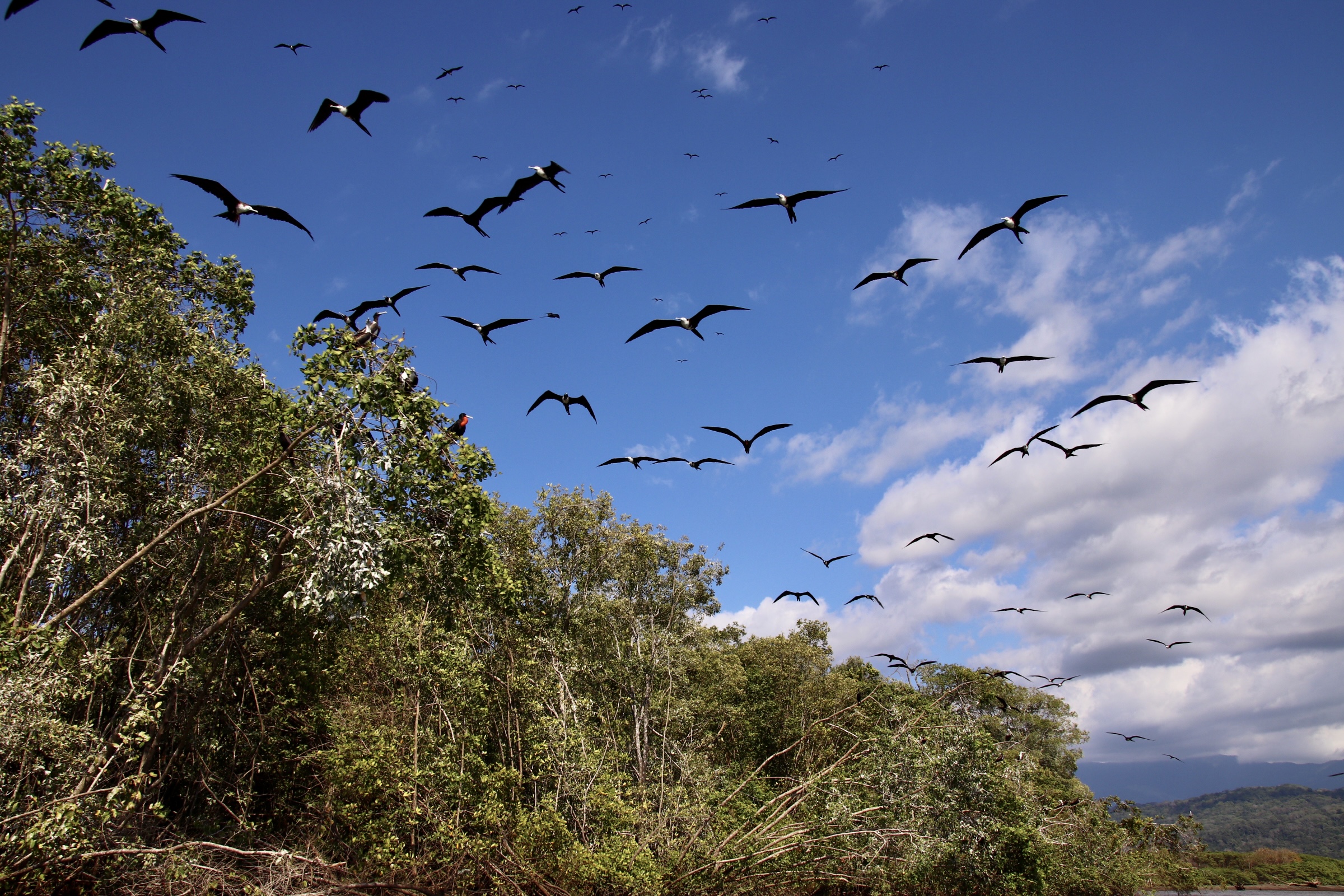
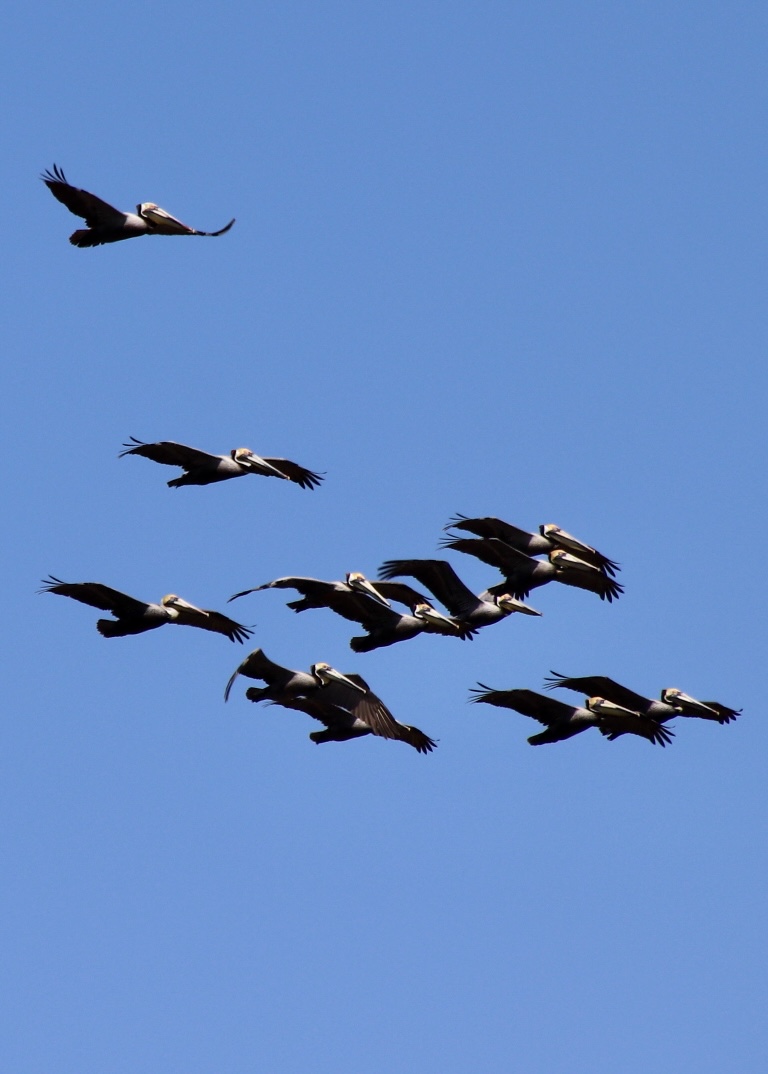
As we continued our exploration, the sky above Carara became a mesmerizing spectacle. Hundreds of Magnificent Frigatebirds (that’s their name, not an effusive adjective) circled overhead, creating a breath-taking aerial ballet. These large seabirds, known for their distinctive forked tails and striking red throat pouches, captivated us with their acrobatic displays. And they shared the coastal vistas with dozens of brown pelicans.
One of the most striking sightings was the elegant Roseate Spoonbill, a captivating wading bird with its pink plumage and distinctively spoon-shaped bill. This majestic bird stood gracefully in the shallow waters, sweeping its bill from side to side in search of its aquatic prey. As avid fans of the board game Wingspan (yes, I’m revealing my not-so-well-hidden dorky side), Paul and I were particularly excited by this one!
We also spotted vultures soaring high above the treetops and picking at bones in the swallows. These efficient scavengers play a crucial role in the ecosystem by cleaning up carrion, making them an essential part of Carara’s natural balance.
Whilst the scenery itself is not as verdant and stunning as some of the other national parks we visited on our trip, I was really pleased we’d visited Carara. The diversity of the bird species is testament to the park’s commitment to preserving its rich biodiversity.
Let’s dive back into our central American adventure! (Or should I say fly back into…)
We’d arrived in Monteverde, I believe, when I’d last paused our story. Nestled in the heart of the Tilarán Mountain Range, Monteverde National Park is often rhapsodically referred to as the ultimate haven for nature enthusiasts. But this is not unwarranted hyperbole. Its cloud forest reserve boasts incredible biodiversity and it is stunningly beautiful.
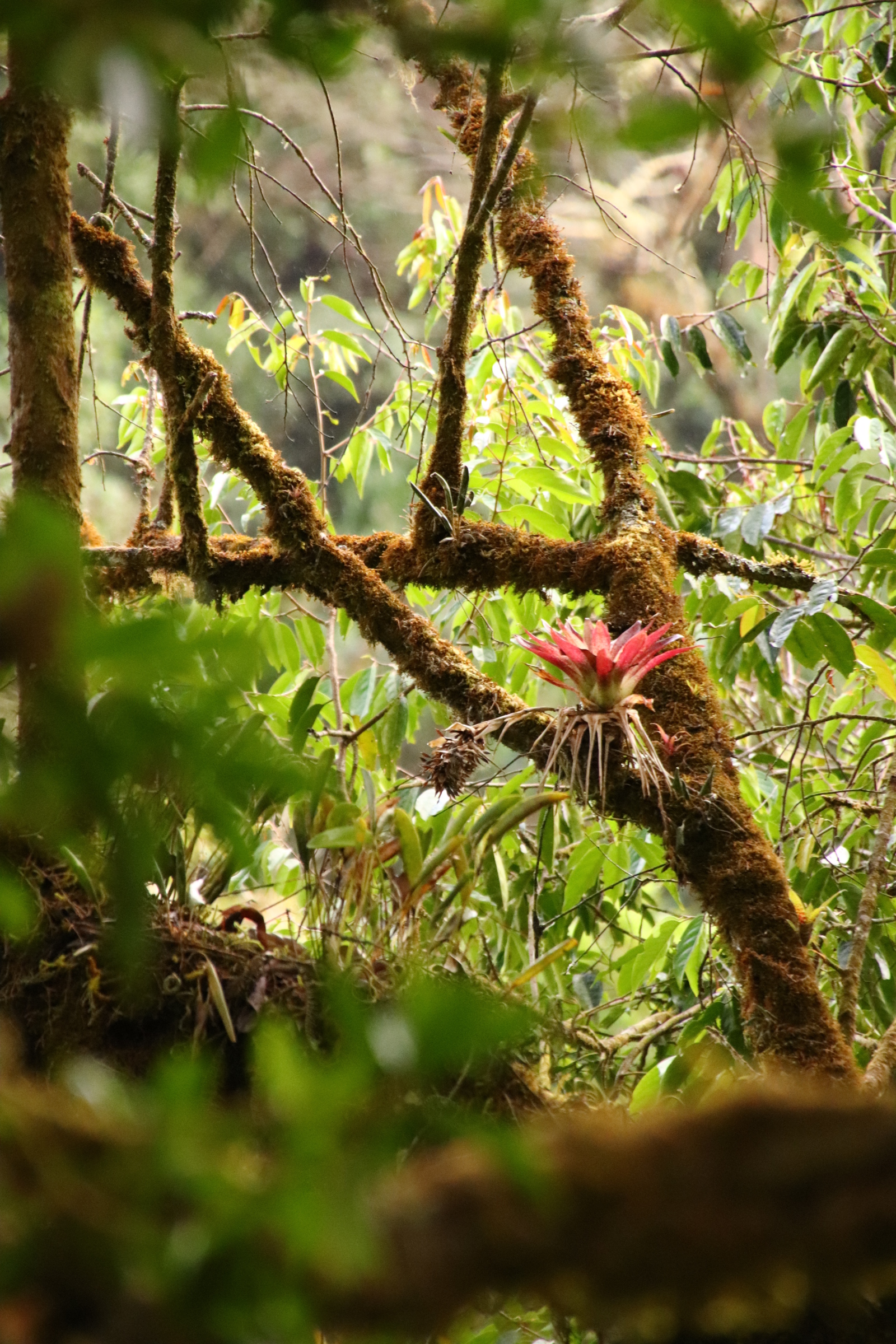
Cloud forests are typically found at higher elevations, usually between 1,000 and 2,500 meters above sea level. The combination of high altitude and the cooling effect of the clouds results in lower temperatures – to be honest, a welcome relief after the cloying heat of the previous week! I was hoping we’d also get fewer mossie bites (though this didn’t prove to be the case). Due to the constant cloud cover, these types of forest experience really high levels of precipitation, often in the form of fog or mist, even during the dry season. The clouds trap moisture, which contributes to the high humidity levels, and this moisture provides a continuous source of water for plants, animals, and numerous micro-organisms. As a result, Monteverde’s forest is home to an incredibly diverse range of plant species, adapted to the moist and cooler conditions. Epiphytes, such as mosses, ferns, and orchids, are particularly common. These grow on the branches and trunks of trees, thriving in the limited sunlight near the forest canopy. The presence of epiphytes adds to the ethereal beauty of the cloud forest, creating a magical atmosphere.
Wandering through the misty trails and treetop walkways provides a surreal perspective of the lush canopy and a chance to spot unique bird species and mammals such as the tapir and jaguar. I say ‘chance’ because we didn’t actually see any of these. Our time in the cloud forest was actually our most animal-lite part of the whole trip. No matter. Monteverde truly does have a mystical sense to it, where the union of clouds and forest created an otherworldly aura, leaving you feeling like you’ve stepped into a real-life fairy tale.
One of the highlights of our visit to the area was however – somewhat surprisingly – exploring Jardin de Mariposas, the local butterfly garden. This enchanting sanctuary showcases the beauty and diversity of Costa Rica’s butterflies across four different habitats. Stepping into the mini-reserve, you’re immediately surrounded by a flurry of colour, as over 30 species of butterflies flit gracefully around you.
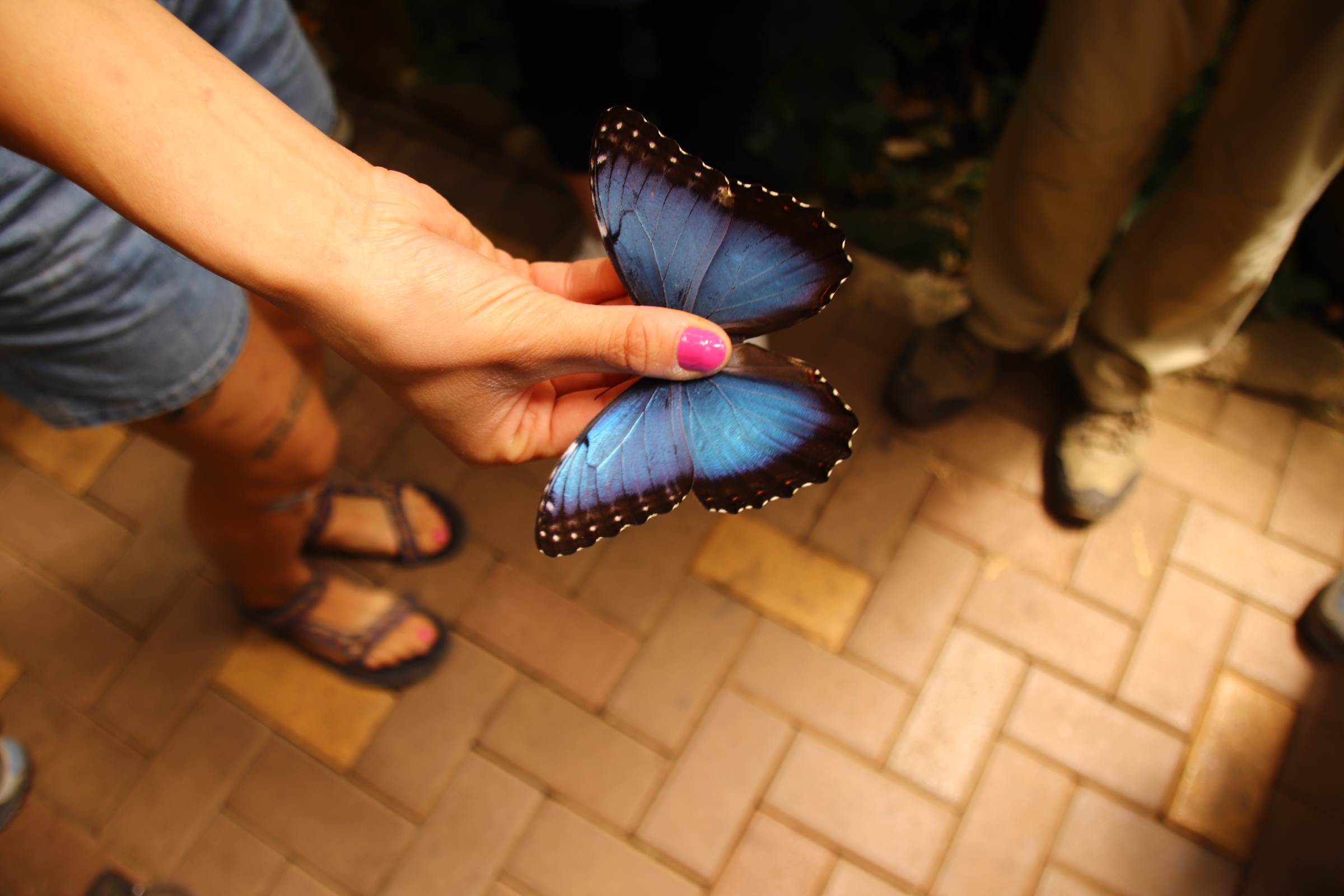
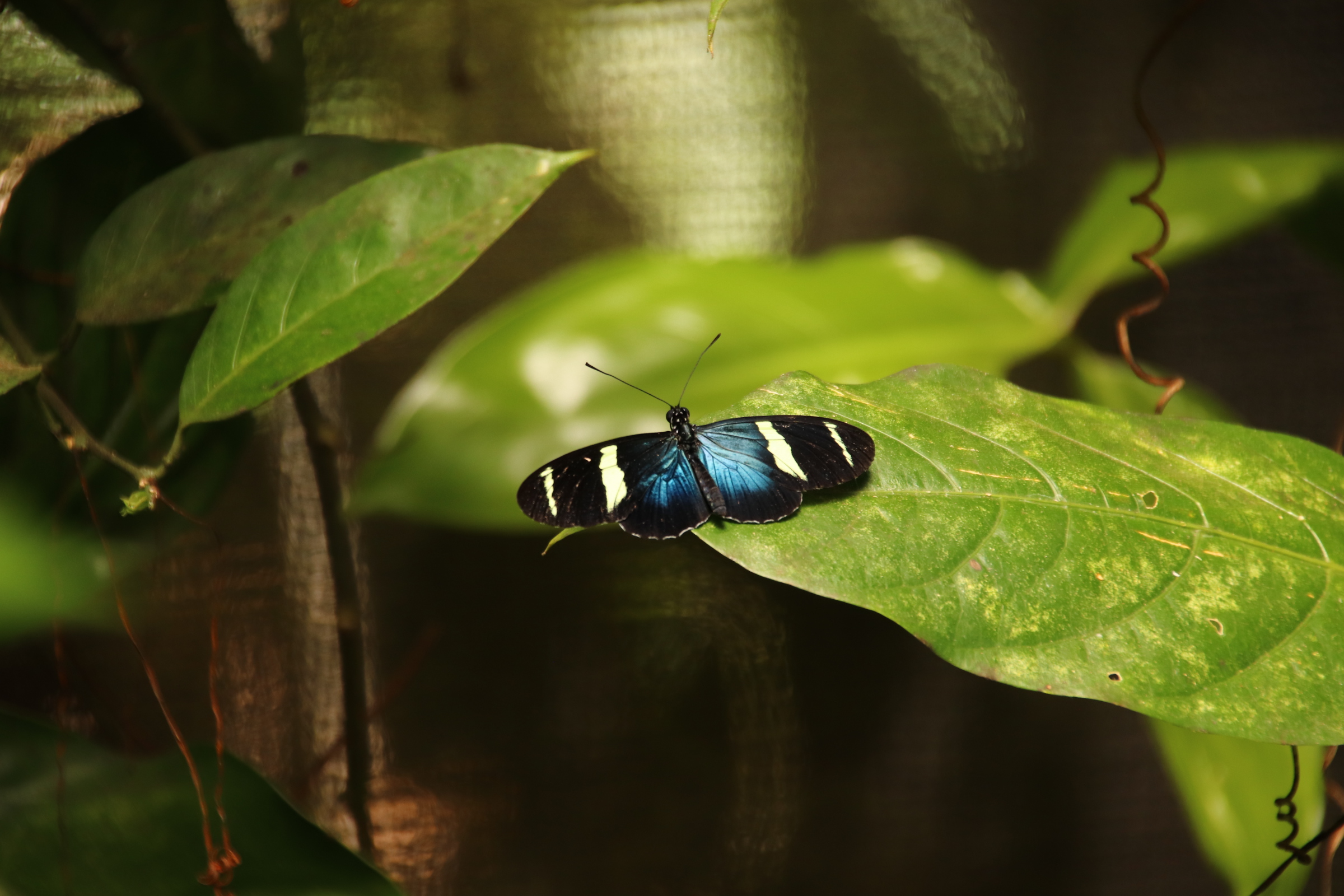
Our very punky and incredibly knowledgeable guide, Emmy, steered us around the centre, pointing out rare specimens and even grabbing them effortlessly from the air to show us up close. Gently, I should add! She grabbed them very gently. The cattleheart, with its delicate pink spots, danced through the air alongside the ethereal glasswing, whose transparent wings make them almost invisible against the foliage. The striking malachite butterflies, adorned with vivid green and black patterns, add a burst of colour. And then, there are the famous blue morpho butterflies, shimmering like sapphires as they glide through the air. Their radiant blue wings reflect the sunlight, captivating everyone’s attention. I’d seen some of these species before, but never in such numbers!
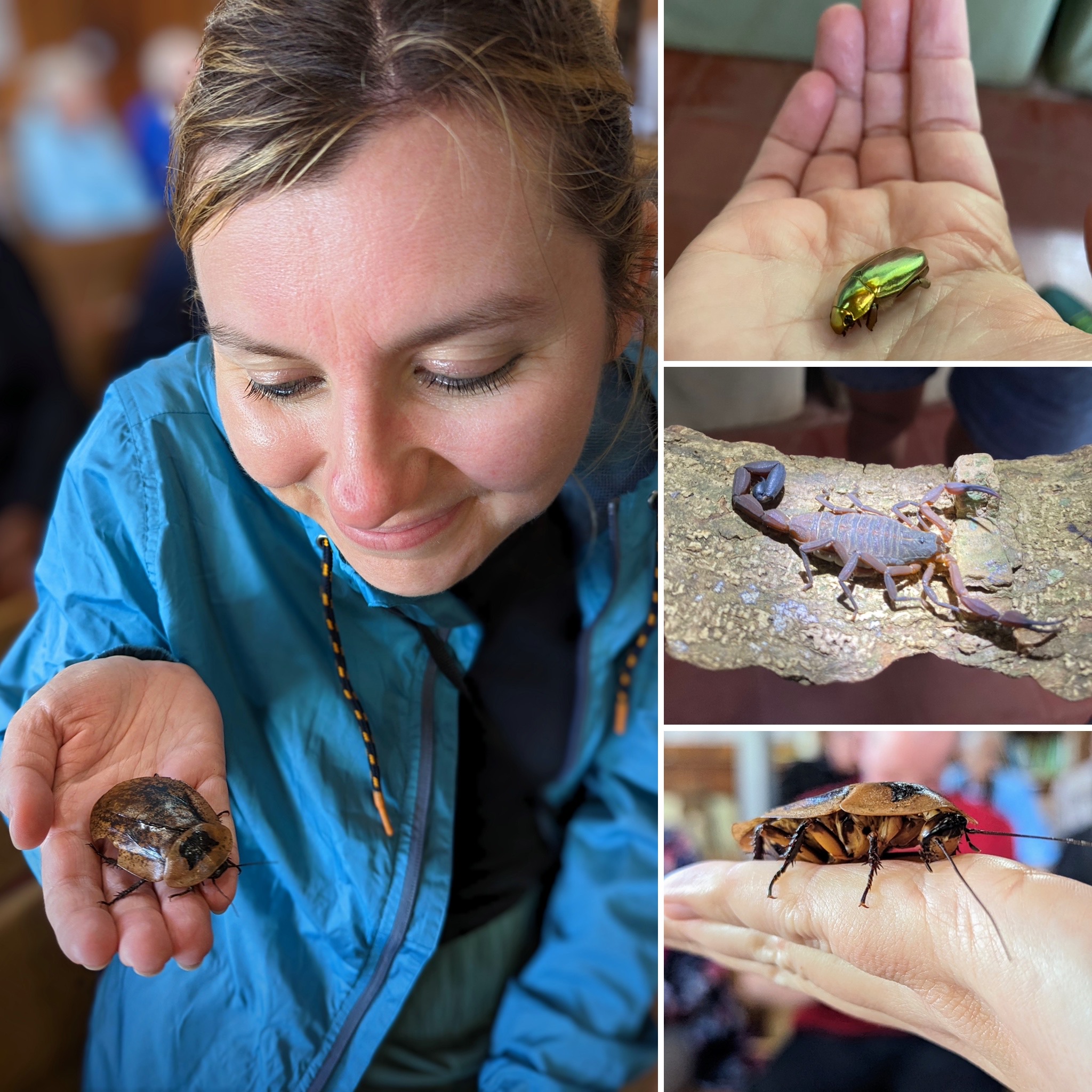
There’s an array of other intriguing creatures in the sanctuary too. From scorpions to millipedes, stick insects to jewel beetles, and even a friendly cockroach named Tiny that I held in my hands, the garden offers a fascinating (and educational) experience about some of the smallest creatures of the rainforest.
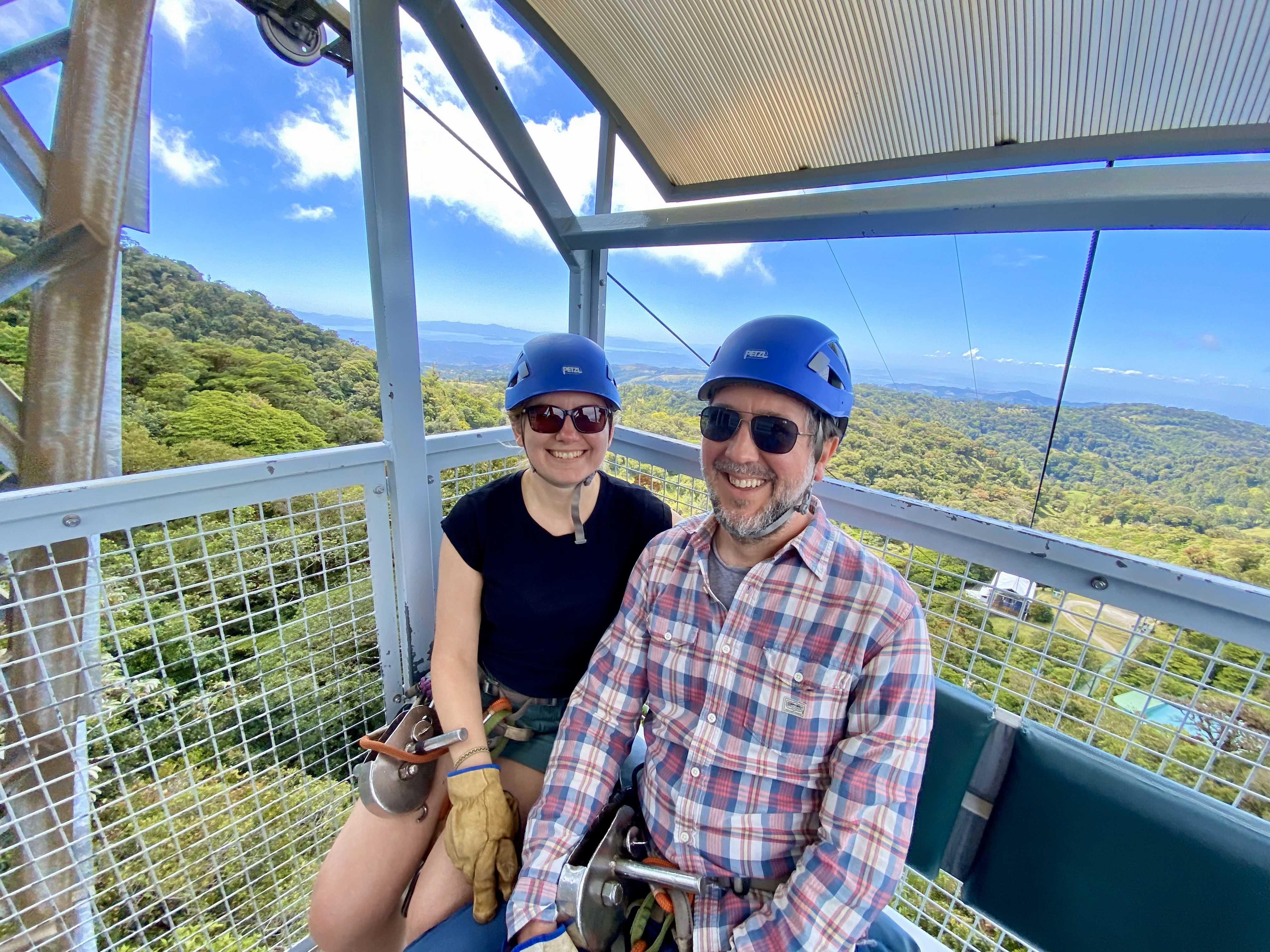
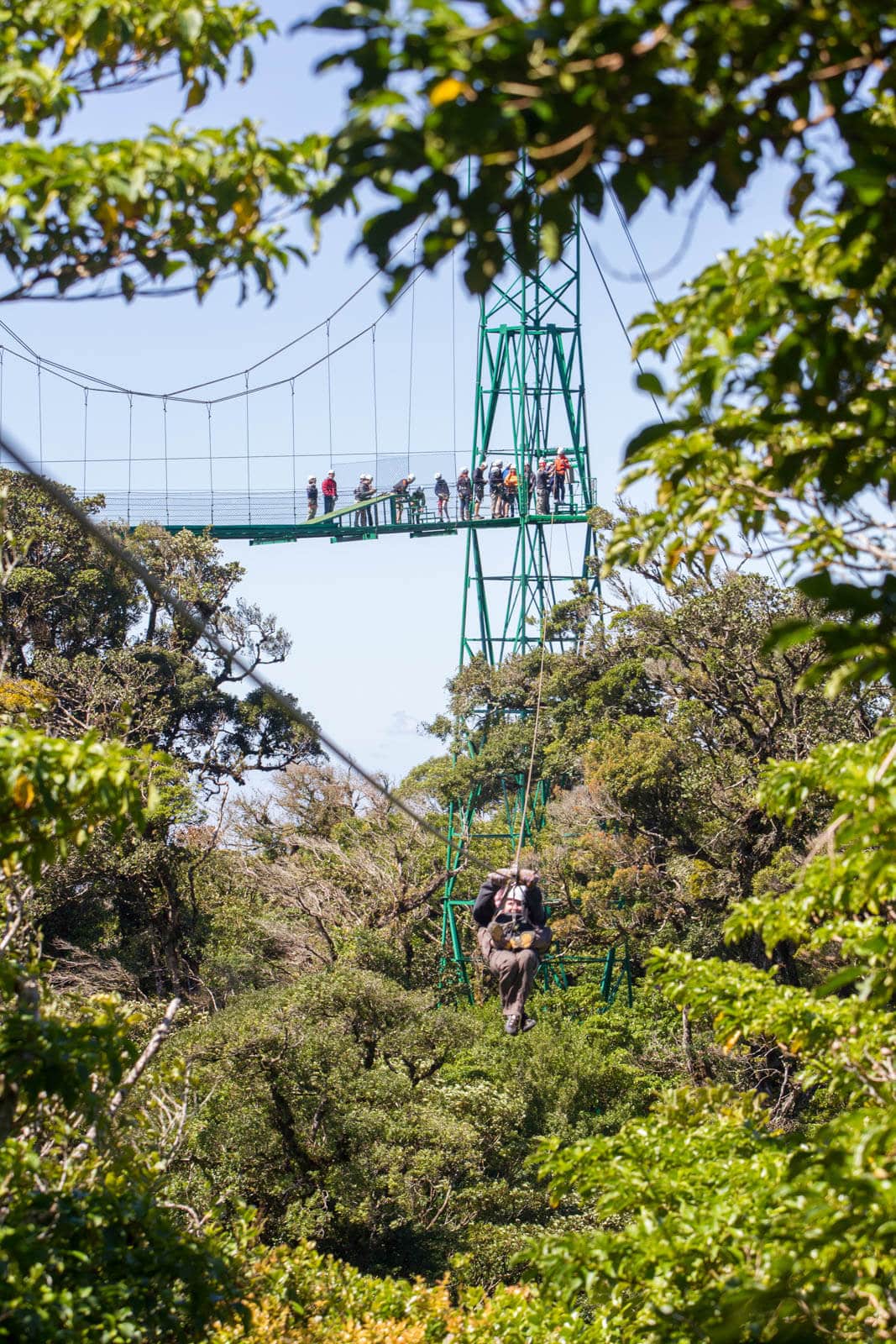
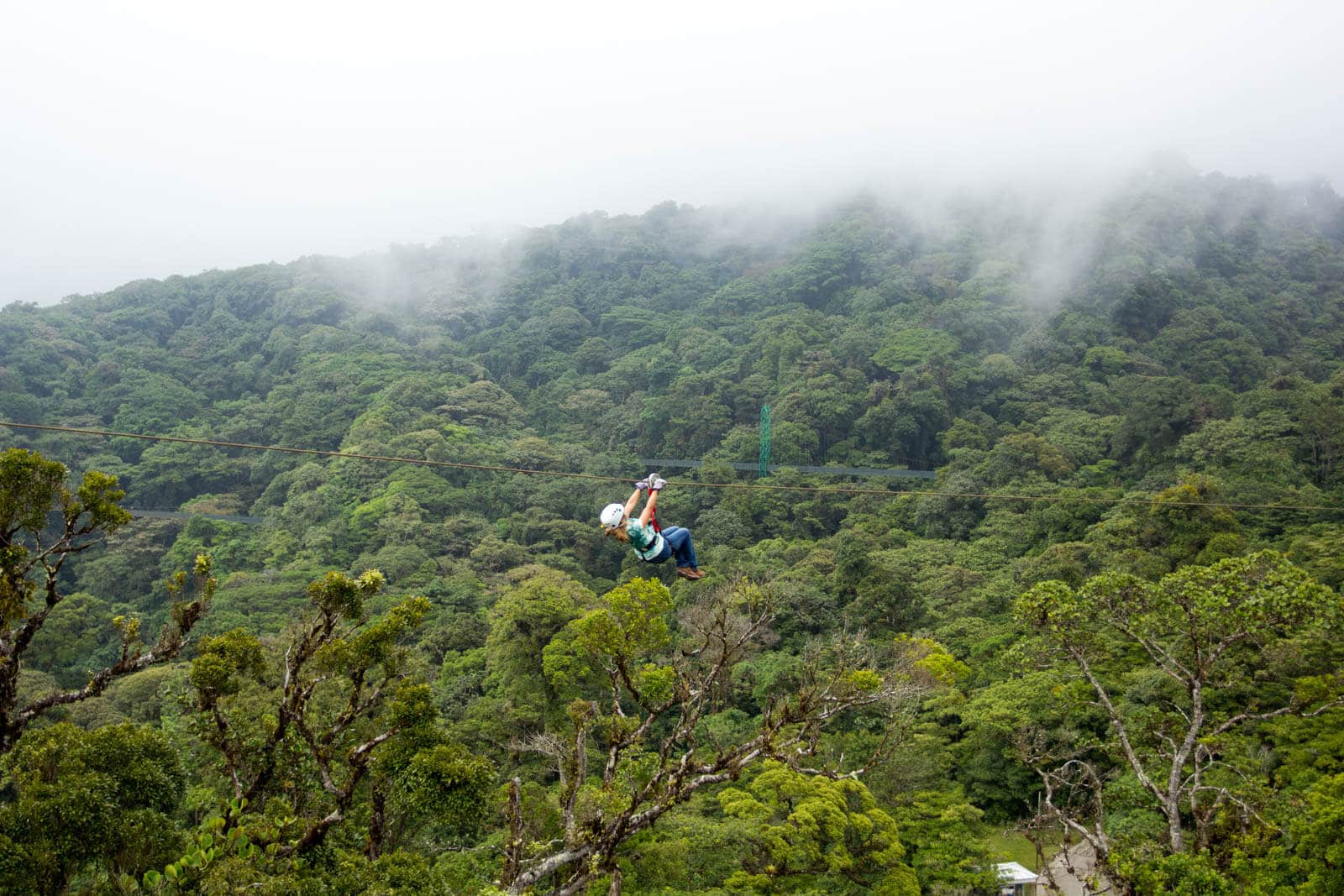
After that gentle, calming experience, I craved another dose of adrenaline. [Disclaimer: I have never “craved a dose of adrenaline” in my life and should stop trying to make myself sound cool on this website!]. We did however fight our nerves to go zip-lining high in the forest. Given it’s the first time I’ve ever tried zip-lining, I’m not qualified to judge, but we were repeatedly told (by those with far more experience) that there’s no better place to experience this than in the cloud forest’s canopy. Zip-lining through the foliage, suspended thousands of feet above the forest floor, was certainly exhilarating. Gliding from platform to platform, I felt like a bird (in the words of Nelly Furtado), getting an up-close view of the vibrant flora below. The rush of the wind against my face, the sheer thrill of the heights, and the captivating vistas made this an unforgettable highlight of the whole trip.
We began our journey to the treetops in an open-air gondola that gradually ascended to the breath-taking height of 1,750 meters above sea level. As we ascended, the landscape unfolded before us, revealing panoramic views across to the majestic Arenal volcano on one side and the glistening waters of the Pacific coast on the other. The sight was nothing short of awe-inspiring, and it set the stage for the adrenaline-pumping adventure that lay ahead. [Disclaimer: no, actually I stand by “adrenaline-pumping adventure”. It was. That’s justified. And I didn’t insinuate that’s a common occurrence for me.]
As we reached the first platform, I must admit I was a bit nervous. The idea of soaring through the forest on a thin cable seemed daunting at first. But with the expert guidance of the Sky Adventures team, my fears soon turned into excitement. With a leap of faith, I embarked on the first zip-line. A tiny scream, and then….freedom! And the unique sensation of gliding on top of the world.
One by one, we soared through a series of six zip-lines, each one offering a different perspective of the cloud forest. The rush and the breathtaking scenery combined to create an experience I will cherish forever.
As if the zip-lining wasn’t enough to get our hearts pounding, at the end of the course there was an unexpected twist – a 5-meter free-fall bungee rope. With my heart pounding, I mustered the courage to take the plunge, and the sensation of free-falling before the bungee rope caught me was an incredible thrill. I’d definitely recommend the experience to anyone – and would happily endorse Sky Adventures, who made us feel safe and secure the whole way round!
…Oh, and we saw a very cute white-nosed coati in the car park afterwards. So this part of the trip wasn’t totally bereft of mammals!
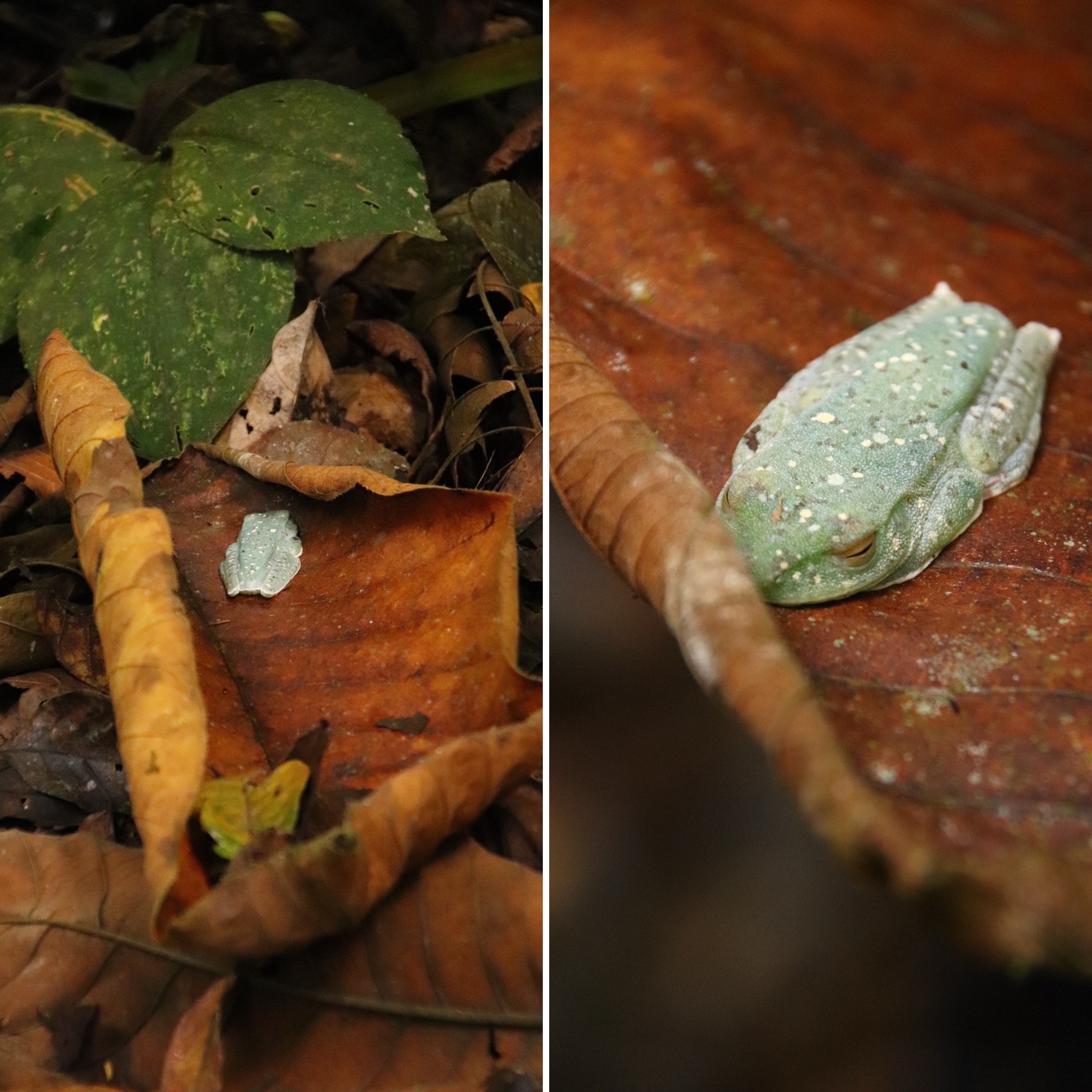
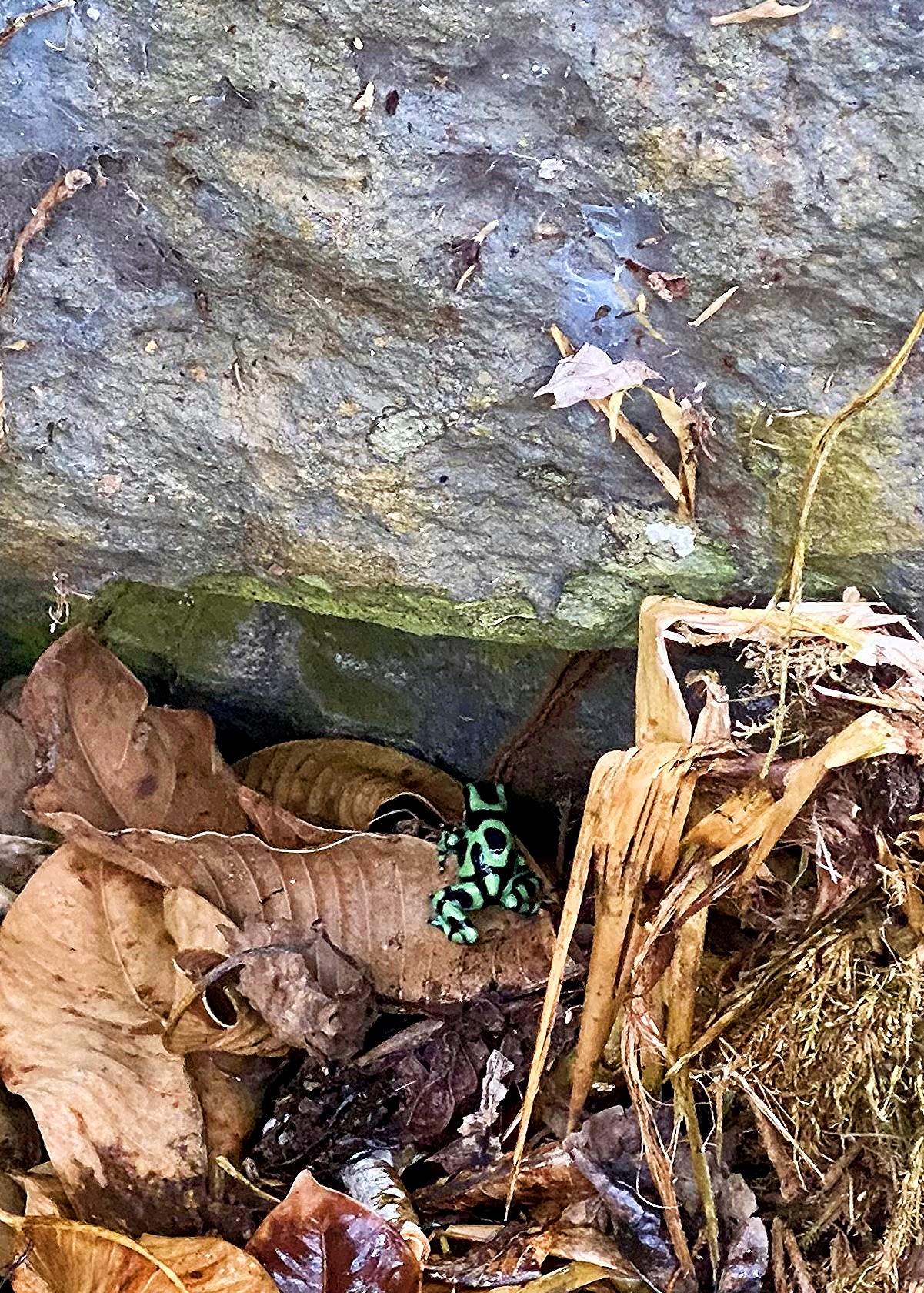
I didn’t expect to spot any of these tiny amphibians on our trip to Costa Rica, so was amazed to notch up at least eight different species. Thanks primarily to the fantastic guides on our rainforest night walks, of course. But I was proud to have found the two types of poison dart frog pictured here all by myself (although they were jumping about in low light, and hence those particular photos aren’t great!).
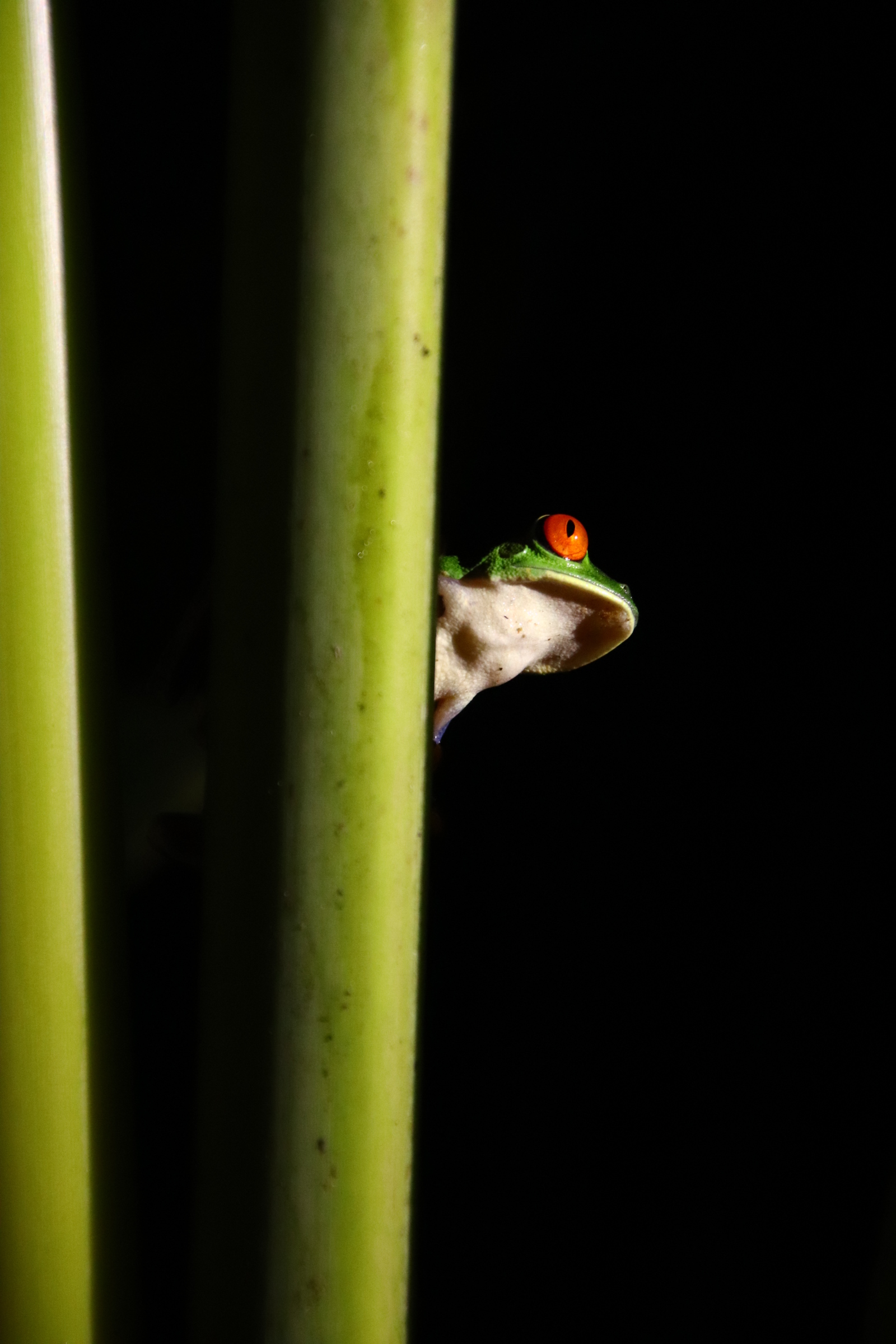
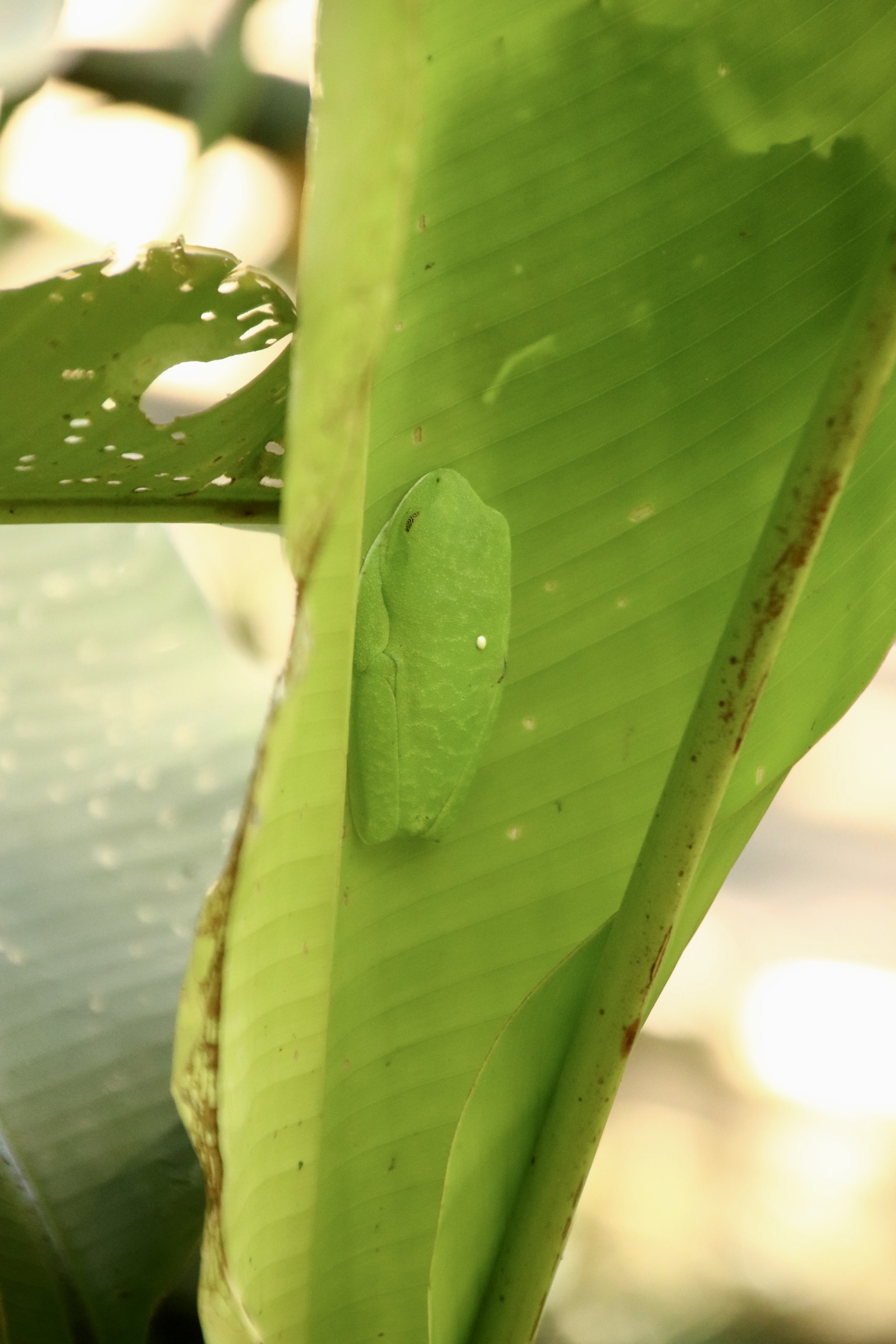
A couple of quick factoids: according to National Geographic (and who doesn’t trust them?) there are 149 species of frog in Costa Rica. They like the moist lowlands best, so are most commonly found around Arenal and the central/south pacific areas, which we were lucky enough to visit, but they can be found all over the country. The frog that most people associate with Costa Rica is the Red-Eyed Tree Frog, and it was certainly the species we saw the most – and my personal favourite – hence its multiple appearances in the highlights below.
Poison dart frogs are arguably the more interesting though, secreting toxins from their skin in self-defence and having vivid aposematic coloration or markings (to deter predators). For centuries, the indigenous tribes of the rainforest have used their poison to tip blowpipe darts for hunting (hence their common name). There are over 170 species in the world – we saw three of them: the strawberry poison dart frog (or “blue jeans” frog); the green and black spotted poison dart frog; and the striped poison dart frog (not pictured).
Paul and I have just returned from a 10-day stint in Leeds looking after our nephews and niece, whilst my sister and her husband escaped to the sun. It was lovely spending so much time with them and actually not nearly as difficult as we’d feared – the months of anticipation, when all sorts of horrific scenarios had percolated in our minds, happily baring no resemblance to the reality. I’m going to miss bedtime cuddles, hide-and-seek in the woods, snowmen building and story-time. I’m even going to miss “helping” with homework (even though this had limited/mixed success). And the glasses of wine in front of the fire, stroking their ragdoll cat Popcorn, were peaceful and restorative. Although it wasn’t all easy, and I have to say I’m very glad I no longer need to play tea-time bad cop, prizing the Nintendo Switch from a protesting 8-year-old; and my knees are grateful for respite from my niece’s cute but tiring imaginative play sessions, which invariably saw my reluctant tiger being bossed around by her strict zookeeper.
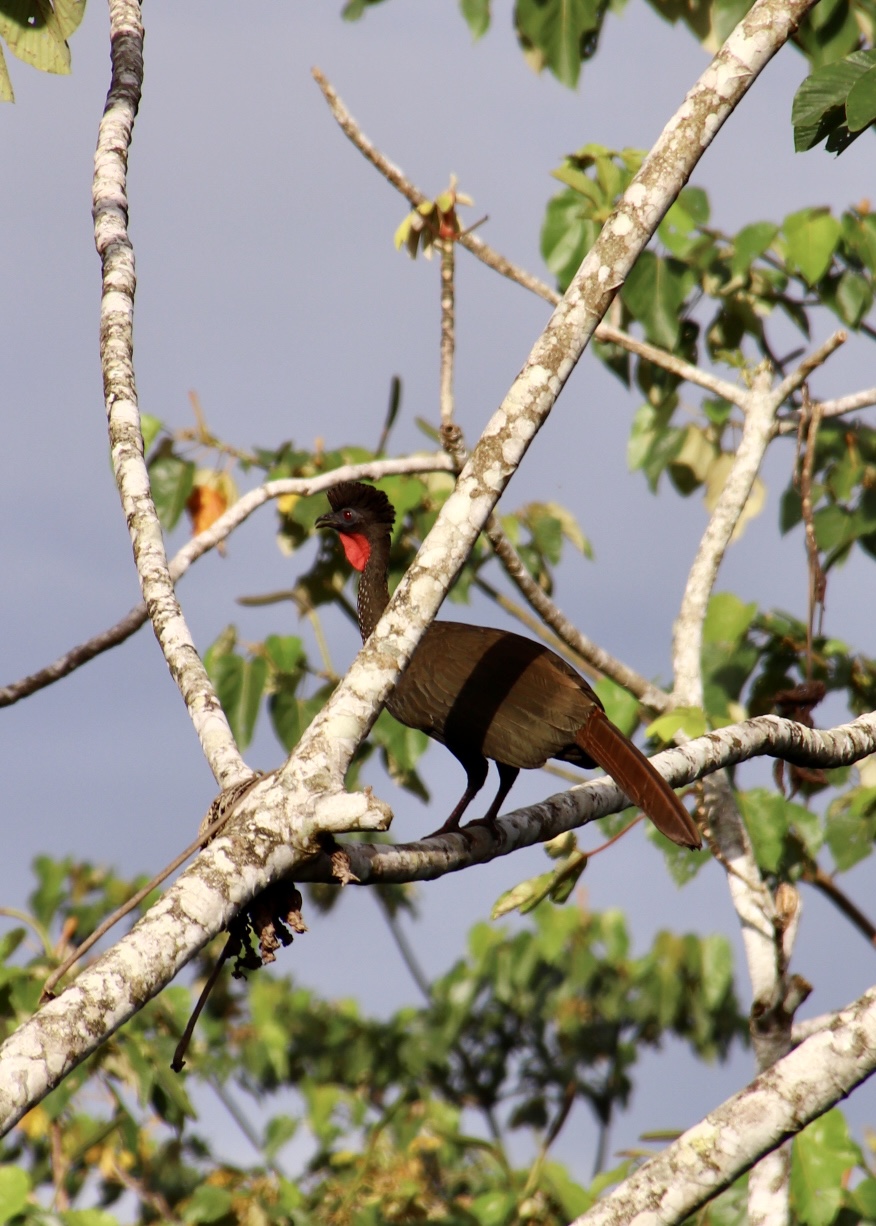
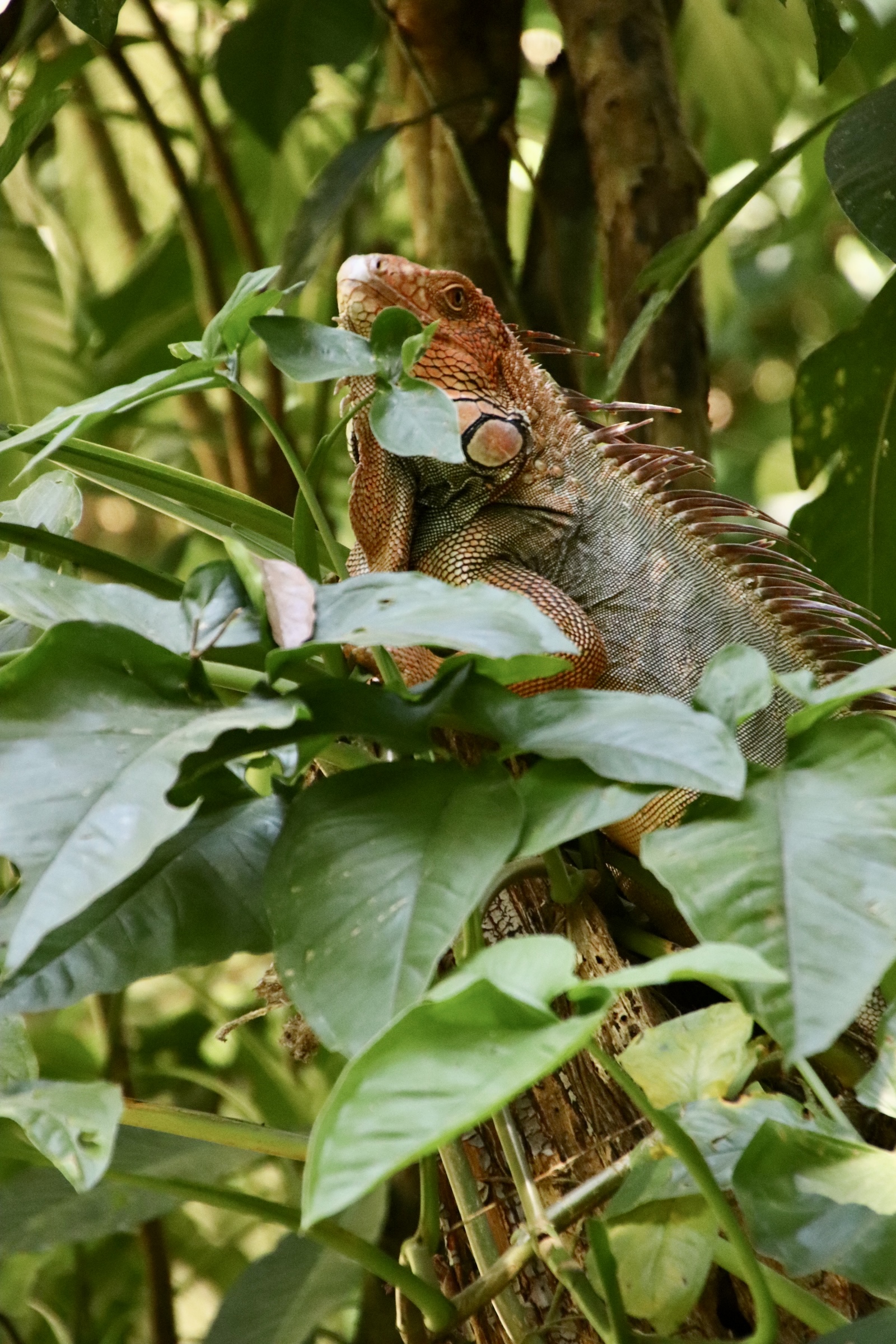
Safely ensconced back in our London flat, I’ve turned my attention back to editing our Costa Rica photos and can now pick up the story where I left off…. So, after Tortuguero we next stopped for a few days in rural Sarapiqui, Heredia Province. Our lodgings were very basic but had a lovely infinity pool overlooking a steep-sided valley and were well-located for La Tirimbina biological reserve (one of the main reasons for visiting). Relaxing in the grounds on our first afternoon, we spotted what looked like a skinny flying turkey (later identified as a Crested Guan), as well as a precarious iguana balancing on the high branch of a kapok tree, a strawberry poison dart frog (locally referred to as “blue jeans”) and a bushy-tailed tayra (related to the marten family).
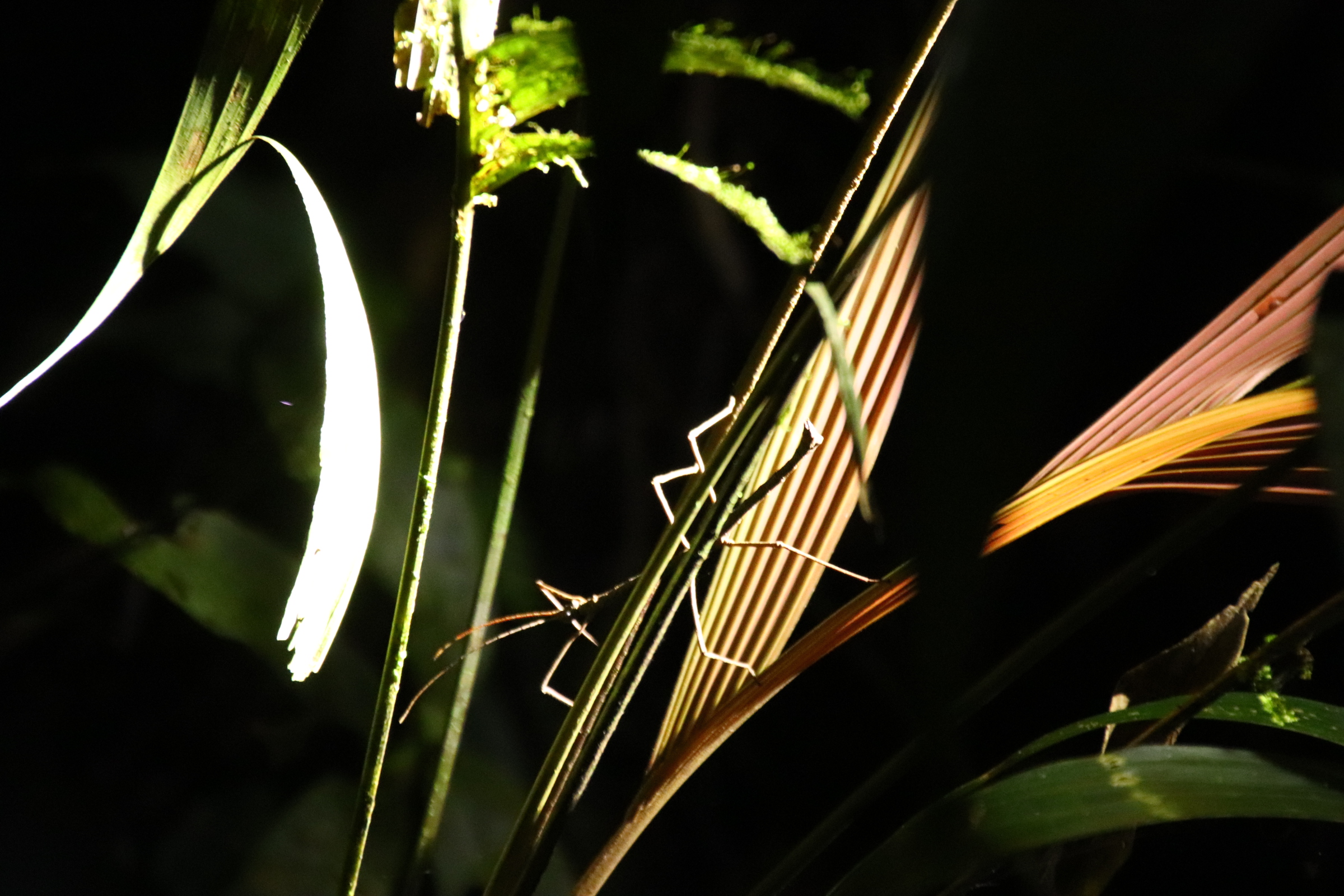
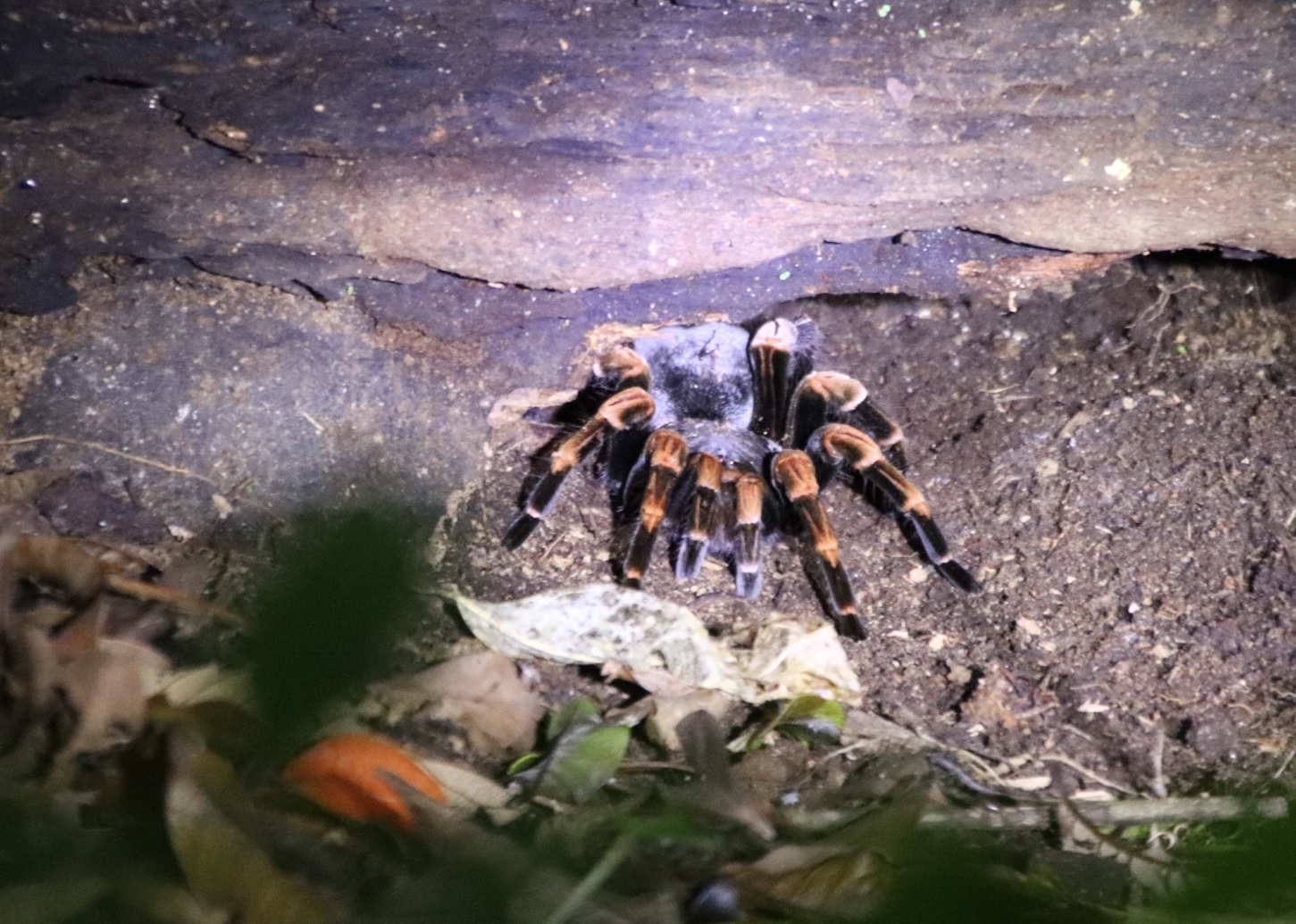
But these wildlife spots were nothing compared to the delights of our night walk in La Tirimbina. Armed with flashlight, enough Deet to floor a professional wrestler, and our darkest clothes, we crossed the country’s second longest suspension bridge – swinging unsteadily over the Río Sarapiquí – and entered the reserve. Tirimbina protects 345 hectares (852 acres) of pre-montane tropical forest, hosting a wide array of different ecosystems and over 9 kilometres of walking trails. Charlene, our friendly and incredibly knowledgeable guide, helped us find scorpions, tarantulas, cane toads, frogs, basilisks, howlers, geckos and stick insects. Her eyesight was phenomenal: I have no idea how she managed to isolate them within the impenetrable blackness. Paul and I got most excited, however, by the sprightly armadillo that crossed our path (twice!) and a fur-de-lance snake, the most venomous in Central and South America, with a bite that can be fatal to humans.
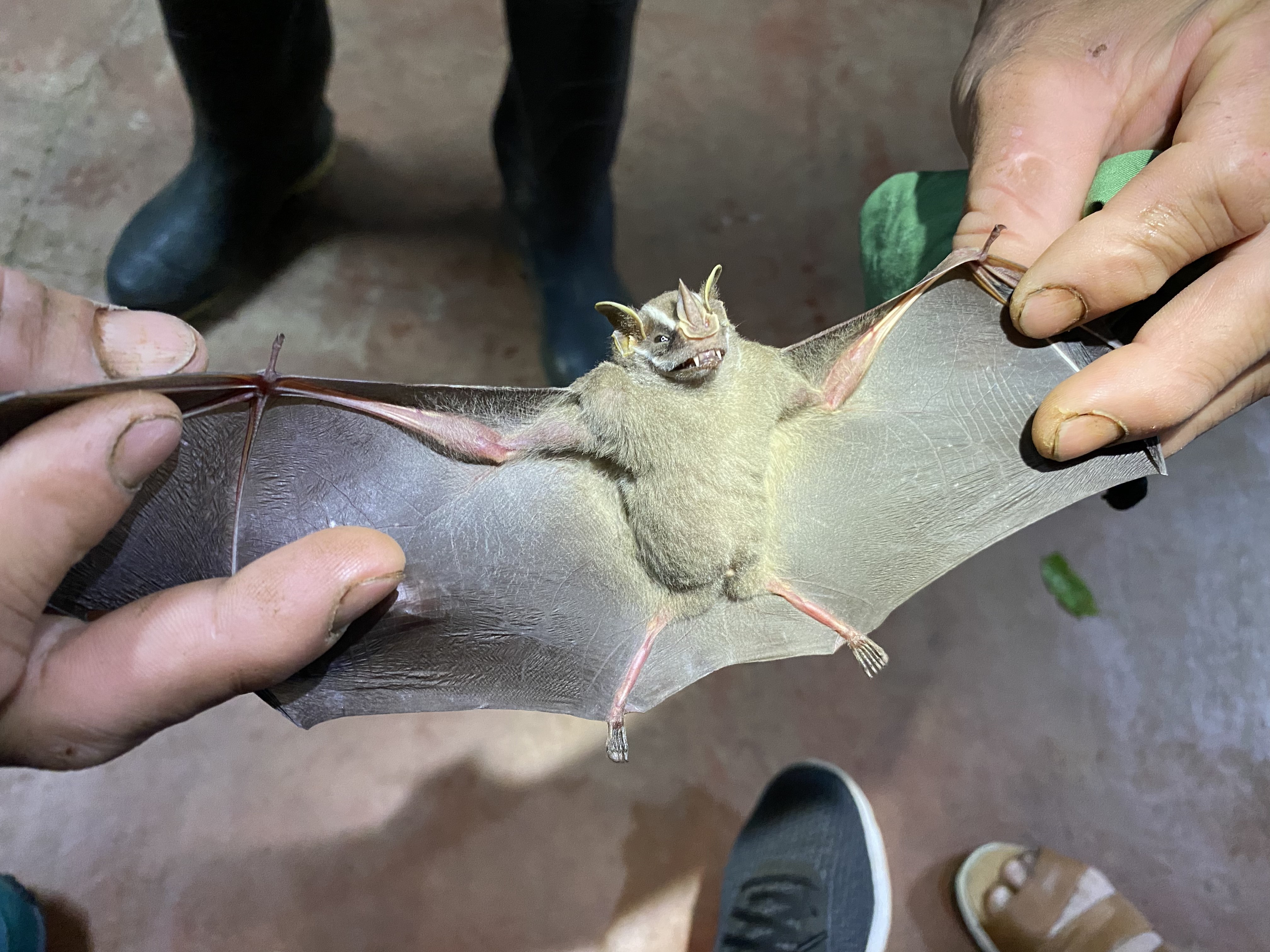
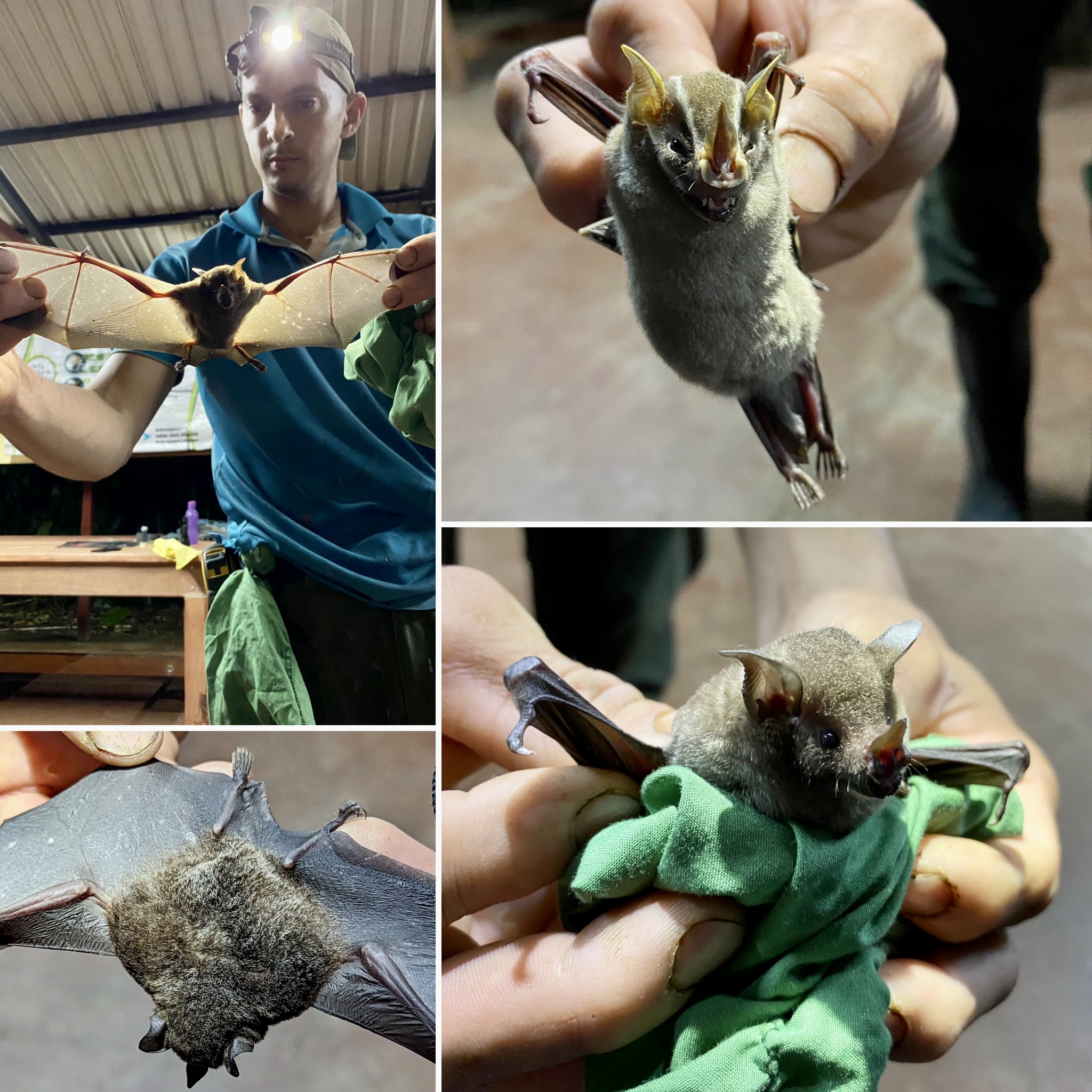
We were so impressed with the forest, we returned the next night to be educated by William on all things bat-related. Costa Rica has more than 100 species of bats, making up 50% of the country’s total mammal population, and 70 of those species can be found at Tirimbina. While some eat insects or feast on blood, most species feed primarily on fruit, pollen and nectar. With the aid of humane ‘mist’ nets, so delicate (and expensive!) that we respectfully kept our distance, the staff captured a range of bats to show us up close: a docile proboscis bat, a common tent-making bat, a Honduran white bat, and the larger frog-eating (or fringe-lipped) bat. Wearing thick leather gloves, our guide gently held each flying mammal so that we could closely observe their wings, spindly arms and odd little faces. And then – allowing time for us to set up the slow-mo functions on our camera phones – released them so we could observe close-up flight. Absolutely fascinating!
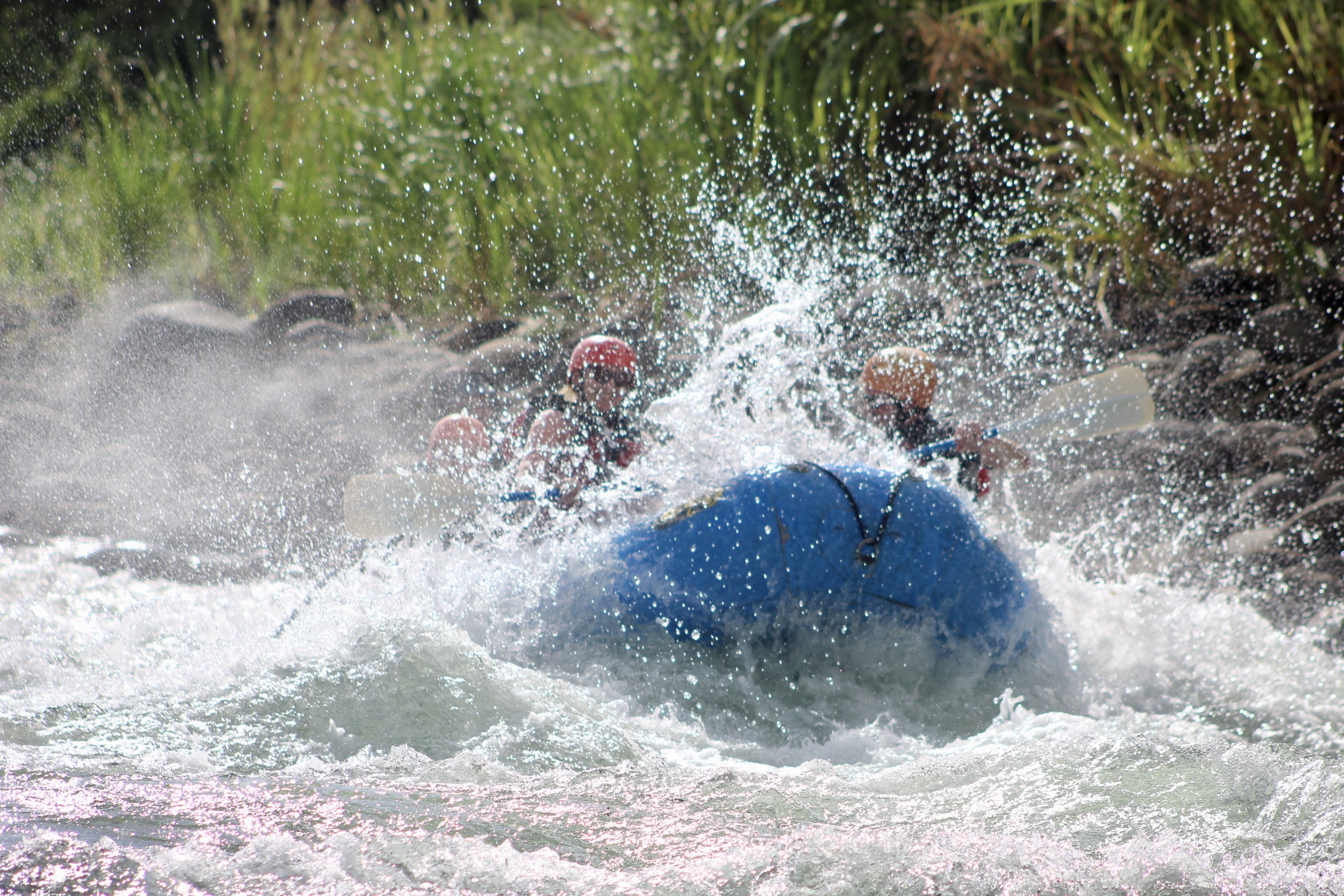
For a change of pace, we booked ourselves on a white-water rafting trip on the Río Sarapiquí the next day. Having never been rafting, I was little trepidatious. But need not have worried, as our guide expertly navigated us along a 13km mixture of class 3+ rapids and calm pristine water surrounded by lush flora and fauna. The company, Aguas Bravas, were very professional – providing all the protective gear and tuition – but also really good fun, encouraging splash fights between boats and seeking the most thrilling routes. Along the journey, we saw two ospreys, a large ringed kingfisher (the biggest in the Americas), and plenty of egrets, herons and sandpipers. We arrived back at the lodge very wet but very happy!
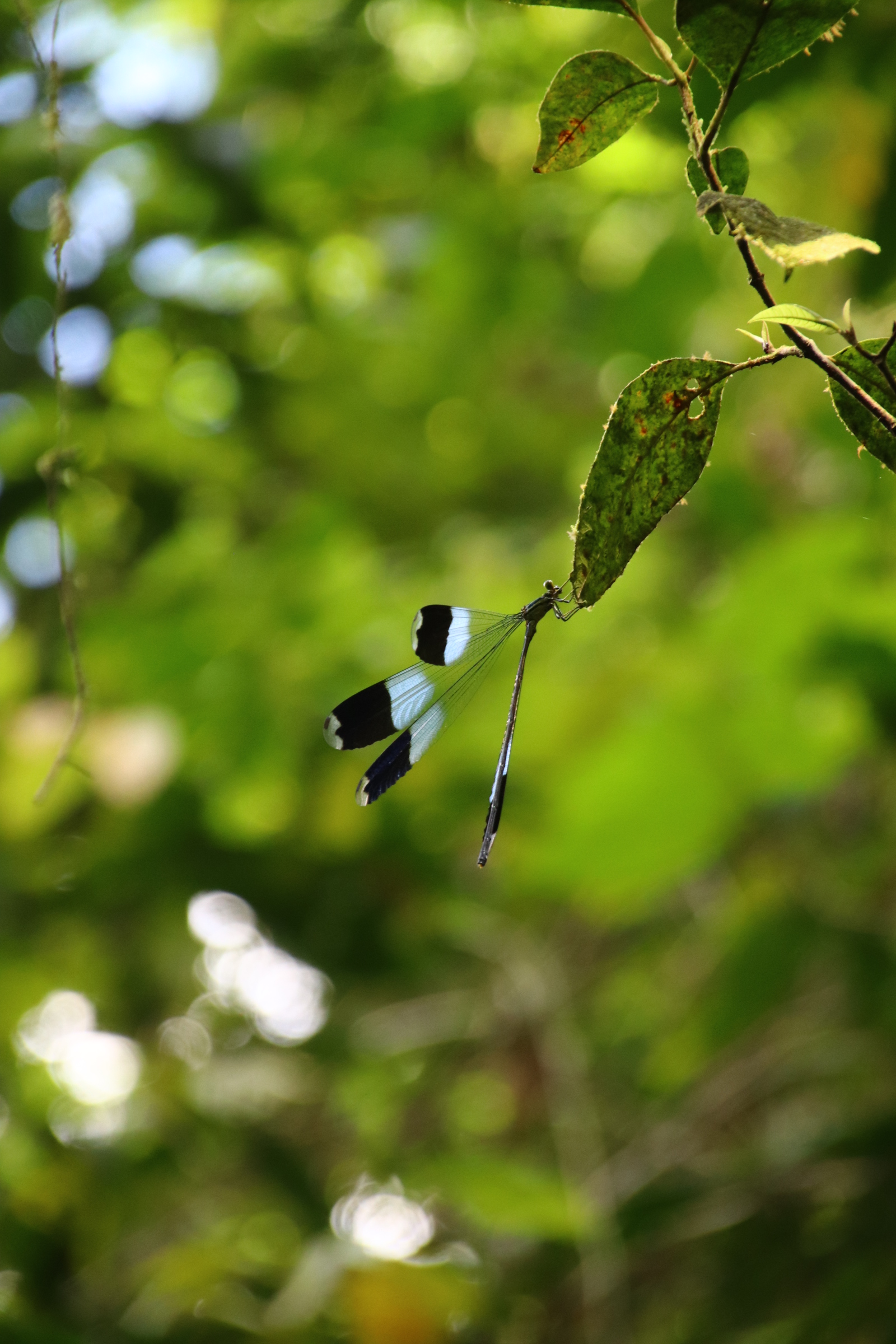
The other highlight of this part of the trip was La Selva research centre and biological reserve. It’s a working field station and our guide, Joel, had spent over a decade there researching plants and insects. The reserve is owned and operated by the Organization for Tropical Studies, a consortium of universities and research institutions from the US, Costa Rica, and Puerto Rico, and is recognised internationally as one of the most productive field stations in the world for tropical forest research. Our short trek, which barely scratched the surface of the 1,500+ hectare reserve, took in primary and secondary forest, as we crossed suspension bridges observing some of the 1,000+ plants and 250 trees in the area. In less than three hours, we ticked off the great tinamou (one of the most primitive birds on the planet), a helicopter damselfly, a two-toed sloth, three very beautiful keel-billed (aka rainbow beaked) toucans, a Central American whiptail lizard, several black river turtles, a red-webbed tree frog, two pale-billed woodpeckers (the Woody Woodpecker variety), and a milk frog (which the guide got particularly excited about).
Leaving Sarapiqui behind on Day 7, we next visited Arenal volcano in the north-western province of Alajuela, taking a short trek over the lava fields to look out over the 85 square kilometre man-made lake. To put that in perspective, the biggest lake in the English Lake District – Windemere – is a measly 17km long and 1.5km wide. The hydroelectric project is a key part of Costa Rica’s green energy policy and when first created the lake provided 70% of the country’s electricity. The Costa Rican people are understandably very proud of their record when it comes to sustainability, conservation and green energy. And it can be no coincidence that the country has ranked first four years’ running in the Happy Planet Index (HPI).
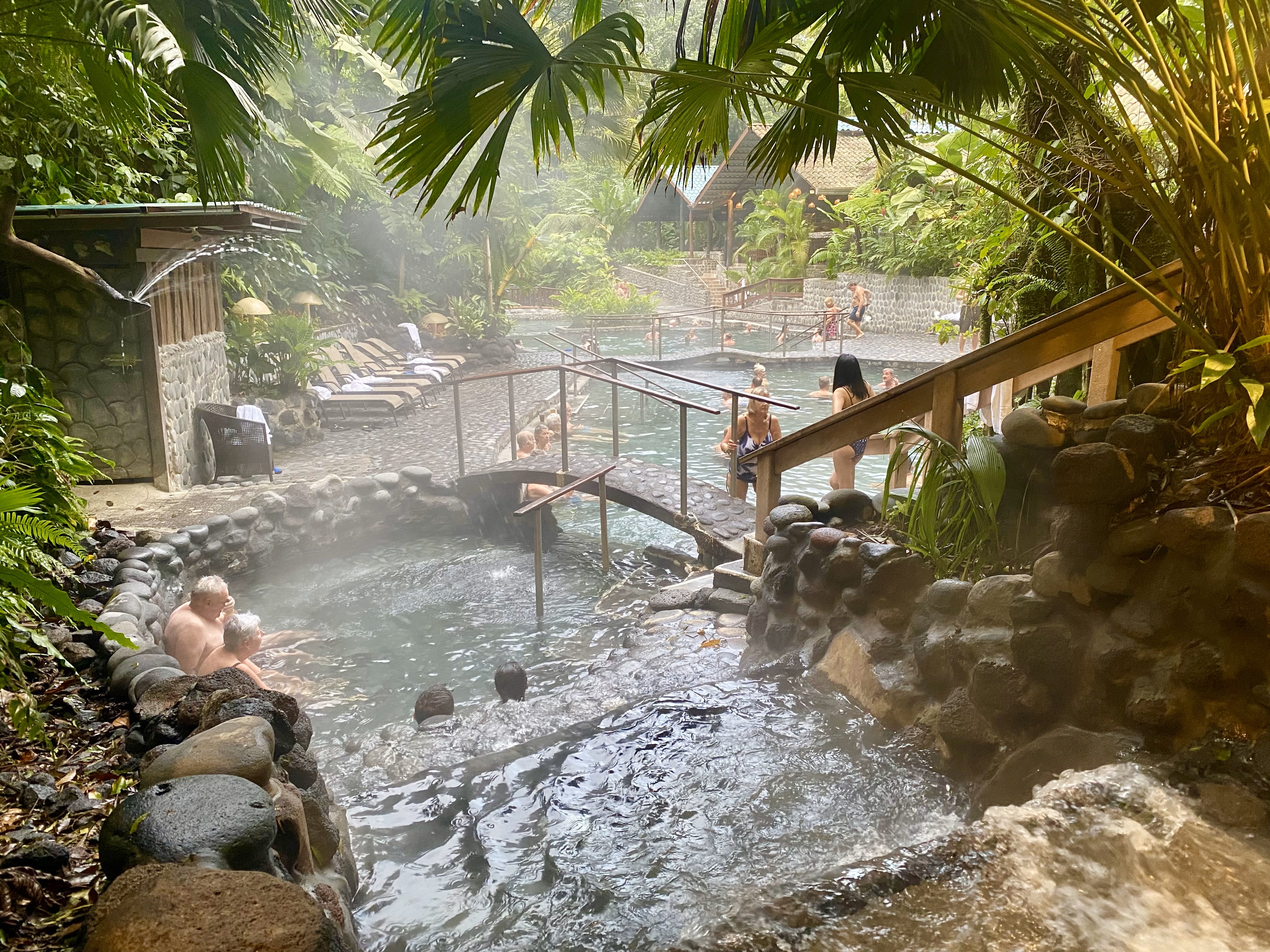
Speaking of happiness, we called into the little town of La Fortuna for some hot wings at a local bar, had a cracking hot chocolate at Cafe Fusión, and bought some rum and plantain chips from the local supermarket, before spending the evening relaxing in the Ecotermales hot springs. We were told that the hyper-thermal magnesia filled waters perfectly and naturally balance quantities of calcium bicarbonates and magnesium, which have analgesic, anti-inflammatory, and muscle relaxing properties. Who knows! But I can tell you I found sitting in the 41°C pools, cocktail in hand, with waterfalls gently massaging my back to be very medicinal indeed.
We crossed the lake by boat the next day, in order to reach the rural hills and valleys of Cabaceras. After a three hour drive, passing homely farmsteads and over serene sun-baked fields, cutting through fords and witnessing the birth of a little calf, we arrived for lunch at Rancho Heliconia. The ranch has a blue flag for sustainable practices and specialises in growing coffee. Its owner, doña Roxana, belongs to one of the original Costa Rican families to settle in Cabaceras; she’s a joyful, imposing, enthusiastic woman who makes you feel like you’re visiting family. Her cheese, produced using traditional methods, was delicious, and we were taught to prepare traditional corn tortillas (the basis of the Costa Rican diet since pre-Columbian times) before sitting down to slow-cooked lamb, spicy chicken, the obligatory rice and beans, and plenty of that scrumptious cheese with a seaweed dressing. Whilst visiting, you’re also encouraged to plant a guanabana tree – one of the native species – as part of a local rewilding project.
Driving onwards to Monteverde, before checking into our hotel we stopped at the Curi-Cancha Reserve for another night walk. This time our guide was not as great – whilst clearly knowledgeable, Eric was quiet and taciturn and we didn’t therefore have a great experience. To be fair to him, I think he’d been working since dawn, the weather had become wet and windy, and the group he was leading was larger than he’d have liked. Anyway, it was still great to see a sleeping orange-bellied trogan, two mottled owls, a green toucanette, tarantula, spotted wood thrush, and a sea of dancing fireflies. We’d see Eric again the next morning – his grumpiness having subsided somewhat – but clearly working two jobs does nothing to alleviate his temperament.
I’m going to pause there again and return to cover our time in Monteverde properly in another post. For now: Pura Vida!
In the indigenous Bribri-Cabécar tradition, spirits make a person sick for violating the established norms or because society has lost its balance. Well, I’m not sure what specific conventions I may have inadvertently infringed, but I certainly felt I was being punished when the dreaded second line materialised on my Covid test less than 48 hours after returning from Costa Rica.
In the various tribal traditions of the rainforest, healers used to dress in animal pelts, carrying carved wooden sticks in the shape of the aiding spirits of alligators, snakes, monkeys and birds. The shaman put tobacco (and other, ahem, plant-based substances) into nasal inhalers; and the healing rites were accompanied with musical interludes from ocarinas, maracas and drums. Mujer chamán, or female healers, would cover themselves in elaborate body paint, evoking the skin of jaguars and reptiles, and dance in earmuffs and thongs.
I tried all of this, of course. But in the end it was the Paxlovid anti-virals, couriered over from Guy’s Hospital, that saw me right. At the time of writing, I have had my first decent night’s sleep since our return from Central America, and writing this blog post feels like a minor victory. Sure, there are plenty more useful things I could be doing with my Sunday, now I’m able. Help my husband with the backlog of washing, for instance. Or get on the phone to Virgin Media to argue against their extortionate £11 price hike (is TiVo really worth it?!). But I’ve chosen to indulge my desire to sift and edit holiday photos. Surprise, surprise. Or at least to make a dent in the process!
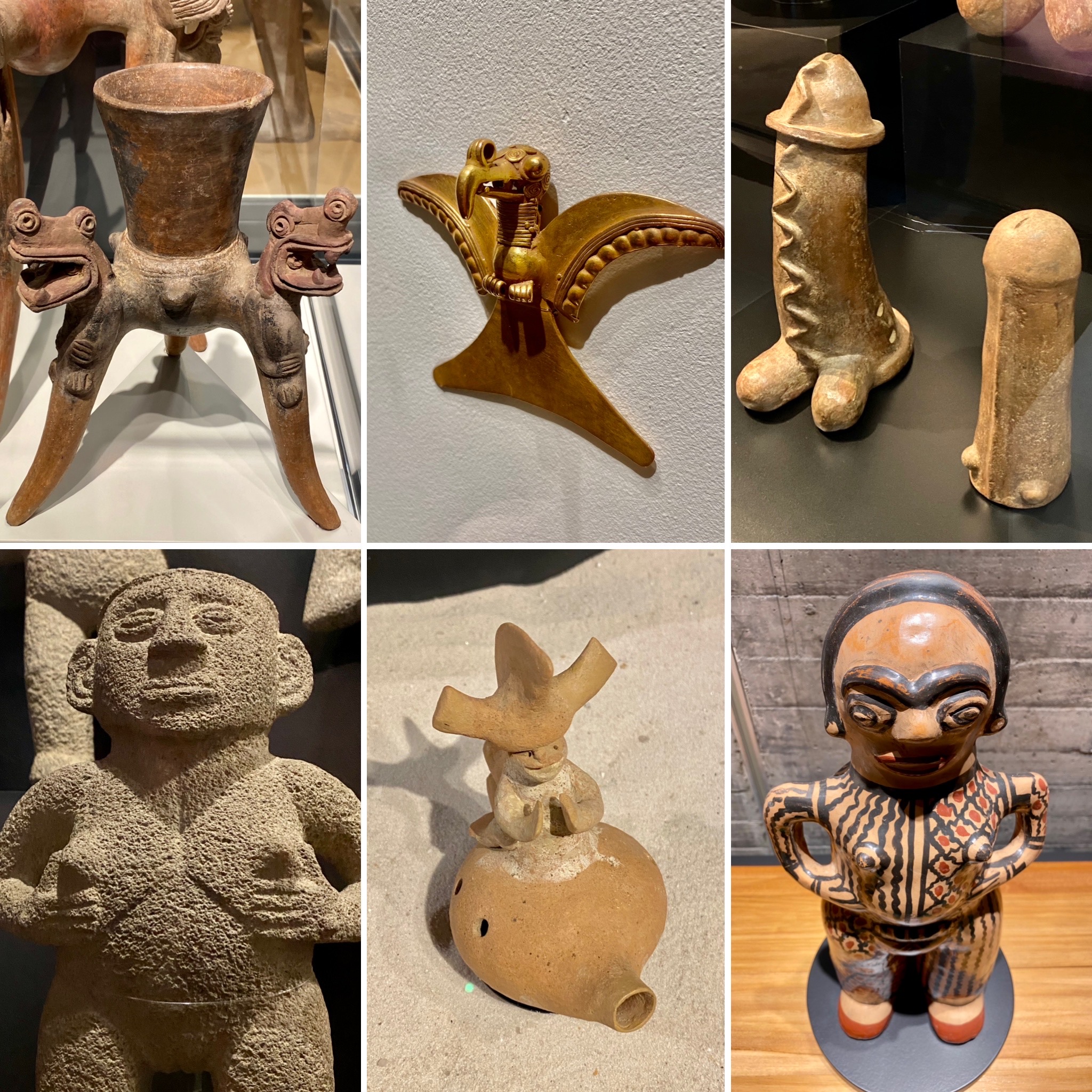
So, where to start? Well, controversially maybe, I’ve decided to start at the beginning. Which was the capital city, San José. But I’m not going to dwell there long, because I’m sorry to say I didn’t like San José all that much. There were some nice parts, and true to form I enjoyed perusing the brightly-coloured murals around the university neighbourhood and old railway. We also really loved both the Pre-Colombian Gold Museum, housed in a brutalist subterranean building next to the diminutive opera house, and the Museo del Jade, which happily happened to have a Salvador Dalí exhibition alongside the world’s largest collection of green mineral. Both collections feature a fascinating and bewildering range of erotic statues, glittering ornaments and cultural artefacts; and you can while away hours in their cool embrace. But, in general, I found the capital uninteresting and a little unloved. Which was a shame.
Before leaving for the Caribbean wetlands, we did however enjoy a noteworthy meal at Jaguar Negro, a predominantly Mexican cantina, where I celebrated my birthday with seared tuna steak, shrimp risotto and cortezas de cerdo (giant pork crackling!), washed down with a tequila and ginger cocktail. Not much to complain at there.
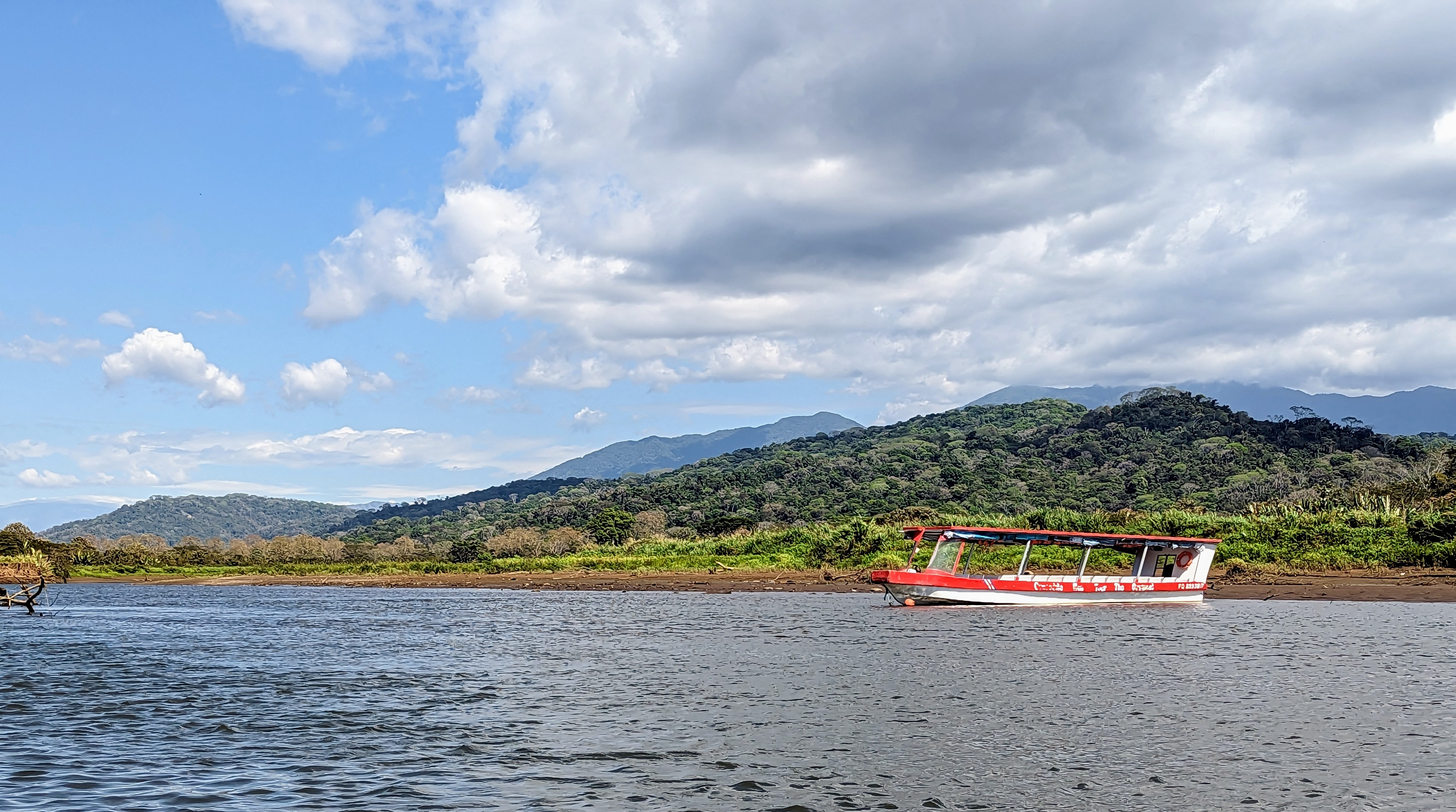
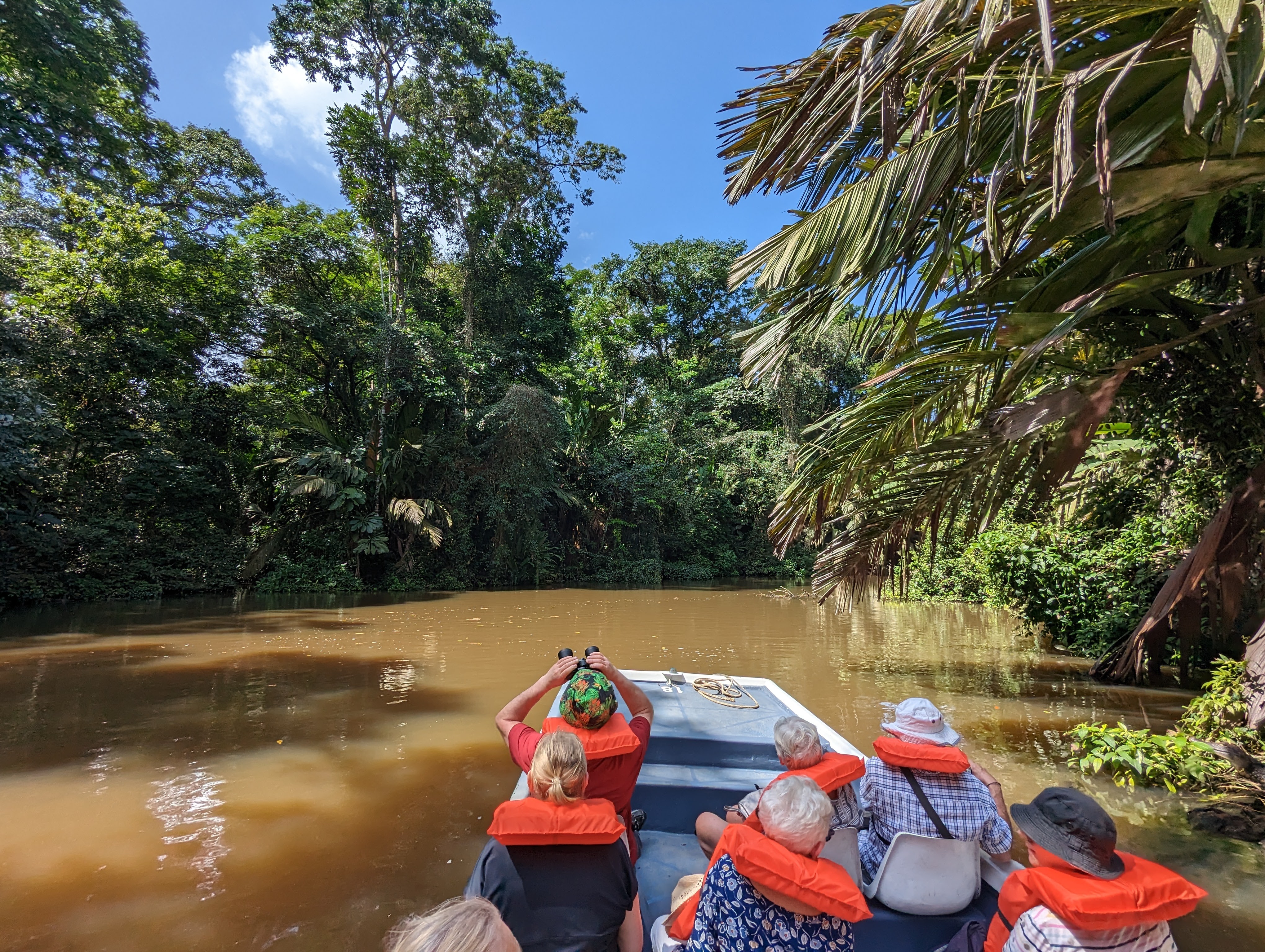
The next morning, though, we were up early to head east to Limón province and start the holiday proper. After a hearty breakfast of gallo pinto (rice & beans, a staple we would come to know intimately throughout our stay), we made our way to La Pavona (an approximate 3 hour journey) to board a motorised passenger boat to Tortuguero. With our luggage safely stored on a different vessel – and with assurances we’d see it at the other end – we sat back and enjoyed the 90 minute ride through scenic mangroves and rivers, watching for wildlife and gently sweating in the 80%+ humidity.
Parque Nacional Tortuguero is one of Costa Rica’s 34 national parks, a staggering number for a country that’s slightly smaller in size than the state of West Virginia (or about the same size as Denmark). It’s a popular area for seeing sea turtles hatching, but you need to visit in the wet season for that; we were there instead to see the abundance of wetland fauna and to experience a genuine “jungle cruise”.
Our home for the next two nights was Laguna Lodge, a basic but charming hotel with sprawling grounds and a great situation – the Caribbean coast easily walkable on one side and an al fresco bar overlooking the titular lagoon on the other. After a short mosey round the local village – where we gaped in awe at a 40ft parade of leaf-cutter ants – and an essential watermelon daiquiri, we felt justified spending the rest of the day relaxing by the pool, as Montezuma oropendolas (a type of weaverbird) and bright yellow kiskadees sang out from the surrounding trees.
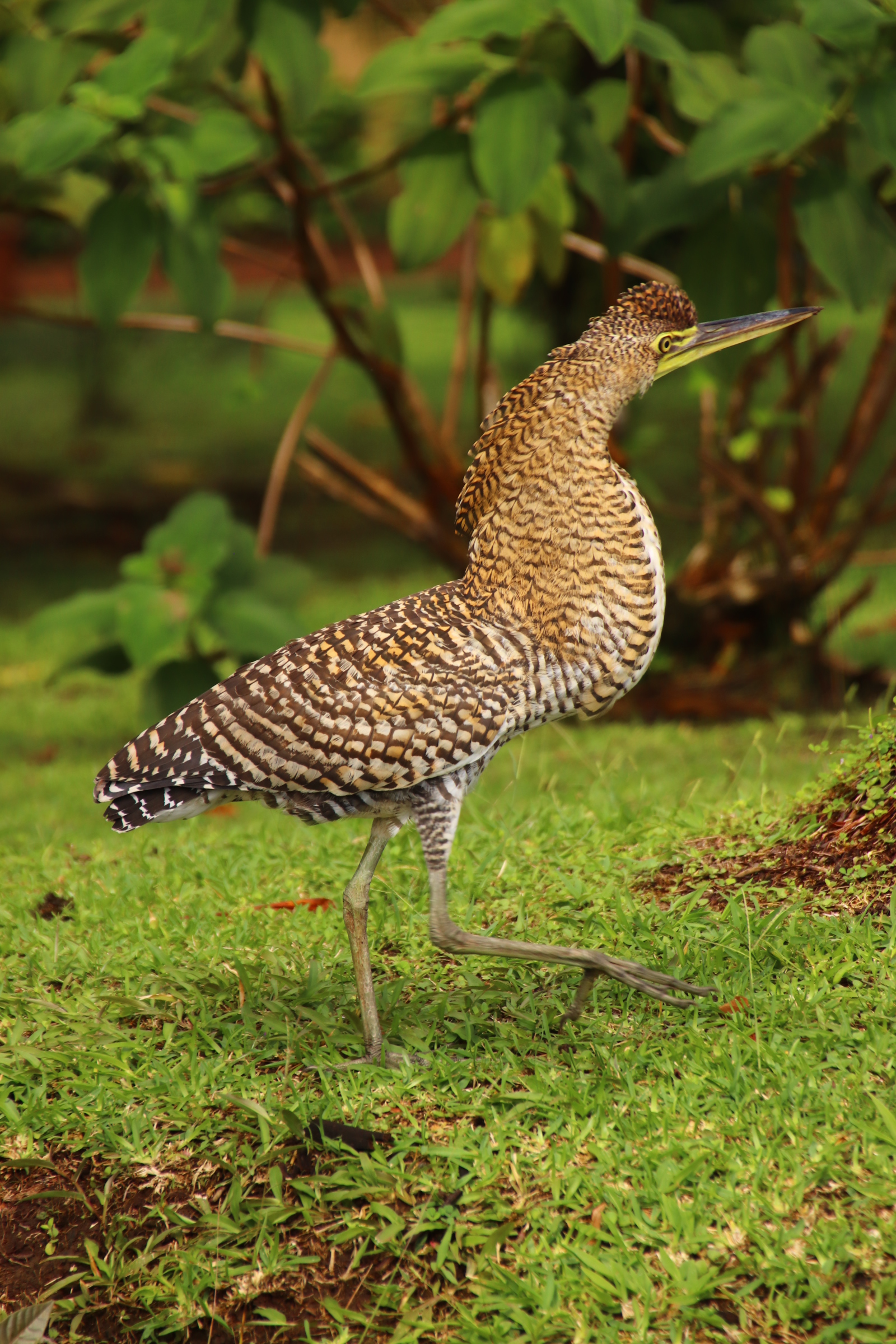
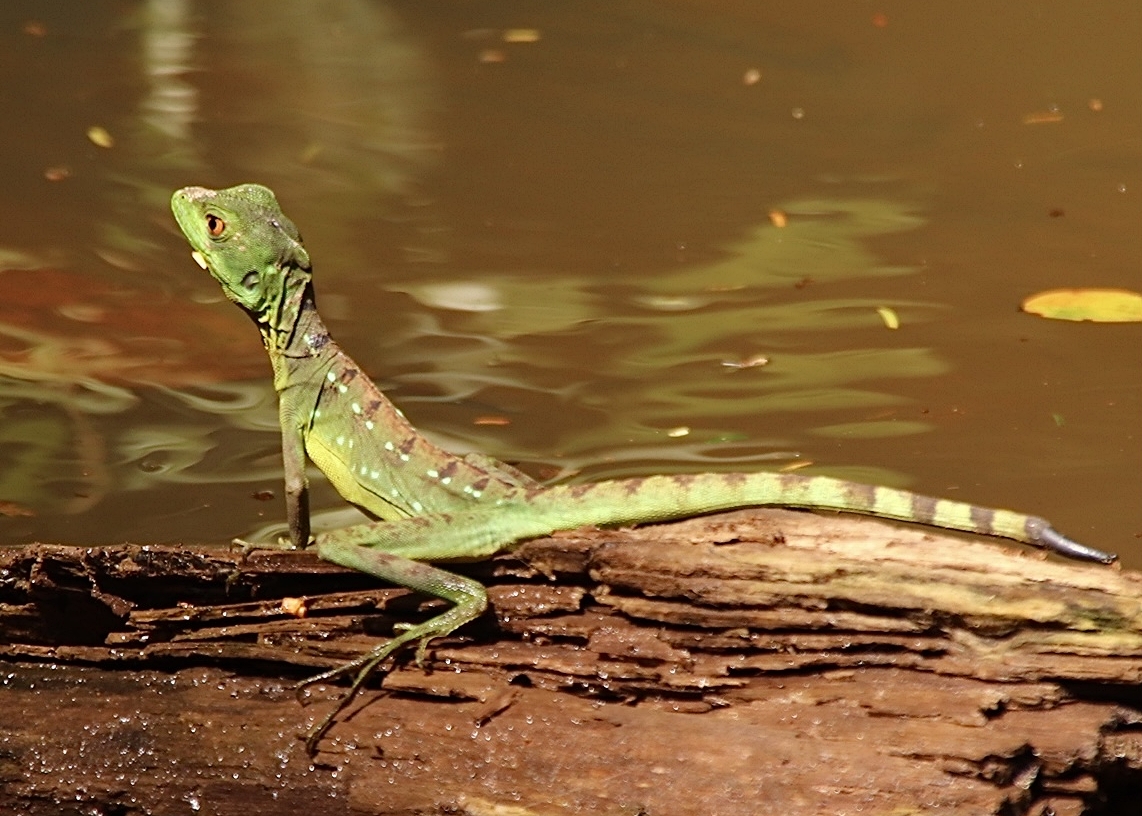
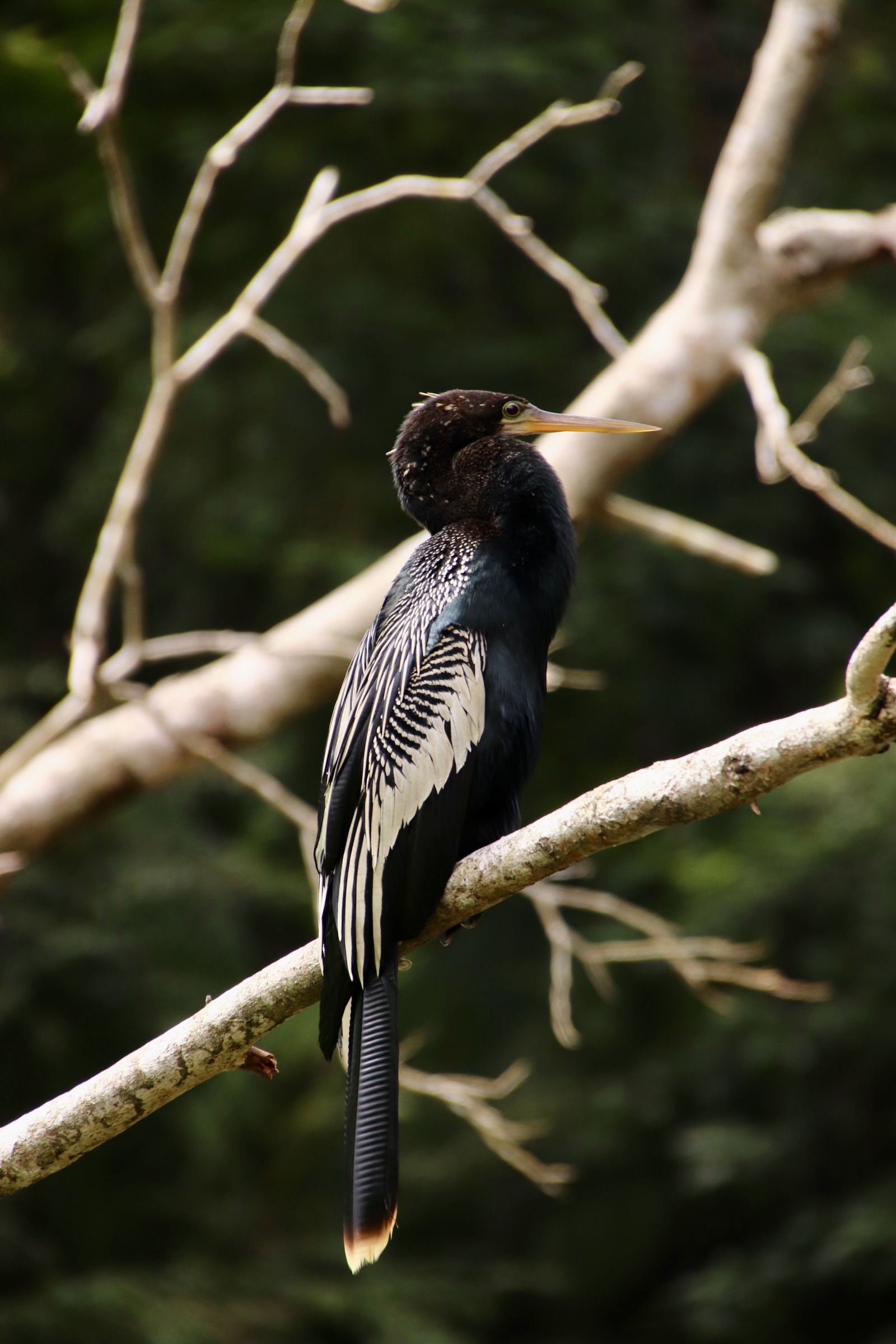
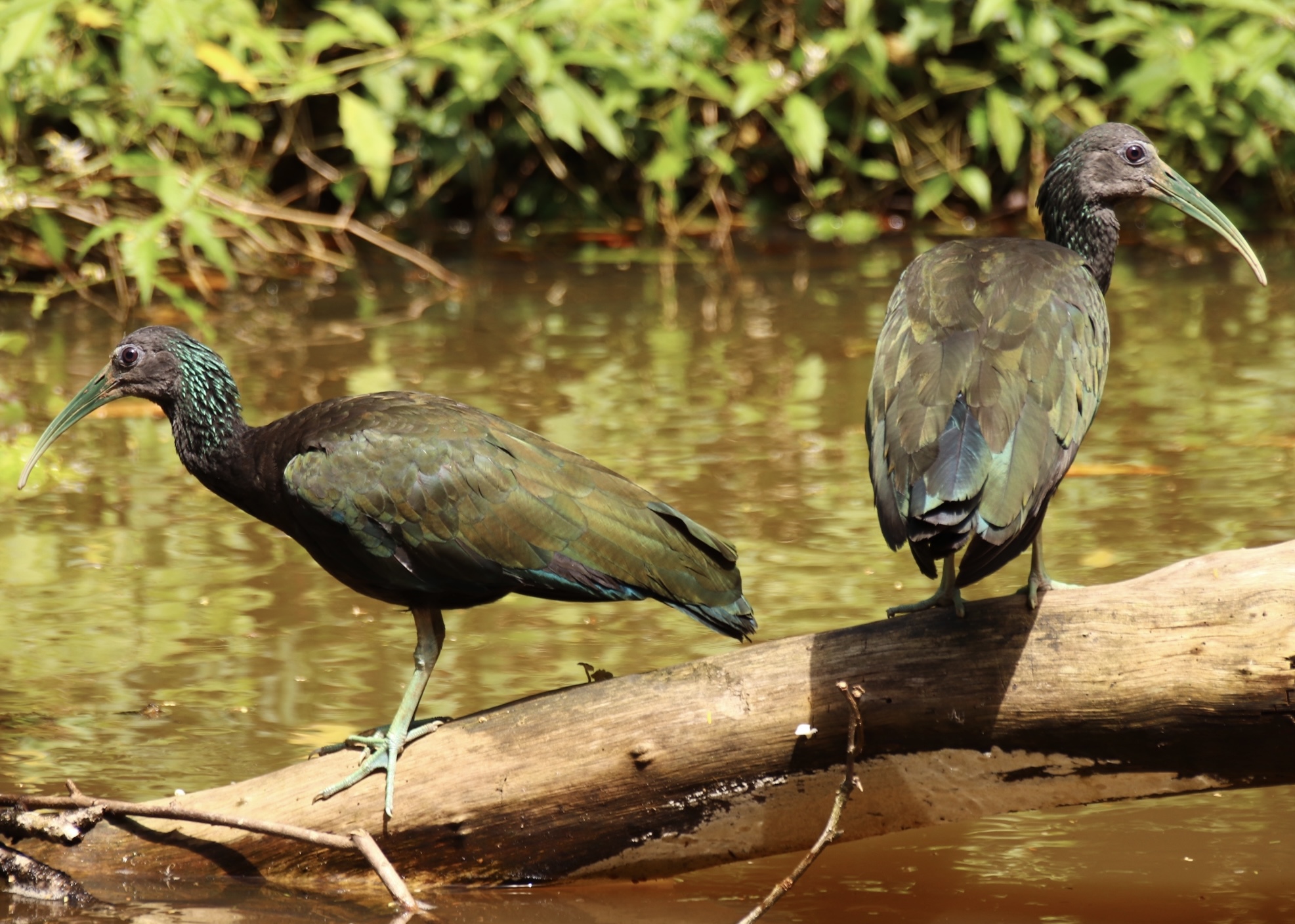
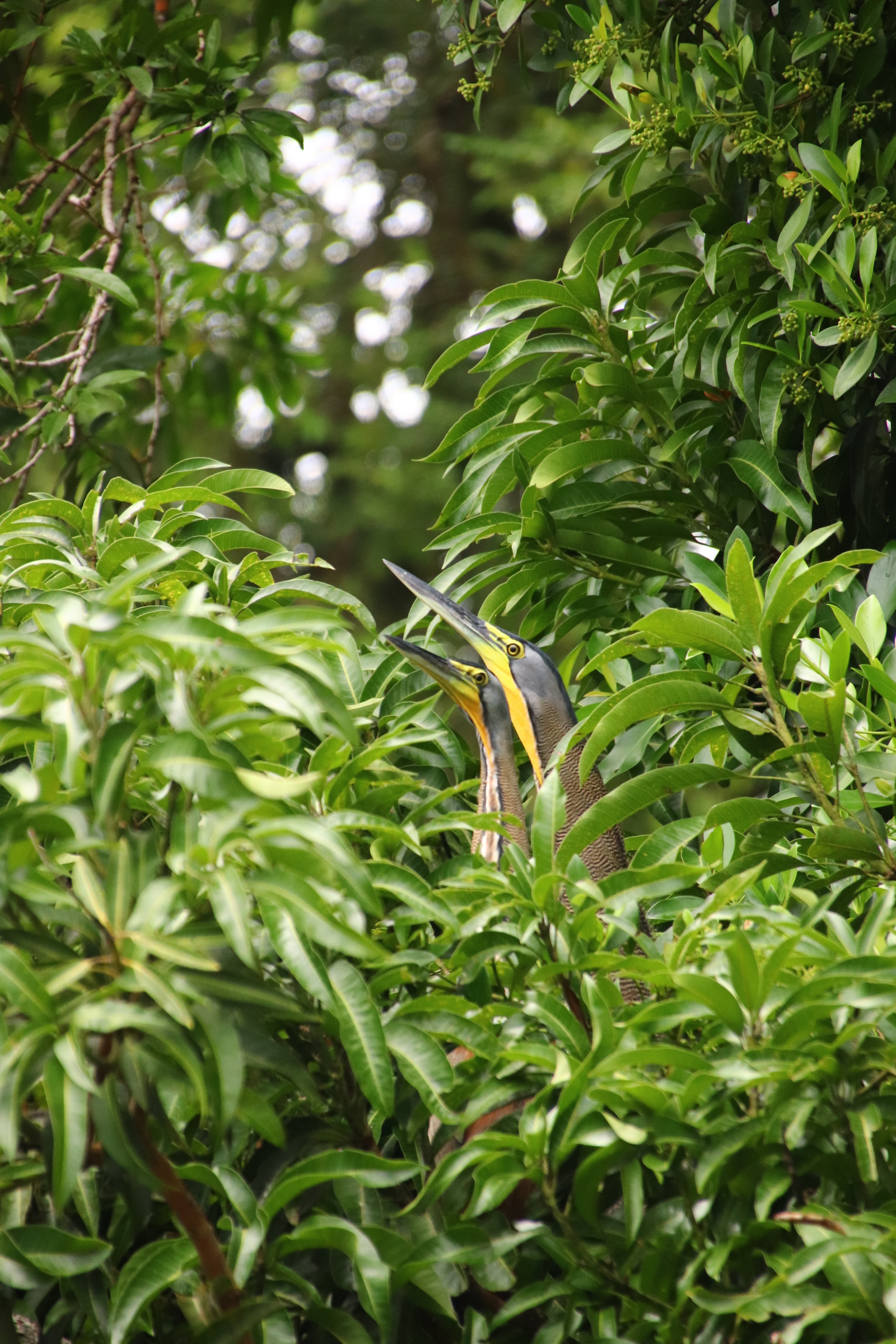
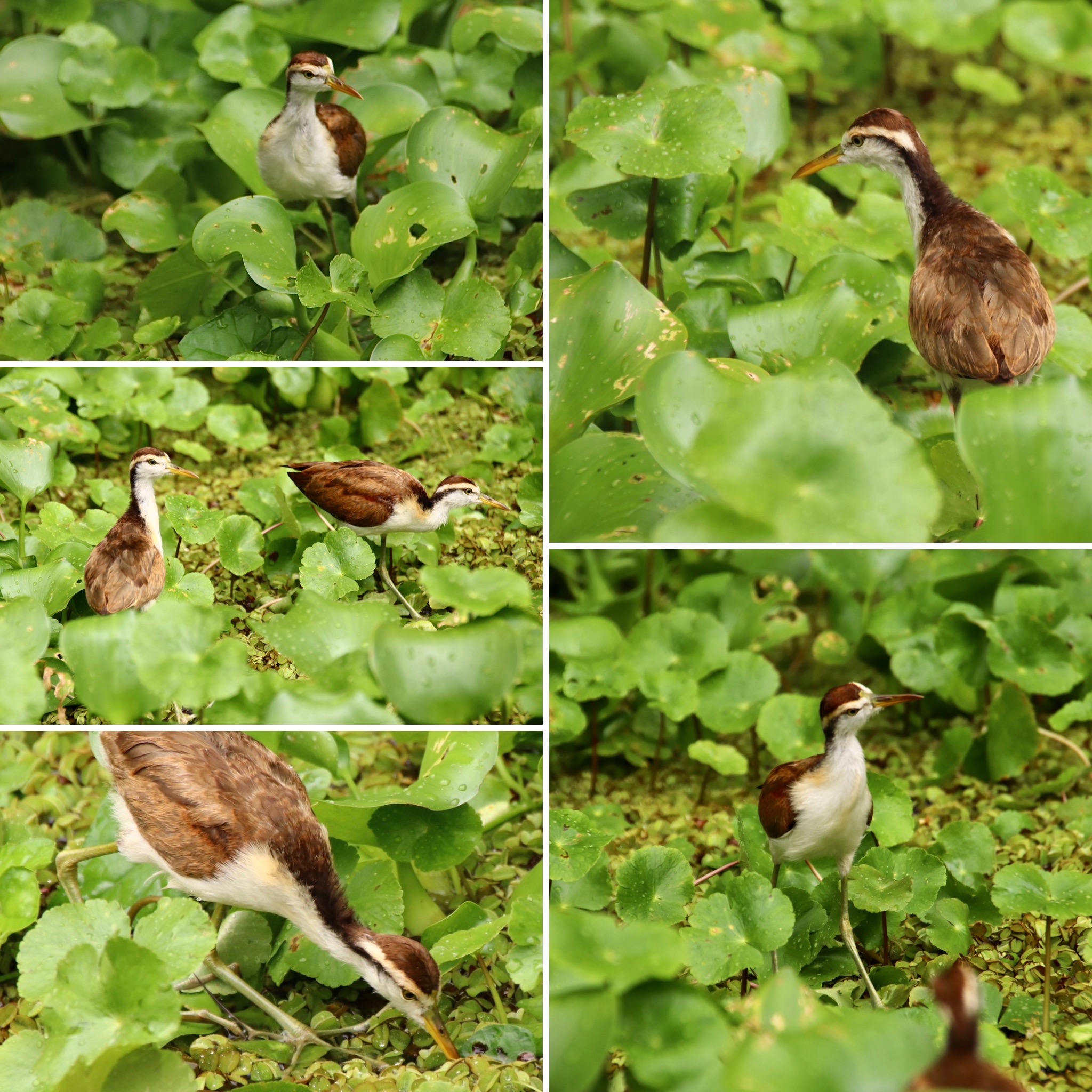
The main event, of course, was the next day’s boat safari along the canals and waterways. Fortified with a salad of papaya, melon and cassava (yum!), we let our guide navigate us through the stunningly lush verdant green river habitats, fringed with palms, wild mango, crabwood, fig and breadnut trees. The protected park comprises 19,000 hectares of rainforest, beach, mangroves and lagoon, with over 300 species of bird, 100 different reptiles, and around 60 species of mammals. We obviously only saw a small part of it, but were surprised at the range and volume of critters to be seen. I’ve pasted some of my favourite snaps of the wildlife below.
Our chaperone, though quiet and somewhat humourless, was clearly incredibly knowledgeable, with an uncanny ability to spot even the tiniest flash of colour, indicating the presence of a lizard, warbler or other rare delight. I loved every second of the trip, gleefully taking in the reserve’s wonders, learning about conservation efforts, and snapping away with my camera. It was disappointing to head back to the hotel’s private dock three hours later, but I consoled myself by immediately getting out my dorky ornithology guide and contentedly ticking things off whilst munching an empanada and sipping ‘toad water’ (agua de sapo, a sludgy but delicious mix of sugar cane, limes and ginger).
After another swim, we got out our binoculars to explore the grounds of the hotel, including a ‘tamed’ area of rainforest in which we almost got lost in what looked suspiciously like a raptor cage from Isla Nublar. Amazonian kingfishers, yellow-throated heroes, and grey cowled wood rails were added to the tally. Later that evening, we were also lucky enough to spot some red-eyed leaf frogs in moist vegetation near our chalet. See my upcoming dedicated frog post for photos!
I’m going to stop there for now, and pick up the story another time. Leaving you with the image of us bouncing away on a boat taxi the next morning, the sun beating down mercilessly on Paul’s encroaching bald patch, joyfully spotting caimans, vultures and iguanas along the marshy banks.
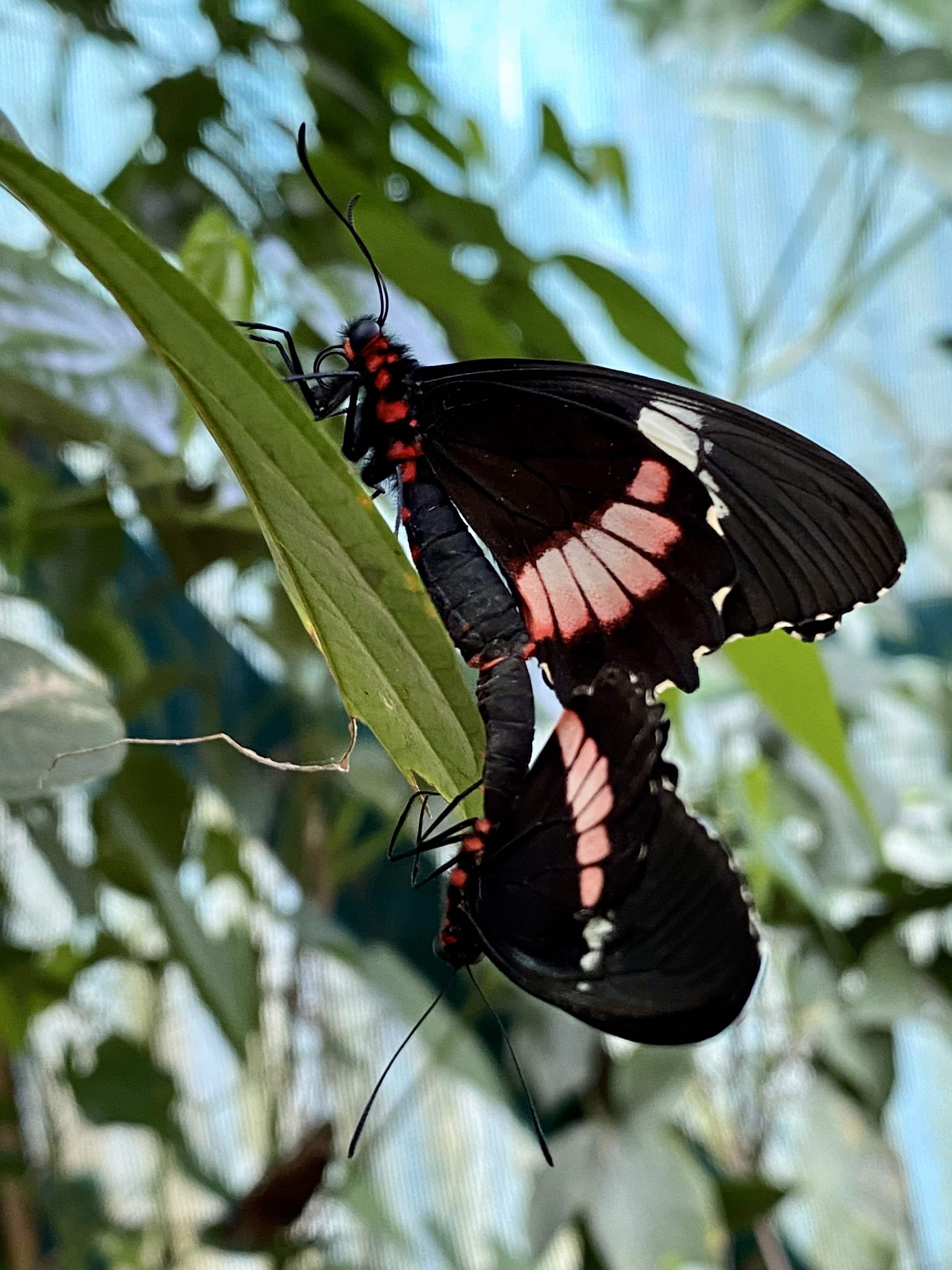
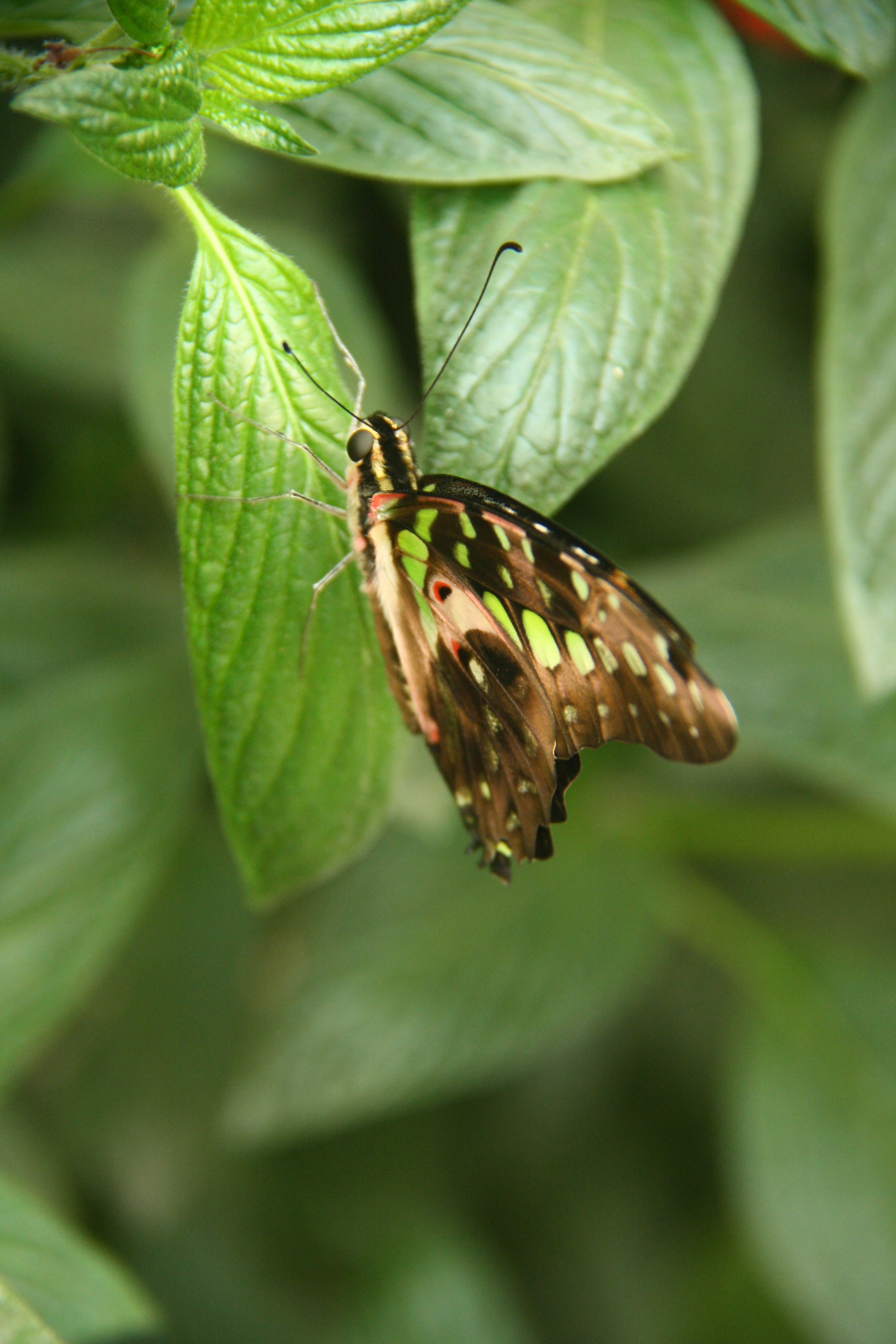
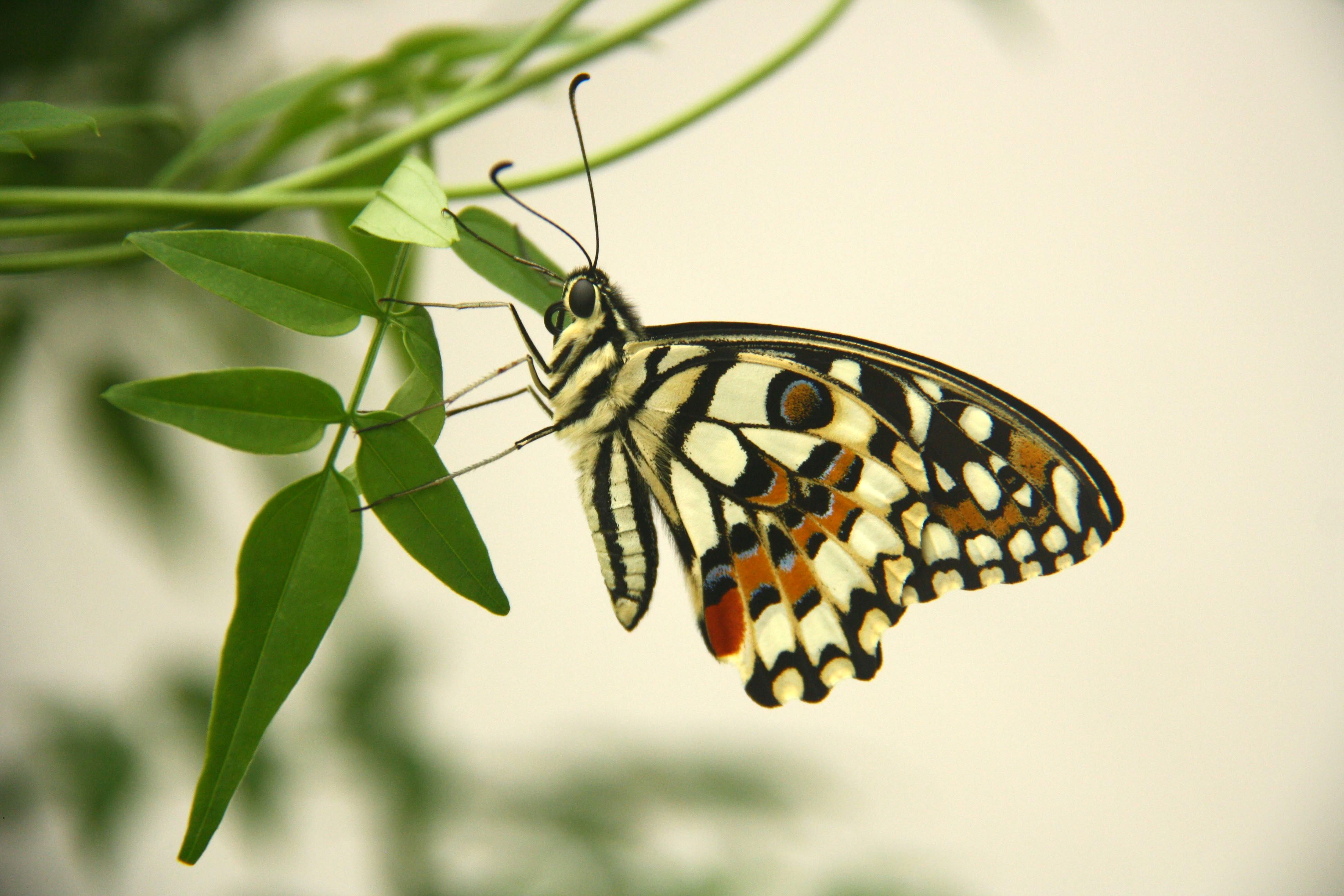
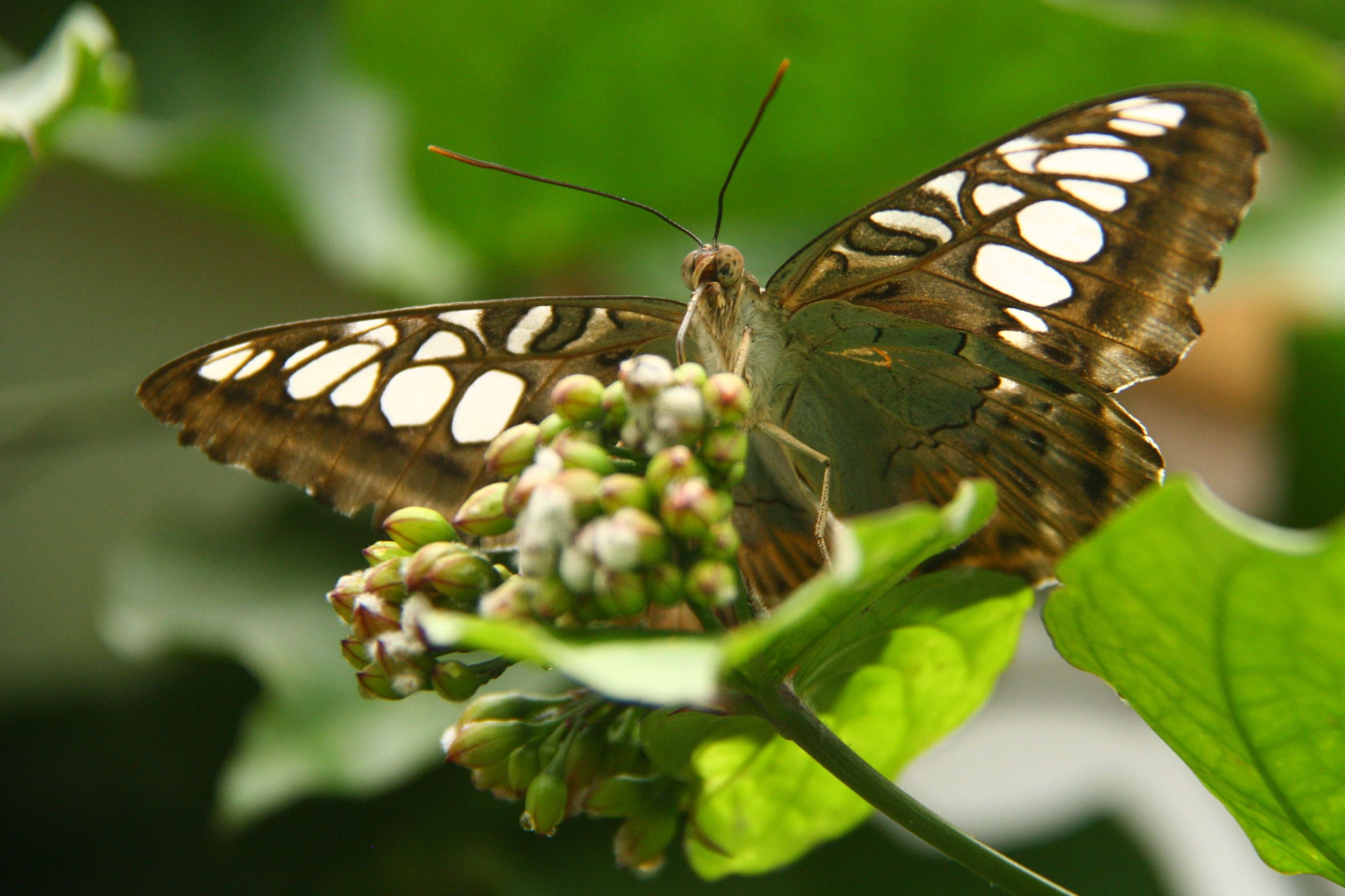
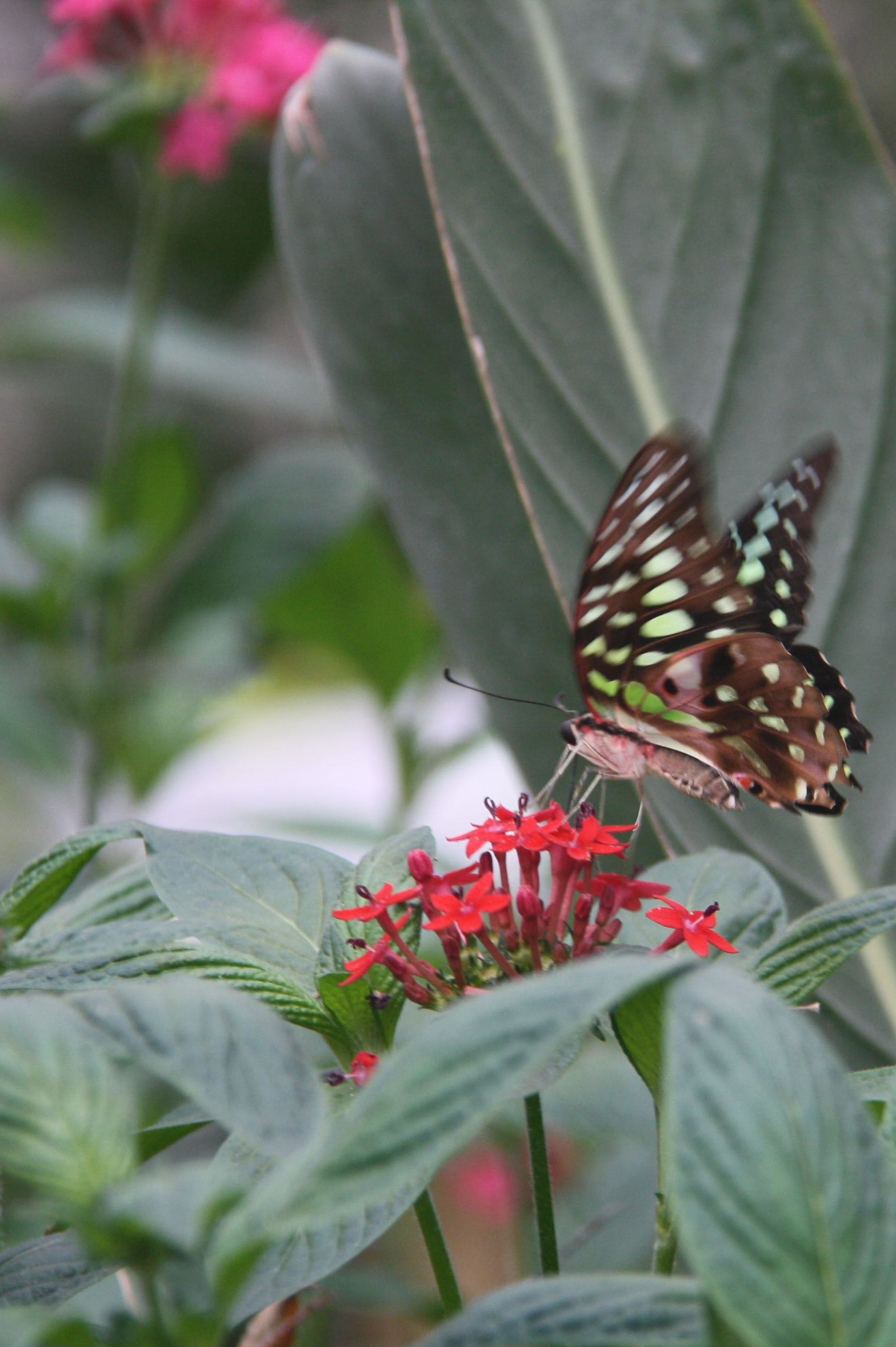
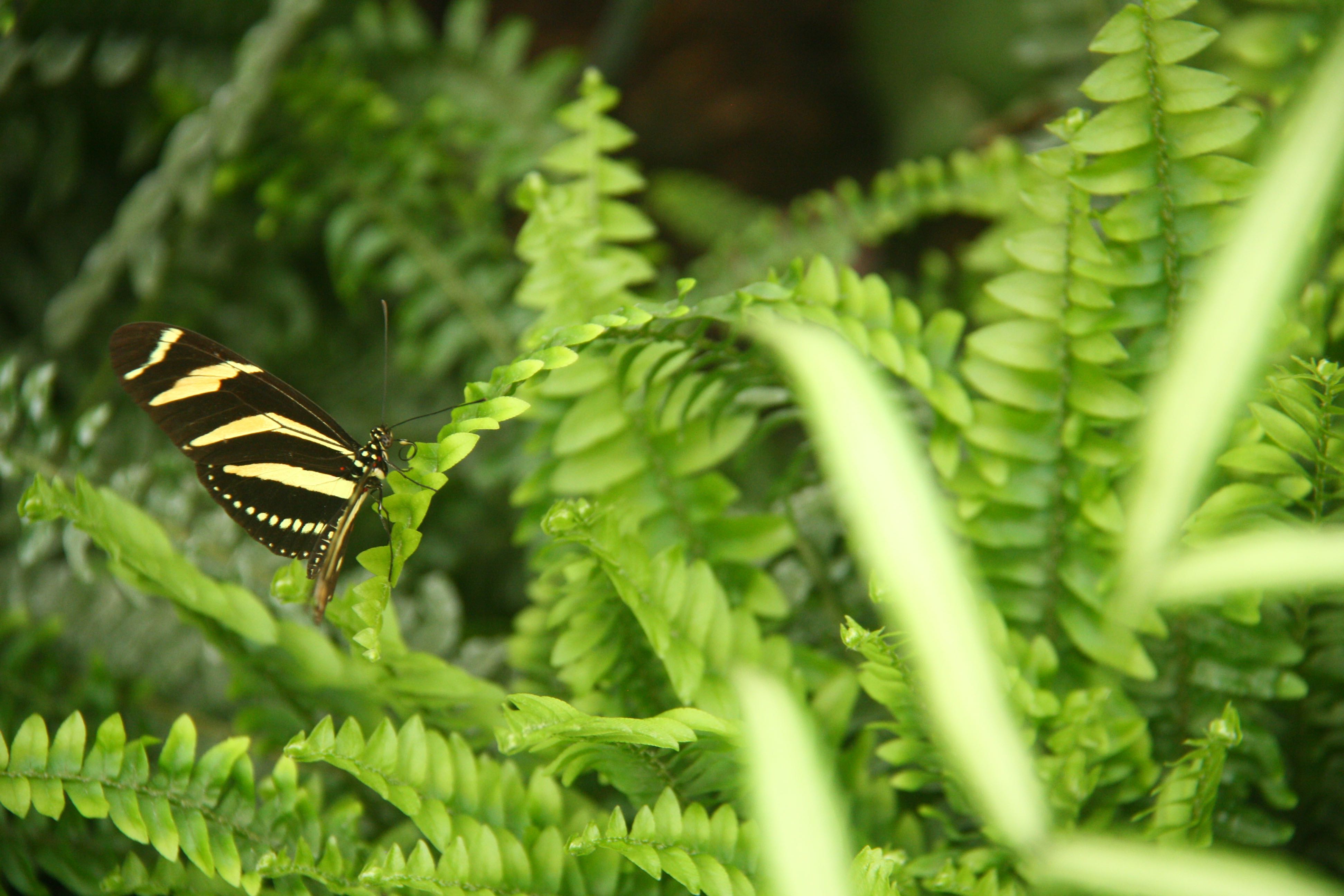
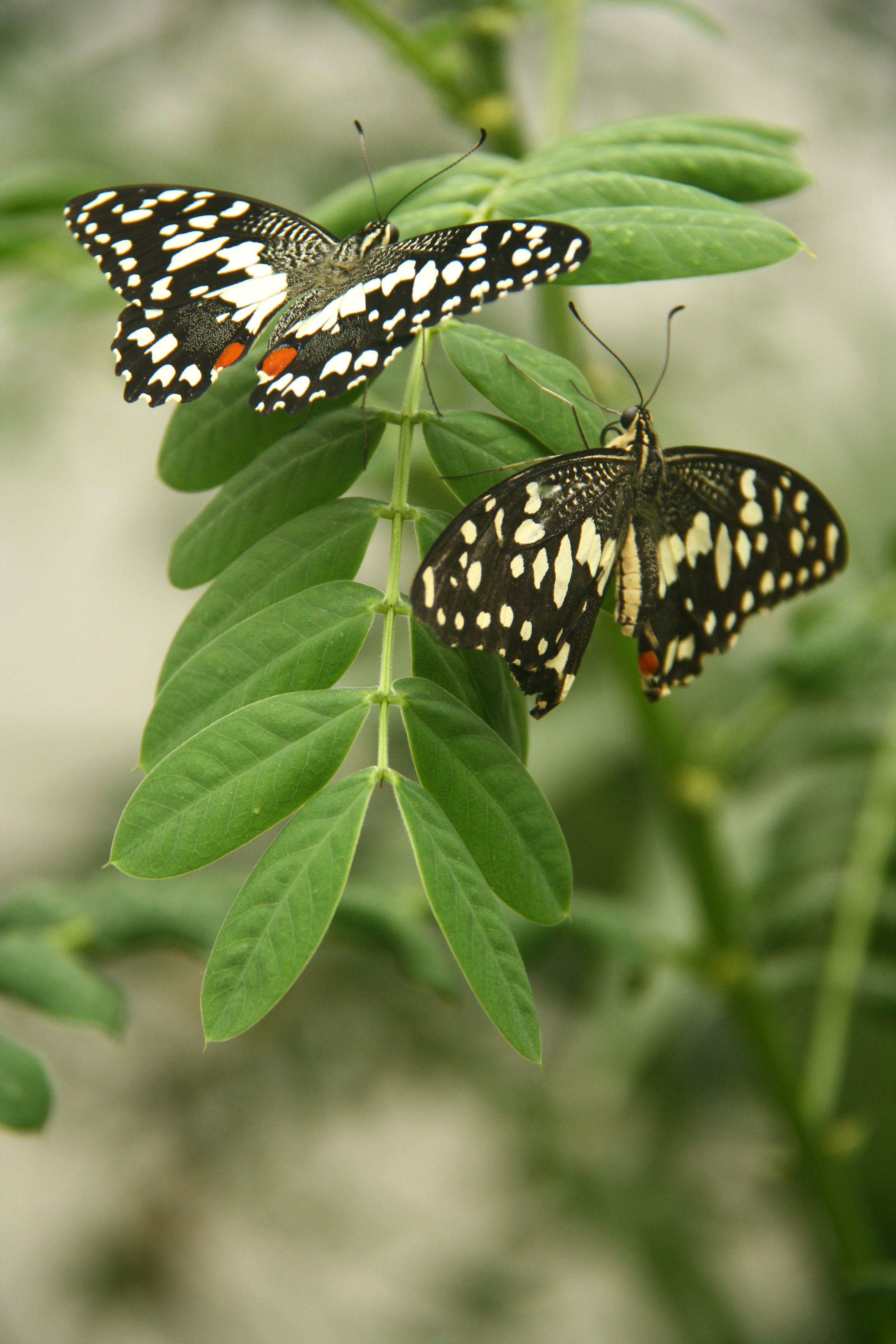
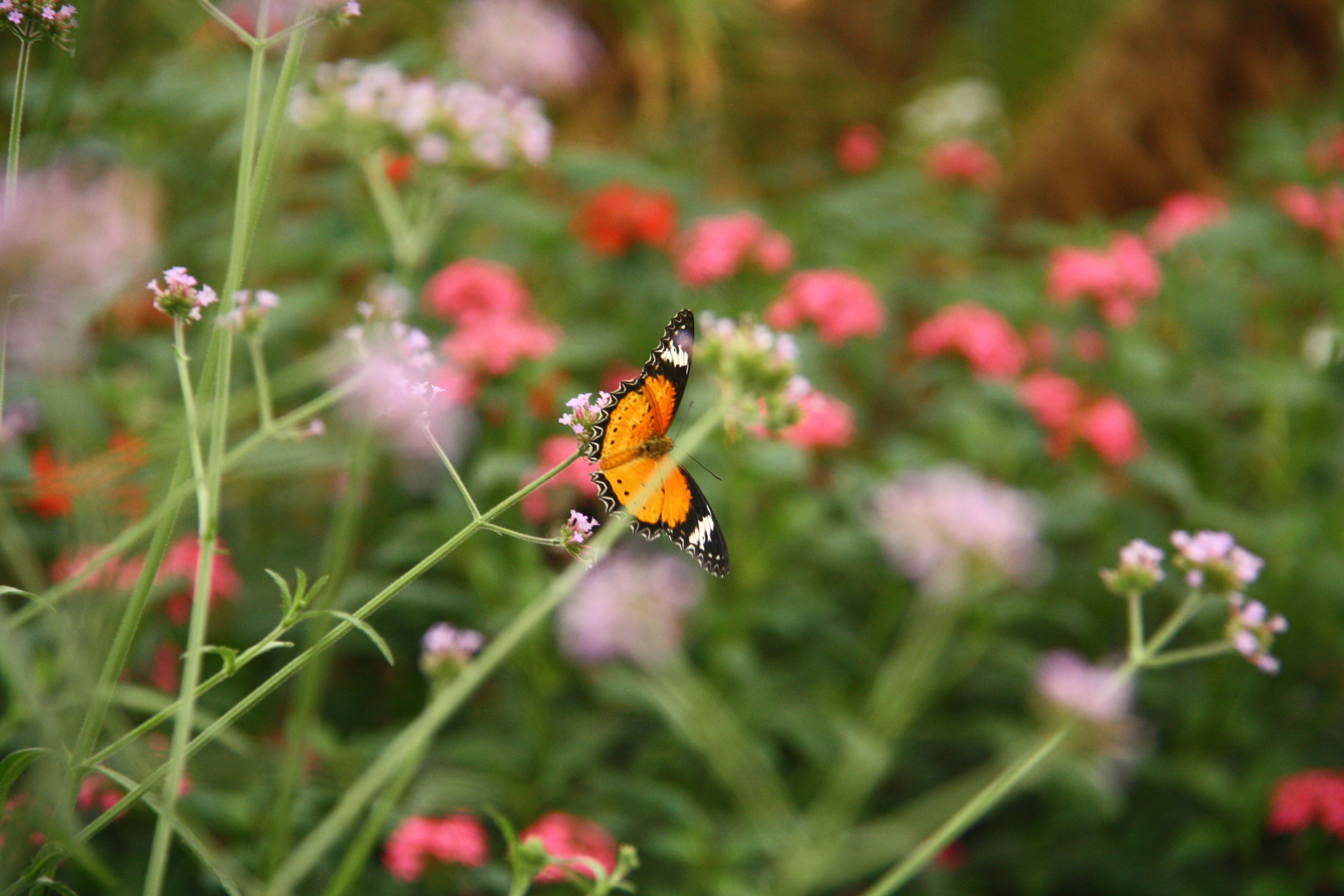
Having previously spent hours with the butterflies at London Zoo, I thought I’d see if the Natural History Museum’s temporary butterfly house could compare. I think I now have arthritis in my hands from gripping the camera steady for so long!
I’ve just returned from a fantastic 17 day trip to South Africa and, as always, my first priority – to the chagrin of my long-suffering boyfriend, who would rather I was emptying my suitcase or helping to clean the flat – has been to edit down my several hundred photos. Here, I present to you: Part I. Yes, that means there will be more to follow.
The trip started with four days on safari in the Mthethomusha game reserve, just outside Kruger National Park. We stayed in Bongani Mountain Lodge, perched high above the valley and enjoying breathtaking views across to the Drakensberg mountain range. Impala and baboons were frequent visitors around the lodge, elephants roamed the hills, and from the lookout you could often see zebra and wildebeest drinking from the watering hole. We even saw two male giraffes fighting whilst relaxing one day by the pool – David Attenborough eat your heart out!
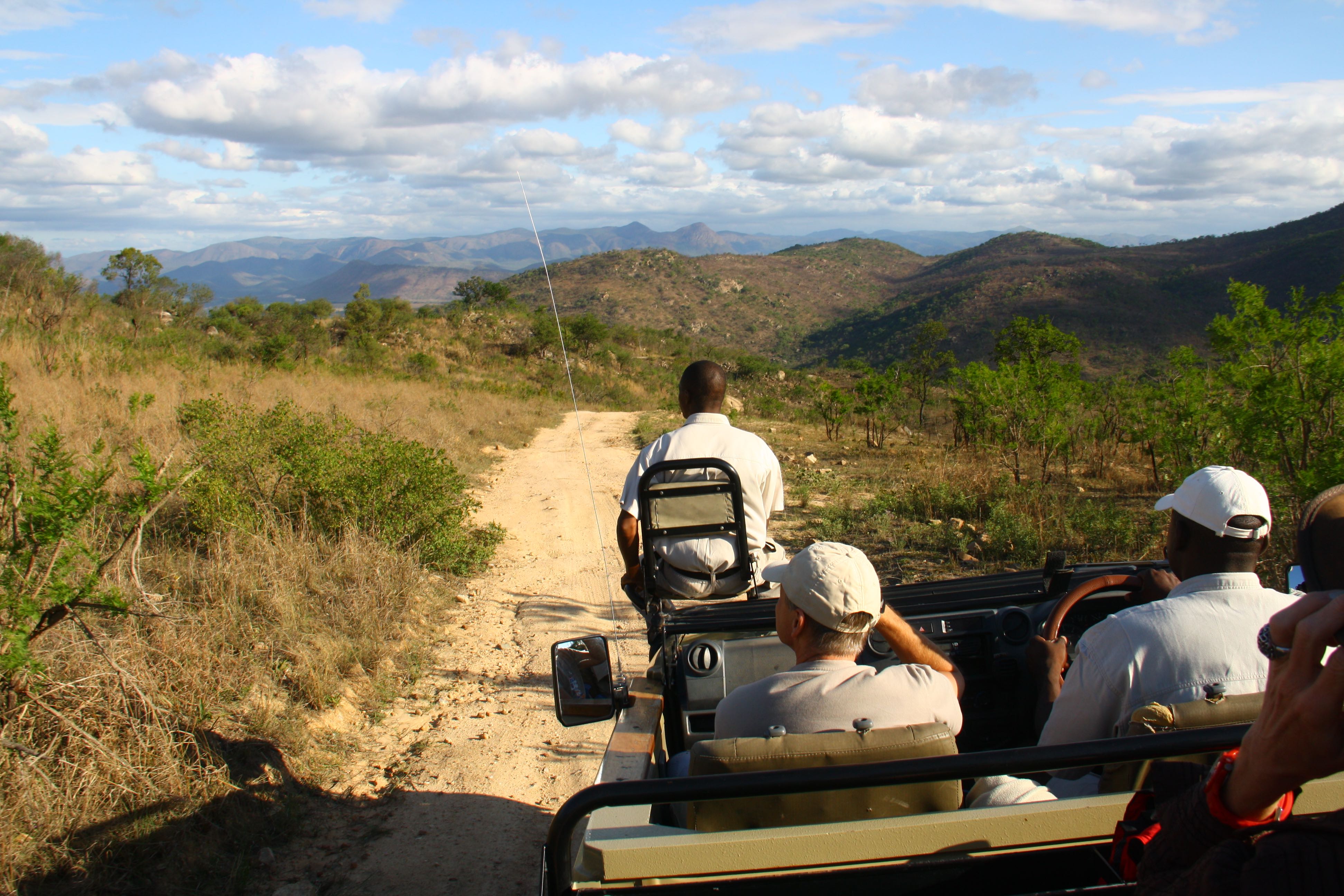
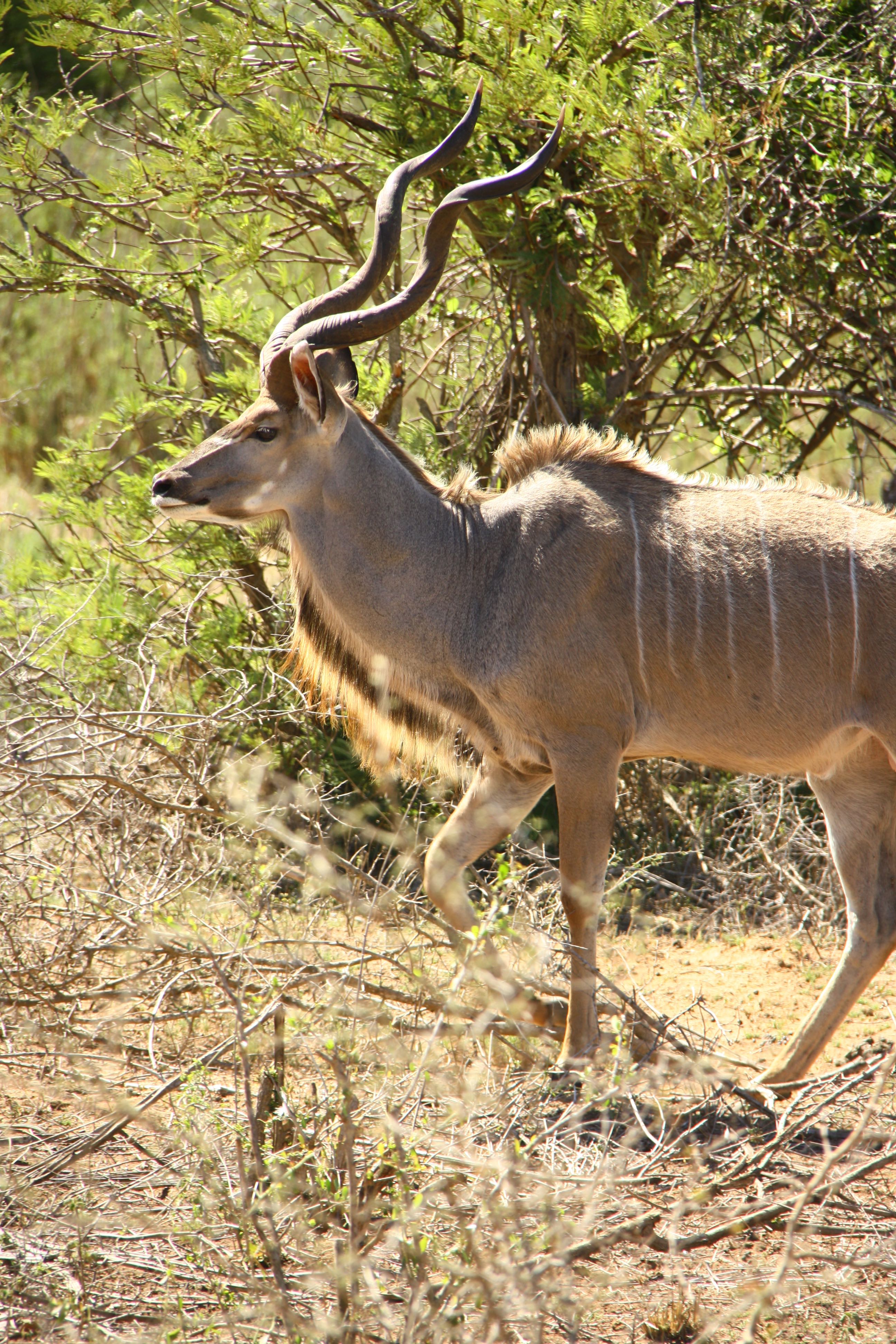
Our regular guide was Johnson, a big, serious guy, who insisted on running through umpteen safety procedures before each drive and yet had no qualms about taking himself off on foot into the bush in search of lions. He was an excellent tracker and got us up close to rhino, buffalo, kudu, giraffe, nyala and a whole host of other animals, as well as spotting much smaller creatures…such as the tiny chameleon he clocked on a tree branch from a fast-moving jeep one evening, after the sun had already set! Yeah, he was impressive. The drives themselves, all off-road on bumpy, dusty tracks at dawn and dusk each day, were fantastic. I never want to forget how it felt to climb to the highest point in the area to stop and stretch our legs, taking in the incredible views and listening to the stillness as the sun rose.
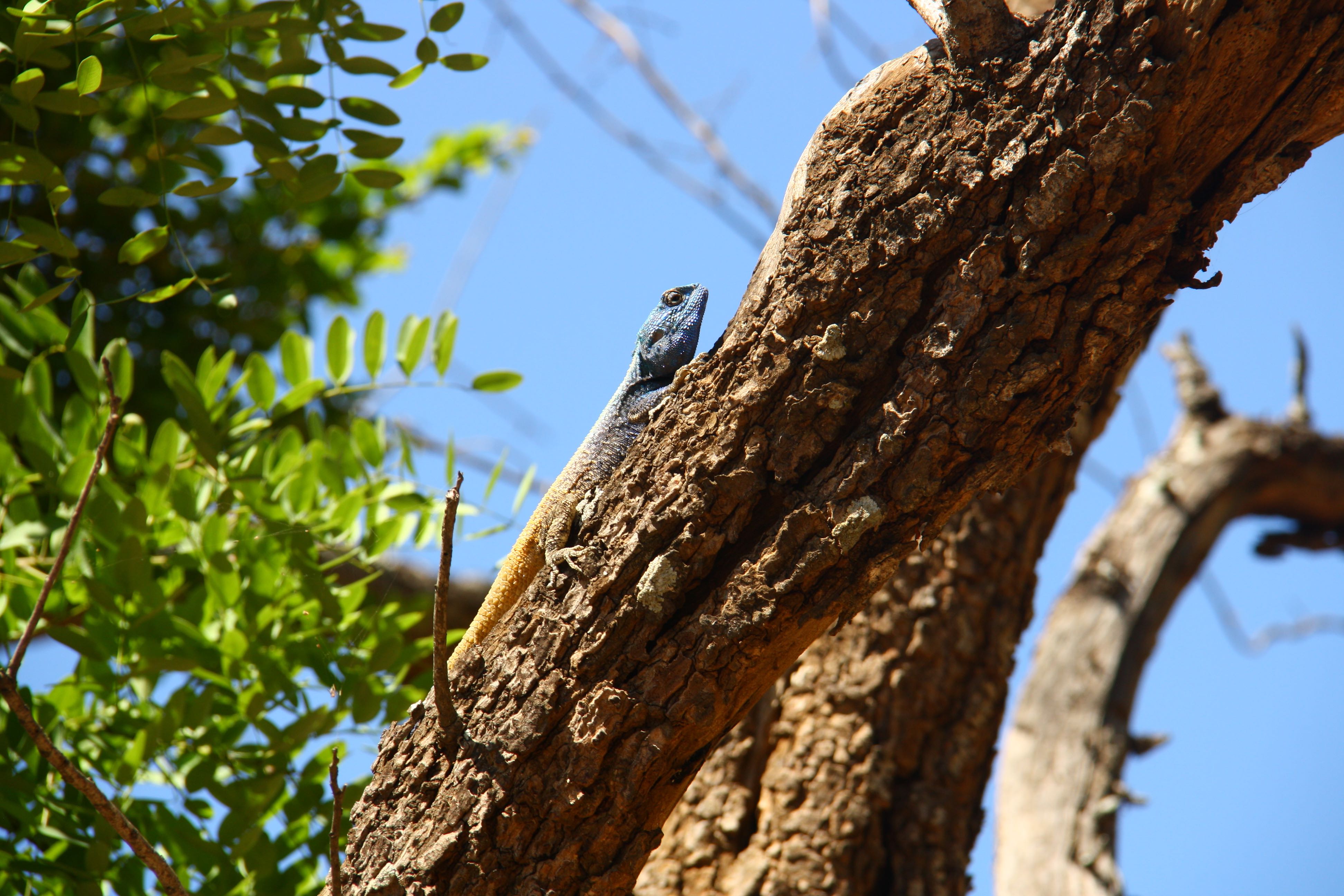
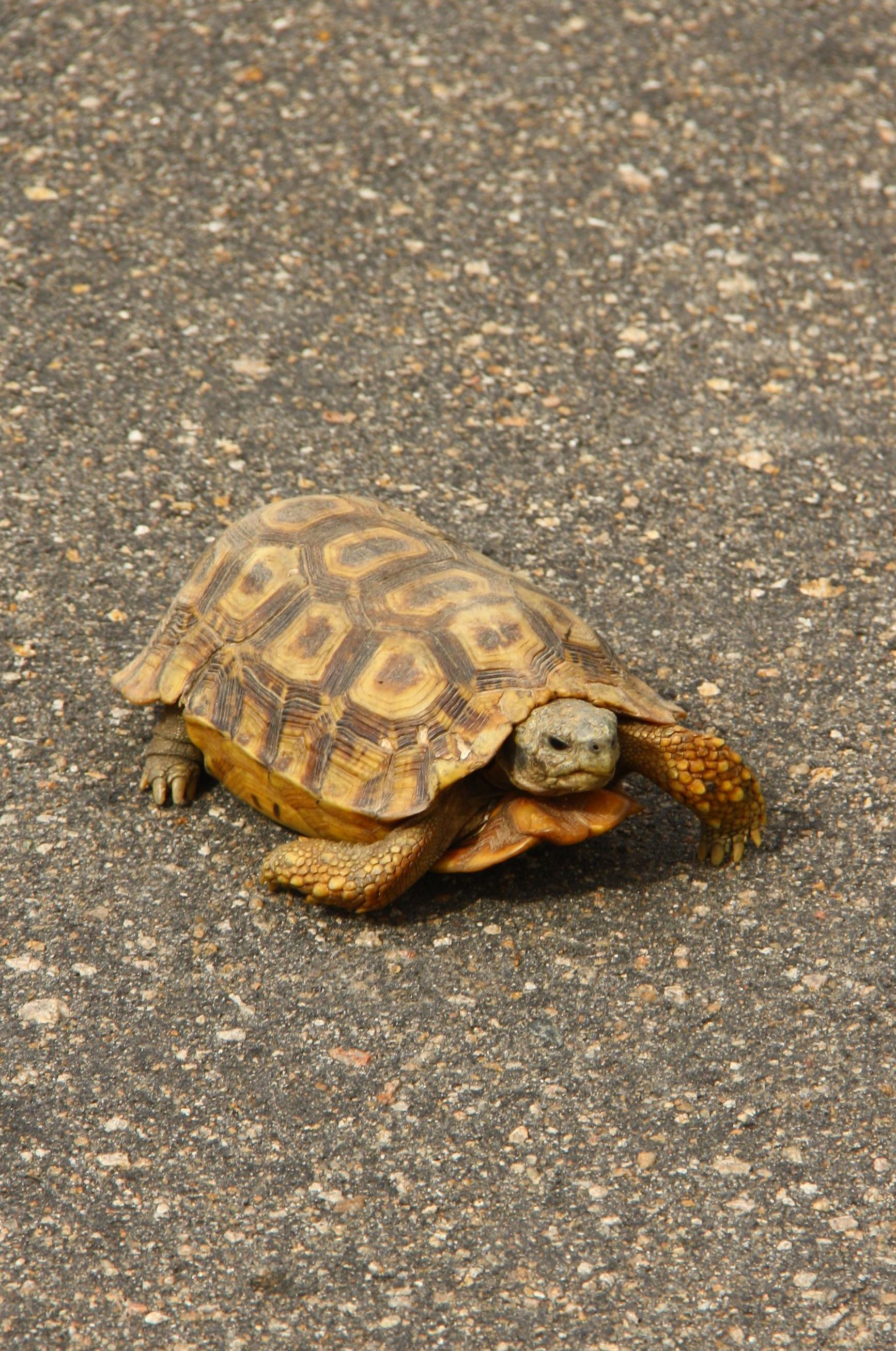
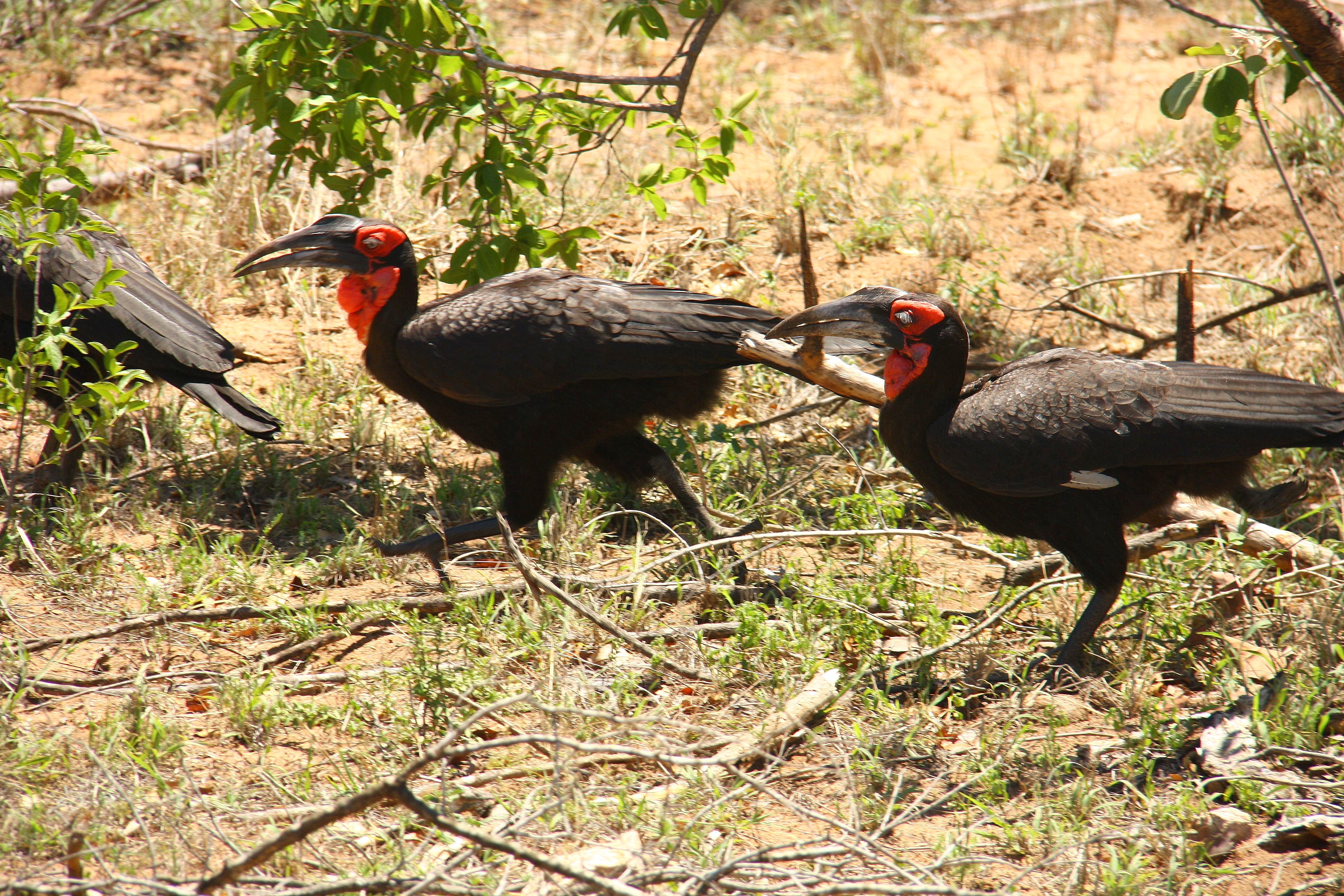
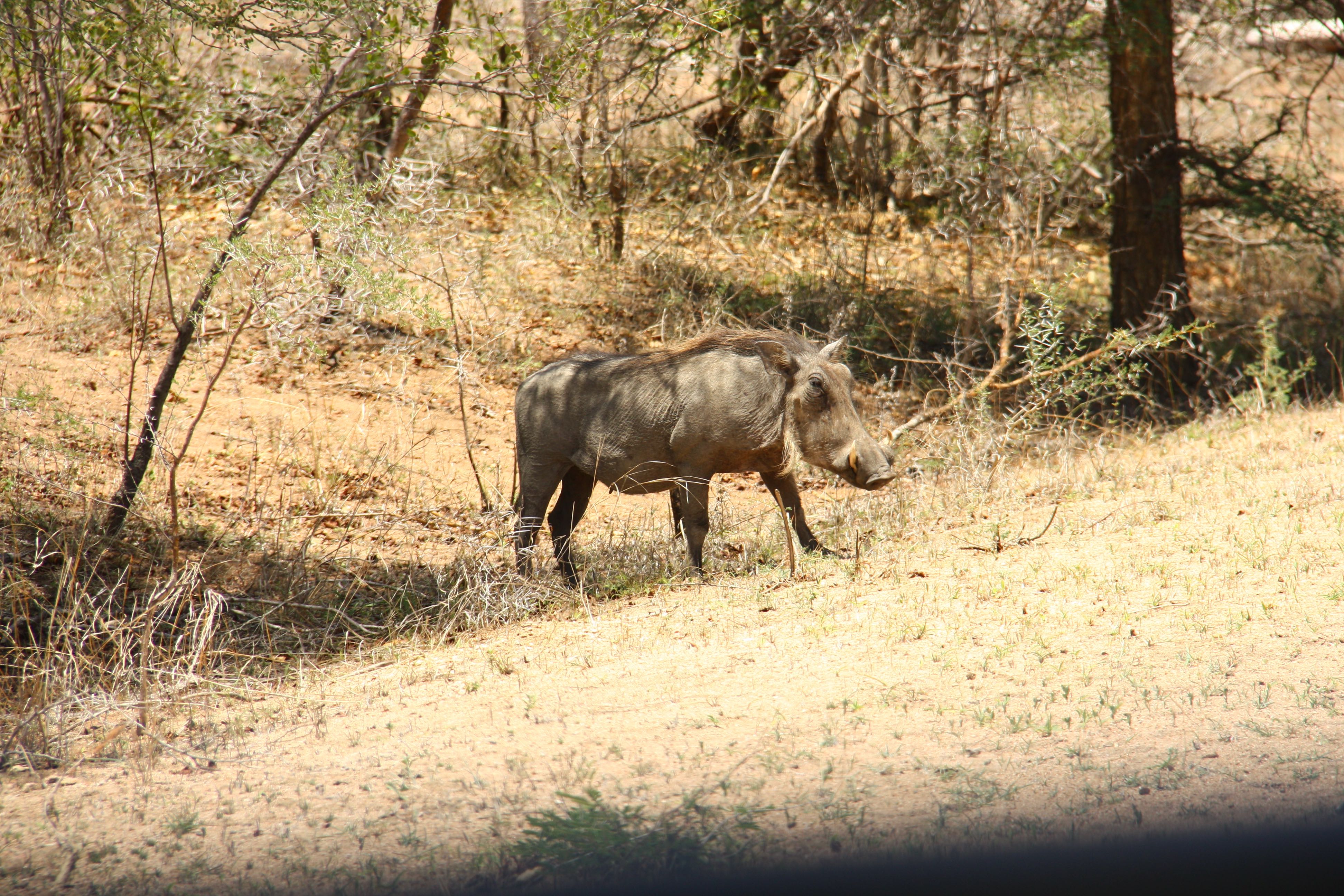
The lions eluded Johnson though, to his frustration. It wasn’t until our trip into Kruger itself that we managed to see them up close: three males and a sleeping female. Seeing them in the wild is actually a little scarier than I was expecting; you realise how exposed you are in a topless jeep! Kruger was mind-blowing. Bigger than Wales (why is it always Wales?), the flat landscape stretching into infinity in all directions and the undergrowth teeming with animals. In addition to what we’d already encountered in Mthethomusha, we saw elands, hyenas, hippos, warthogs, bushbucks, vultures, tortoises, purple starlings, lizards and vervet monkeys. It was such an exciting and memorable experience. And that evening we returned to the lodge for a braai (Afrikaans for ‘barbecue’) in the boma, a large circular eating space with open fire. Perfect!
So, four out of the ‘Big Five’ ain’t bad. Here are a small selection from my ridiculous number of photos…


































































 Victoria's Secret Blog